
Deciding between an Original Equipment Manufacturer (OEM) and an aftermarket water pump for your Honda Click 125i depends on how you balance immediate repair costs against long-term mechanical peace of mind. For daily riders navigating high-humidity tropical climates and heavy stop-and-go traffic, the OEM water pump is generally the most reliable choice because it guarantees exact factory specifications and material compatibility. However, high-quality aftermarket alternatives can serve as a cost-effective solution if you are willing to carefully verify the manufacturer’s reputation, seal materials, and part dimensions before purchase.
Why the Water Pump Matters for Your Honda Click 125i
The Honda Click 125i relies on a liquid cooling system to manage engine temperatures under demanding conditions. The water pump is the heart of this system, constantly circulating coolant through the engine block and radiator to dissipate heat. Because scooters operate at high revolutions per minute (RPM) and often carry heavy loads in congested urban areas, maintaining a functional cooling system is vital to prevent engine failure.
Several observable warning signs indicate that your water pump may be failing. A primary indicator is coolant weeping from the small relief hole (weep hole) located underneath the pump housing, which signals that the internal mechanical seal has degraded. You might also notice the high-temperature warning light illuminating on your dashboard, or hear a distinct metallic grinding or rattling sound from the right side of the engine where the pump is mounted.
Products mentioned in this guide
![HONDA Genuine Parts Water Pump Assembly for Click125 / Click 150 [ 19200-KWN-901 ]](https://img.lazcdn.com/g/p/dcb07916b58c6f3b55b8e17a1a58ec74.png_400x400q80.png_.webp)
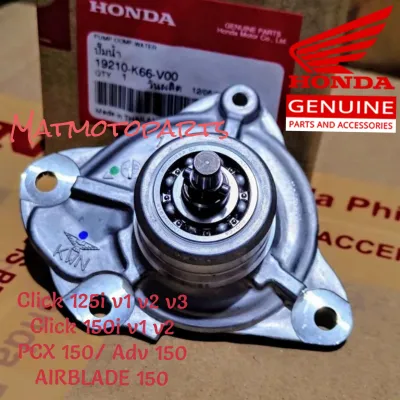
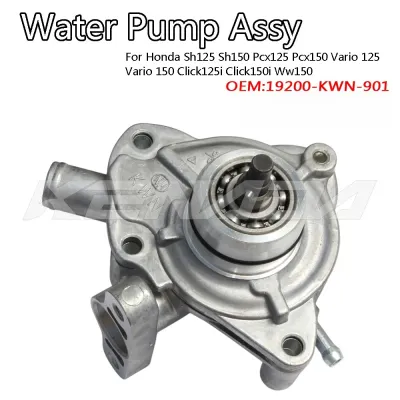
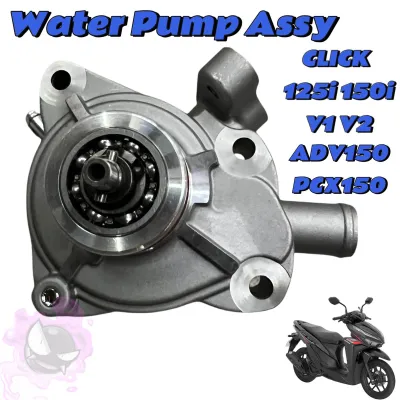
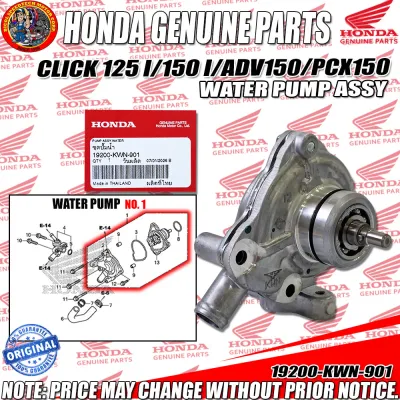
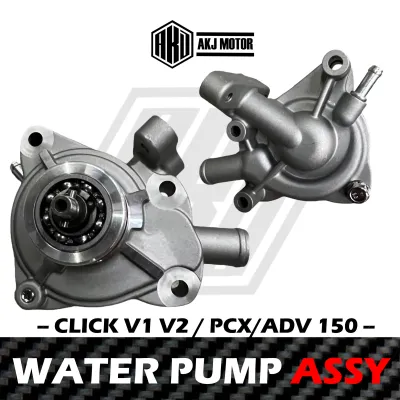
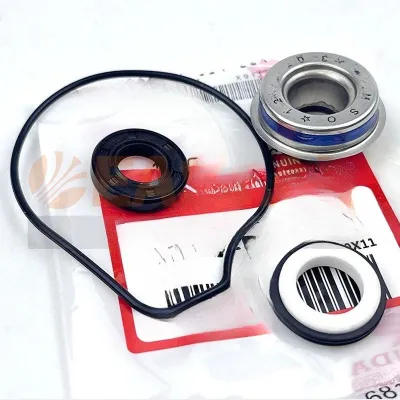
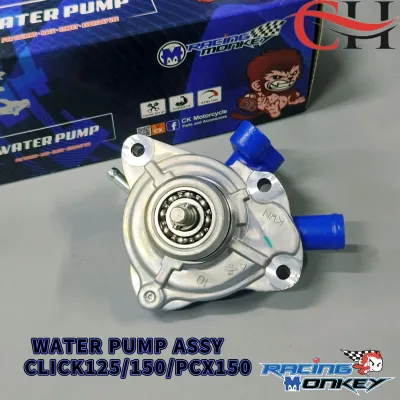
Prices are valid at publication and may change. Please refer to the product page for the latest price.
Ignoring these warning signs can lead to severe mechanical consequences. When a water pump fails completely, the rapid rise in engine temperature can warp the cylinder head, blow the head gasket, or cause the piston to seize. Addressing a failing pump early prevents these highly expensive, labor-intensive engine rebuilds.
Evaluating OEM Water Pumps for the Click 125i
OEM water pumps are produced by or directly for Honda, matching the exact specifications of the component installed on the assembly line. Choosing an OEM part ensures that the replacement component is identical in every way to the original, maintaining the factory-engineered balance of your scooter’s cooling system.

The primary benefit of an OEM water pump is guaranteed compatibility. The mounting points, impeller depth, shaft dimensions, and hose inlet diameters will align perfectly with your Click 125i engine block. This precise fitment eliminates the need for modifications, reducing the risk of installation errors and subsequent leaks.
Additionally, OEM pumps offer a highly predictable lifespan. They are manufactured using high-grade mechanical seals and bearings designed to withstand the specific operating pressures and temperatures of the Click 125i engine. This durability is particularly valuable for riders who use their scooters daily and require consistent performance without premature wear.
However, there are trade-offs to consider. OEM parts carry a premium price tag, making them a more significant upfront investment. Furthermore, depending on your location, authorized dealers may not always have the part in immediate stock, which can lead to repair delays if you have to wait for factory backorders.
Navigating Aftermarket Water Pump Options
Aftermarket water pumps are produced by third-party manufacturers and offer an alternative to factory parts. These options range from reputable performance brands to unbranded, budget-focused replacements, providing a wide variety of choices for scooter owners.
The most compelling advantage of aftermarket pumps is their affordability. They are generally much less expensive than OEM units and are widely available at local motorcycle supply shops and online marketplaces. This accessibility makes them a popular choice for quick, budget-friendly repairs when immediate downtime must be minimized.
To ensure you are getting a reliable aftermarket part, you must perform diligent quality checks. Inspect the packaging for clear branding, manufacturing dates, and part number cross-references that explicitly list compatibility with the Honda Click 125i. Examine the physical unit for clean casting lines, smooth impeller rotation, and high-quality rubber gaskets or O-rings before proceeding with the installation.
Opting for the cheapest, unbranded aftermarket pumps carries substantial risk. Low-grade units often use inferior seal materials that degrade quickly when exposed to hot coolant, leading to premature leaks. Poorly designed impellers may also fail to circulate coolant at the correct flow rate, causing localized hot spots within the engine. Furthermore, these parts rarely come with reliable warranty support, leaving you unprotected if the component fails early.
Core Comparison Dimensions: OEM vs. Aftermarket
When choosing between these two options, comparing them across key dimensions helps clarify which path offers the best long-term value for your specific situation.
Price and value assessment is often the deciding factor for many riders. OEM pumps sit in a higher price bracket, reflecting their factory certification and guaranteed durability. Aftermarket options are positioned as budget-friendly entry points, but their true value depends on their lifespan; a cheap pump that fails within a few months ultimately costs more in labor and replacement coolant than a single OEM unit.
Fitment precision is another critical area. OEM kits typically include high-quality, pre-shaped gaskets and O-rings that seal perfectly without the need for excessive liquid gasket compound. Aftermarket kits may include generic gaskets that require careful alignment or additional sealant to prevent leaks during assembly.
Material durability varies widely. OEM impellers and shafts are engineered with precise tolerances and corrosion-resistant alloys to prevent rust and cavitation. While some premium aftermarket brands match these material standards, lower-end aftermarket options may use cheaper plastics or metals prone to rapid wear under high thermal stress.
| Comparison Dimension | OEM Water Pump | Aftermarket Water Pump | Verification Checkpoint |
|---|---|---|---|
| Fitment & Alignment | Guaranteed exact fitment with no modifications required. | May require careful alignment; check gasket shapes. | Verify mounting hole alignment against the engine block. |
| Material Quality | High-grade corrosion-resistant alloys and premium seals. | Highly variable; ranges from premium alloys to cheap plastics. | Inspect the impeller material and seal flexibility before installing. |
| Price Bracket | Premium pricing reflecting factory standards. | Budget-friendly to mid-range options available. | Compare total cost including gaskets and coolant. |
| Warranty & Support | Backed by official manufacturer warranty policies. | Limited or no warranty, depending on the brand. | Check the retailer's return policy and brand warranty terms. |
Decision Framework: Which Pump Fits Your Needs?
To finalize your decision, evaluate your riding habits, budget, and mechanical confidence against the characteristics of each pump type.
You should choose an OEM water pump if you rely on your Honda Click 125i for heavy daily commuting, delivery services, or long-distance travel. If you prioritize long-term reliability, want a straightforward installation process with zero fitment hassles, and prefer the security of factory-tested components, the OEM pump is the most suitable choice.
Conversely, you might choose an aftermarket water pump if you are working within a strict repair budget and use your scooter primarily for light, occasional trips. This option is viable if you can confidently verify the third-party brand’s reputation, inspect the part’s build quality before installation, and accept the potential risk of a shorter service life.
Before making any purchase, verify your scooter’s warranty status. If your Click 125i is still covered under an active manufacturer warranty, installing a non-OEM water pump may void your coverage. Always double-check your specific model year and engine code against the product documentation, as minor design updates can affect part compatibility.
Installation Safety and Maintenance Boundaries
Working on a motorcycle cooling system carries inherent safety risks that require careful preparation. Never attempt to open the radiator cap or remove the water pump while the engine is hot, as pressurized, boiling coolant can escape and cause severe burns. Allow the engine to cool completely before beginning any disassembly.
Always refer to the official Honda service manual for your Click 125i to find the exact torque specifications for the water pump mounting bolts. Over-tightening these bolts can easily strip the threads in the aluminum engine case, while under-tightening can lead to coolant leaks and engine overheating. Ensure the gasket is seated flat and follow the recommended coolant bleeding procedure to eliminate air pockets in the system.
If you encounter seized or stripped bolts during disassembly, or if you notice persistent leaks from the weep hole or mating surfaces after installation, stop and consult a qualified motorcycle mechanic. Attempting to force a poorly fitting part or ignoring a minor leak can cause permanent damage to the engine casing.
After completing the installation and refilling the system with the recommended coolant, perform thorough post-installation checks. Run the engine at idle and check for immediate leaks around the pump housing. Monitor the coolant level in the reserve tank and inspect the weep hole after your first few rides to ensure the seal has seated correctly and the system is operating at the correct temperature.
Frequently Asked Questions (FAQ)
Can I use a water pump from a different Honda scooter model on my Click 125i?
No, you should avoid using water pumps designed for other Honda models unless the manufacturer documentation explicitly lists the exact same part number. Even if the external housing looks similar, internal dimensions, impeller designs, mounting bolt patterns, and hose connection angles often differ. Using an incompatible pump can restrict coolant flow or cause physical damage to the engine block.
How often should the water pump be replaced on a Honda Click 125i?
There is no fixed mileage interval for replacing the water pump. Instead, replacement should be based on physical inspections and observable symptoms. Check your owner’s manual for the recommended cooling system inspection intervals. Typically, the pump is only replaced if you observe coolant leaks from the weep hole, hear bearing noise, experience engine overheating, or during a major engine overhaul.

Community discussion
Share your experience or ask a question. Comments are reviewed before publication.