
Choosing the right diesel engine oil in the Philippines is not about finding a single, universally superior brand. Instead, the best-performing oil is the one that strictly matches your vehicle manufacturer’s original equipment manufacturer (OEM) specifications, including the required API/ACEA ratings and SAE viscosity grade.
This guide is designed for owners of passenger diesel vehicles, light commercial trucks, and heavy-duty utility engines operating under local driving conditions. Whether you drive a modern common-rail direct injection (CRDI) SUV in stop-and-go metro traffic or operate a fleet of utility vehicles across provincial routes, matching the oil formulation to your engine’s design is critical for longevity and performance.
To simplify your decision, you can use a straightforward, condition-based framework:
Products mentioned in this guide
Prices are valid at publication and may change. Please refer to the product page for the latest price.
- Choose Petron Rev X 400 if: You prioritize exceptional local availability, an established nationwide distribution network, and a formulation highly compatible with regional fuel profiles, provided your engine manual permits a mineral-based API CI-4 or equivalent specification.
- Choose Shell or Castrol if: Your modern diesel engine requires specific global OEM approvals, such as specialized European or Japanese manufacturer codes, which are explicitly printed on the back labels of their mid-tier and premium lines.
- Choose Motul if: You own a high-performance or modern passenger diesel vehicle, operate under extreme thermal stress, or are an enthusiast looking for premium, fully synthetic formulations with advanced shear stability, and your maintenance budget accommodates premium pricing.
Before purchasing any brand, you must verify the technical specifications listed on the product’s back label against the requirements detailed in your vehicle’s owner’s manual.
Critical Diesel Oil Specs for Philippine Driving Conditions
Understanding SAE viscosity grades is the first step in selecting a diesel engine oil. Viscosity refers to the oil’s resistance to flow, represented by numbers like 15W-40, 10W-30, or 5W-30. The number preceding the “W” (which stands for Winter) indicates cold-flow properties, while the second number represents the oil’s viscosity at the engine’s operating temperature of 100°C.
Even though the Philippines experiences a tropical climate without freezing temperatures, initial startup wear remains a primary cause of engine degradation. A lower cold-viscosity rating, such as 5W or 10W, allows the oil to circulate rapidly to critical components immediately after turning the key. Conversely, the second number must be robust enough—typically 30 or 40—to maintain a protective lubricating film under intense engine heat.
API (American Petroleum Institute) and ACEA (Association des Constructeurs Européens d’Automobiles) standards define the oil’s performance capabilities and chemical limits. For diesel engines, API categories begin with the letter “C” (e.g., CI-4, CK-4). Modern diesel vehicles equipped with advanced emissions systems, such as Diesel Particulate Filters (DPF) or Selective Catalytic Reduction (SCR), require low-SAPS (Sulfated Ash, Phosphorus, and Sulfur) oils to prevent filter clogging.
Using an older oil standard like API CI-4 in a modern engine requiring API CK-4 or ACEA C-series specifications can permanently damage expensive exhaust aftertreatment systems. Conversely, using a modern oil in an older engine is generally safe due to backward compatibility, though older mechanical designs may benefit from specific additive packages found in dedicated legacy formulations.
Philippine driving conditions place unique physical demands on motor oils. Severe urban congestion, characterized by hours of idling in high ambient temperatures exceeding 35°C, increases the thermal load on the engine. Under these conditions, the oil cannot benefit from the cooling airflow of highway driving, which accelerates oil oxidation, thermal breakdown, and the formation of harmful engine sludge.
Furthermore, variations in local diesel fuel quality, particularly historical sulfur content levels, require robust oil additives. While the Philippines has transitioned to cleaner Euro 4 fuels with lower sulfur limits (50 ppm), older or provincial fuel supplies can still introduce corrosive combustion byproducts into the crankcase. A high-quality oil with a sufficient Total Base Number (TBN) is necessary to neutralize these acids and prevent corrosive wear on bearings and cylinder walls.
Brand Overview: Petron, Shell, Castrol, and Motul
Petron Rev X 400 and Local Lineup
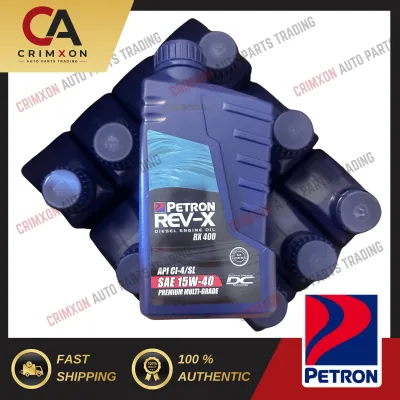
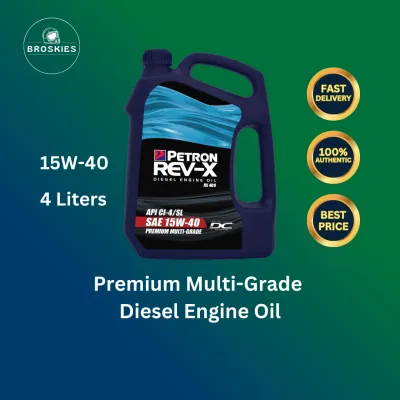
Petron Corporation, as the largest oil refining and marketing company in the Philippines, tailors its lubricant lineup specifically for the local motoring landscape. The Petron Rev X 400 series is widely recognized as a workhorse diesel engine oil, typically formulated as a high-quality mineral oil meeting API CI-4/SL standards with an SAE 15W-40 viscosity grade.

This specific product is engineered to provide excellent engine cleanliness and wear protection for medium to heavy-duty diesel engines, including turbo-charged units. Because Petron operates an extensive network of service stations and partner auto supply shops across the archipelago, sourcing Rev X 400 is incredibly convenient, making it a highly practical choice for public utility vehicles, delivery trucks, and older diesel SUVs.
Shell Diesel Offerings
Shell provides a highly structured diesel lubricant portfolio under its global Rimula and Helix brands. The Rimula family (ranging from R4 mineral oils to R5 synthetic technology and R6 fully synthetic formulations) is designed primarily for heavy-duty commercial vehicles, offering robust control over acids, deposits, and physical wear.
For passenger diesel vehicles, such as modern SUVs and pickup trucks, Shell offers the Helix Ultra Diesel series, which incorporates active cleansing technology. Shell’s global research and development scale ensures that their lubricants carry a wide array of international OEM approvals, making them highly compatible with modern European, American, and Asian diesel engines.
Castrol Diesel Offerings
Castrol is highly regarded for its focus on liquid engineering, offering diesel-specific lubricants under the CRB, MAGNATEC, and EDGE banners. The Castrol CRB range is tailored for commercial and utility vehicles, focusing on preventing oil thickening and deposit buildup to extend engine life.
For passenger vehicles, Castrol MAGNATEC Diesel utilizes specialized molecules that cling to critical engine parts like a magnet, providing an extra layer of protection during the critical warm-up phase. For premium applications, Castrol EDGE Diesel offers fully synthetic performance designed to handle the high pressures of modern turbocharged engines, maintaining viscosity stability under extreme stress.
Motul Diesel Offerings
Motul is a premium, enthusiast-oriented brand known for its pioneering work with synthetic lubricants, particularly ester-based formulations. For heavy-duty applications, Motul offers the Tekma line, which provides excellent shear stability and oxidation resistance.
In the passenger car segment, Motul’s 8100 and Specific series represent high-end, fully synthetic options that carry stringent European OEM approvals from manufacturers like Mercedes-Benz, BMW, and the Volkswagen Group. While Motul lubricants command a premium price point in the Philippine market, they are highly favored by owners of modern, high-performance diesel vehicles who demand maximum thermal stability and extended drain interval capabilities.
How to Compare Labels and Verify Compatibility
When standing in an auto supply store, you should bypass the marketing slogans on the front of the bottle and focus entirely on the technical specification block on the back label. This block contains the verifiable certifications that determine whether an oil is safe to pour into your engine.
To perform a precise comparison, use the following checklist against your vehicle’s owner’s manual:
- Viscosity Match: Ensure the SAE grade (e.g., 5W-30 or 15W-40) matches the recommended viscosity chart in your manual for the local temperature range.
- API/ACEA Rating: Verify that the oil meets or exceeds the minimum service category required (e.g., if your manual specifies API CH-4, then CI-4 and CK-4 are acceptable; if it specifies ACEA C3, do not use an E-series heavy-duty oil).
- OEM Approval Codes: Look for exact alphanumeric codes (such as MB-Approval 228.51, VW 507.00, or Ford WSS-M2C171-F1) if your vehicle manufacturer requires them.
Engine oils are formulated using three primary base oil categories: mineral, semi-synthetic (often labeled as synthetic technology or synthetic blend), and fully synthetic. Mineral oils, like Petron Rev X 400, are refined directly from crude oil and offer reliable, cost-effective protection but degrade faster under high thermal stress, typically requiring shorter drain intervals of 5,000 kilometers.
Semi-synthetic oils blend mineral and synthetic bases to offer improved temperature resistance and a moderate service life, usually lasting around 7,500 kilometers. Fully synthetic oils utilize highly processed, chemically engineered base stocks that provide superior molecular uniformity, outstanding resistance to thermal breakdown, and extended service intervals of 10,000 kilometers or more, depending on the vehicle manufacturer’s guidelines.
Evaluating the true value of an engine oil requires looking beyond the initial retail price per liter. A budget-friendly mineral oil may seem economical upfront, but its shorter service life means you will purchase oil, replace filters, and pay for mechanical labor twice as often as you would with a premium fully synthetic oil.
To calculate the actual cost-effectiveness, divide the total cost of the oil change (including the oil filter and labor) by the recommended drain interval in kilometers. A premium fully synthetic oil that safely supports a longer drain interval often delivers a lower cost-per-kilometer and reduces vehicle downtime, provided your vehicle’s manufacturer explicitly supports the extended interval.
Where to Buy and How to Avoid Counterfeit Oils
To ensure engine safety, you should only purchase diesel engine oils from authorized, reputable channels. These include company-owned service stations, authorized automotive dealerships, established local auto supply chains, and official brand flagship stores on major e-commerce marketplaces.
Buying from unverified third-party online sellers or informal roadside shops carries a high risk of acquiring counterfeit lubricants. Counterfeit oils are often cheap, recycled waste oils repackaged in branded bottles, which lack the necessary additive packages and shear stability, leading to rapid engine wear, sludge accumulation, and catastrophic mechanical failure.
When purchasing oil, conduct a physical inspection of the packaging to verify its authenticity. Genuine products feature high-quality bottle moldings, clear and aligned label printing, and intact tamper-evident security seals under the cap. Many major brands in the Philippines now include advanced security measures, such as unique QR codes, holographic stickers, or batch numbers printed directly on the bottle that can be verified online.
Before initiating an oil change, perform a final cross-reference check. Compare the physical bottle’s printed specifications directly with your vehicle’s owner’s manual; if any required specification or approval code is missing from the oil label, do not use the product.
For the oil change process, it is highly recommended to seek professional service from a qualified mechanic. A professional technician has the correct tools to safely drain the old oil, inspect the oil filter housing, verify that the drain plug gasket is replaced, and check for potential undercarriage leaks. Additionally, professional service centers ensure that used motor oil is collected and disposed of in compliance with local environmental regulations, preventing hazardous chemicals from contaminating the water supply.
Frequently Asked Questions (FAQ)
Can I mix Petron Rev X 400 with another brand during an emergency top-up?
In an absolute emergency where your engine’s oil level is critically low, mixing Petron Rev X 400 with another brand is acceptable to prevent oil starvation and severe engine damage, provided the temporary oil matches the exact viscosity and API/ACEA specifications required by your engine. However, this should only be a temporary measure. Different lubricant brands utilize distinct chemical additive packages that may not be fully compatible, potentially reducing the overall protective qualities of the oil. You should have the engine flushed and refilled with a single, consistent brand and specification as soon as possible.
Does using a premium brand like Motul void my vehicle's warranty?
Using an aftermarket lubricant brand like Motul will not automatically void your vehicle’s manufacturer warranty, provided the specific oil you select strictly meets or exceeds the exact viscosity, API/ACEA standards, and OEM approval codes mandated in your vehicle’s owner’s manual. To protect your warranty coverage, always keep the detailed purchase receipts for the oil and filter, and ensure that every oil change is accurately documented with the date, mileage, and service provider’s stamp in your vehicle’s official service logbook.

Community discussion
Share your experience or ask a question. Comments are reviewed before publication.