
Choosing between professional and DIY wheel alignment tools comes down to your budget, mechanical experience, and how often you need to adjust your vehicle’s suspension. Professional alignment systems use advanced 3D imaging cameras and extensive manufacturer databases to deliver rapid, highly accurate measurements for commercial garages. In contrast, DIY alignment kits rely on manual measurements using strings, lasers, or magnetic bubble gauges, offering a budget-friendly alternative for track-day enthusiasts and home mechanics who have the patience to perform manual calculations.
While a professional setup ensures absolute precision and handles complex electronic calibrations, a carefully executed DIY alignment can successfully restore basic driving dynamics. However, choosing the wrong approach can lead to rapid tire wear, poor handling, or compromised safety systems. Understanding the technical boundaries of each method is essential before deciding where to invest your time and money.
Understanding the Core Differences in Alignment Technology
The primary distinction between professional and consumer alignment equipment lies in how they capture and process suspension angles. Professional systems utilize high-resolution optical cameras or infrared sensors mounted on a rigid tower. These cameras track reflective targets clamped to the wheel rims, calculating camber, caster, and toe in three-dimensional space within seconds. DIY kits, on the other hand, rely on physical reference points. These manual tools use high-tensile strings, portable laser emitters, or gravity-based bubble levels to measure angles relative to the vehicle’s centerline or the ground.
Products mentioned in this guide
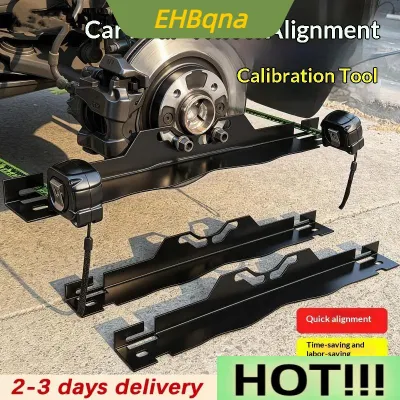
1 Lazada user ratings
he gave me 1pcs! i dont like this seller. check the other store i post
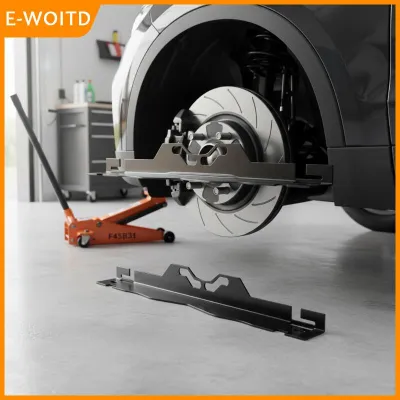
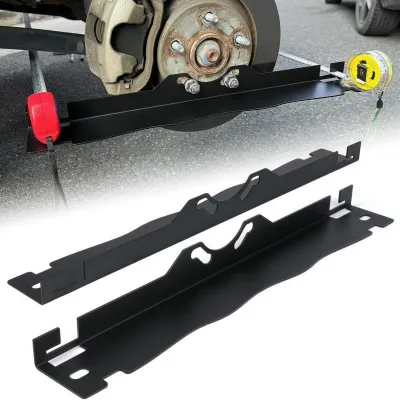
30 Lazada user ratings
good, Improves driving stability, Easy to install and use, Compact and portable design, tapos na gamitin, tago mina, private use only
👌Ease of Use:10 🔨Durability:10 thick enough 🔄Versatility:10
goods kung ano ung nakita ko sya den ung dumating
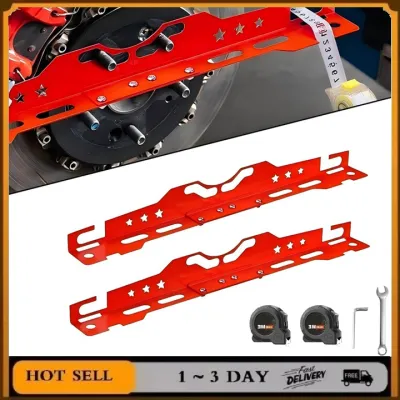
11 Lazada user ratings
Thank you, the material is very good, and I like the appearance very much.
Not aluminum and not the same as per photo
Received in good packaging
51 Lazada user ratings
Suitable for DIY car maintenance, Clear step-by-step instructions,
Ok yong appearance.... Magagamit ko to soon.
Helps adjust tire angles,
🔄Versatility:good 👍 👌
very good quality
5 Lazada user ratings
Orange color design, Accurate measurement,
51 Lazada user ratings
dapat kasi nasa good condition ang items bago nyo ideliver sa buyer at gumagana ng maayos ... nag grinder pa ako at nagwelding,naputol kasi …Read full reviewShow less
dapat kasi nasa good condition ang items bago nyo ideliver sa buyer at gumagana ng maayos ... nag grinder pa ako at nagwelding,naputol kasi pundido ang bakal konting pukpok lang naputol na sya para lang maalign ang items na binili ko ..WALA SA ALIGNMENT..
🔨Durability:legit talaga c seller, ang bilis damating High-quality materials for long-lasting use, Perfect alignment every time, magagamit t…Read full reviewShow less
🔨Durability:legit talaga c seller, ang bilis damating High-quality materials for long-lasting use, Perfect alignment every time, magagamit talaga ng anak ko sa business niya
dumating na Thanks seller maganda di pa nagamit hehe. thanks din sa Nag deliver medyo kinabahan kala nya di kukunin. hehe
Thank you IFMoto nice item not yet try but look durable.thank you sa Lazada at Kay Boss Rider
Oky nmn yng items
Prices are valid at publication and may change. Please refer to the product page for the latest price.
Software integration represents another major technological divide. Commercial machines feature integrated computers preloaded with original equipment manufacturer (OEM) alignment databases for thousands of vehicle models. They automatically guide the technician through runout compensation—a process that accounts for wheel runout and clamp misalignment—and calculate real-time adjustments. DIY tools offer no such automation. Users must manually look up their vehicle’s factory specifications, perform physical measurements, and calculate adjustments using basic geometry.
Hardware durability and calibration needs also differ significantly. Professional equipment is engineered to withstand the daily rigors of a busy workshop, though it requires periodic professional calibration to maintain its accuracy. DIY tools are simpler, lighter, and easier to store, but their accuracy depends entirely on the user’s setup. Because consumer tools lack self-correcting software, any slight bend in a toe bar or a minor calibration error in a laser level will directly translate into an inaccurate alignment.
Evaluating Professional-Grade Alignment Systems
Professional-grade alignment systems are highly sophisticated diagnostic centers designed for speed, repeatability, and comprehensive vehicle safety. Beyond measuring basic wheel angles, these systems perform full suspension diagnostics, checking for setback, track width differences, and frame alignment. Crucially, modern professional systems integrate with Advanced Driver Assistance Systems (ADAS). When a vehicle features lane-keep assist, adaptive cruise control, or collision avoidance, the forward-facing cameras and radar sensors must align perfectly with the thrust angle of the rear wheels. Professional systems allow technicians to perform these mandatory electronic calibrations.

However, the financial and spatial commitments required for these systems are substantial. A complete 3D alignment machine represents a major investment, often ranging from ₱500,000 to well over ₱1,500,000 depending on the software features and camera configurations. Beyond the equipment cost, these systems require a dedicated, perfectly level service bay or a specialized alignment lift. They also demand ongoing software subscription fees to keep vehicle databases updated, making them financially impractical for personal garages.
These systems are ideal for commercial auto repair shops, high-volume fleet maintenance facilities, and professional motorsport teams where time is money. In a commercial setting, the ability to roll a vehicle onto a lift, mount targets, and obtain a complete alignment reading in under five minutes justifies the high capital expense. For individual car owners, these machines represent a service they pay for periodically rather than equipment they should purchase.
Assessing DIY and Consumer-Grade Alignment Kits
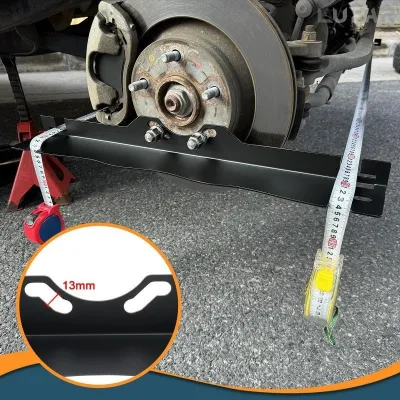
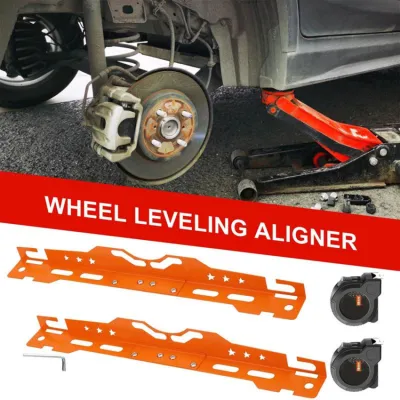
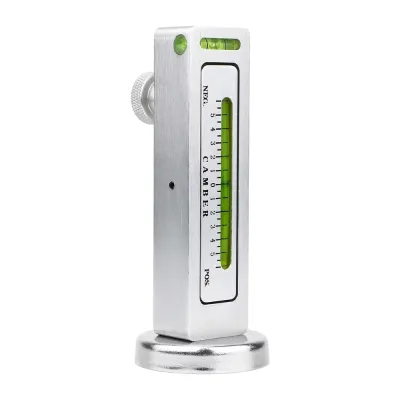
DIY and consumer-grade alignment kits offer a hands-on, highly affordable way to maintain suspension geometry without commercial machinery. The most common consumer tools include magnetic camber-caster bubble gauges that attach directly to the wheel hub, toe plates with tape measures, and laser-based string box systems. These tools allow car enthusiasts to perform routine maintenance in their own garages or make quick adjustments at the racetrack.
While these tools are highly effective for measuring static camber and toe, they have clear capability boundaries. Accurately calculating caster—the forward or backward tilt of the steering axis—requires turning the front wheels at precise angles, which is incredibly difficult to measure accurately without specialized turn plates. Furthermore, measuring complex angles like steering axis inclination (SAI) or thrust angle is virtually impossible with basic DIY kits. If a vehicle has suffered suspension damage from a severe pothole, DIY tools may fail to detect the underlying structural bent components.
Operating these tools successfully requires strict prerequisites. The absolute most critical factor is a perfectly level working surface. Because gravity-based bubble gauges and laser levels rely on flat ground, even a minor slope in a concrete garage floor will ruin your measurements. In tropical climates like the Philippines, high humidity can quickly rust steel DIY tools, so storing them in a dry environment and applying a light coat of protective oil is essential to maintain their precision. Using DIY tools also demands extreme mechanical patience, a solid understanding of suspension kinematics, and the willingness to perform repetitive trial-and-error adjustments under the vehicle.
Decision Framework: Which Tool Matches Your Skill and Budget?
To determine which alignment setup fits your needs, you must evaluate your mechanical skill level, your vehicle’s technology, and your budget.
You should choose professional alignment services or equipment if you run a commercial automotive business, manage multiple fleet vehicles, or own a modern daily driver equipped with ADAS features. If your vehicle requires steering angle sensor (SAS) resets or camera calibrations after an alignment, a professional shop with the correct diagnostic scan tools is necessary to ensure your safety systems function correctly.
You should choose a DIY alignment kit if you own older vehicles without complex electronic driver aids, maintain a dedicated track car that requires frequent geometry changes, or enjoy performing your own mechanical work. A quality set of toe plates and a magnetic camber gauge can pay for themselves after just two or three uses, making them highly cost-effective for budget-conscious enthusiasts.
Always verify your vehicle’s specific requirements before making a decision. Some modern vehicles feature multi-link suspensions that require proprietary adjustment tools or specific weight ballast in the seats during the alignment process. Refer to your vehicle’s factory service manual to confirm if specialized procedures are required.
Many enthusiasts opt for a highly effective hybrid approach. You can use simple DIY tools to perform rough baseline adjustments after replacing suspension components like control arms or tie rods. This ensures the vehicle is safe to drive to a professional alignment shop, where a technician can use a 3D machine to perform the final, high-precision tuning and electronic calibrations.
Essential Setup and Safety Requirements Before Adjusting
Performing any suspension adjustment carries significant safety responsibilities. Before attempting to measure or adjust your alignment, you must establish a safe and stable working environment.
Your workspace floor must be exceptionally flat. You can verify your garage floor’s levelness using a long carpenter’s level or a water level. If the floor has a slight slope, you can construct DIY leveling pads using heavy-duty vinyl floor tiles stacked to compensate for the unevenness.
Vehicle preparation is equally critical to ensure accurate readings. You must inflate all tires to the exact pressures specified on the vehicle’s door placard. Ensure the vehicle has a standard load, which typically means a full tank of fuel or matching the weight distribution specified in the service manual. Most importantly, thoroughly inspect the suspension and steering linkages. If your ball joints, tie rod ends, or control arm bushings are worn or damaged, any alignment adjustment you make will be useless, as the wheels will shift dynamically while driving.
You must establish clear stop conditions. If you encounter heavily seized adjustment bolts, do not apply excessive force that could shear the hardware or damage the subframe. If you notice cracked bushings, bent control arms, or if your DIY measurements yield highly erratic and conflicting readings, stop immediately. Reassemble the components and consult a qualified professional to inspect the vehicle’s structural integrity.
Frequently Asked Questions (FAQ)
Can I accurately align my wheels at home without professional tools?
Yes, you can achieve a highly accurate and safe alignment at home using basic tools, but it requires meticulous attention to detail. While you can easily set toe and camber to safe, drivable tolerances using string lines and bubble gauges, you cannot match the rapid diagnostic capabilities of a 3D commercial machine. Your success depends entirely on having a perfectly level floor and taking highly precise manual measurements.
How often should I check my wheel alignment?
For a typical daily driver, you should have your alignment checked every 10,000 to 15,000 kilometers, or at least once a year. However, you should check it immediately if you install new tires, lower or modify your suspension, hit a severe pothole, or notice uneven tire wear patterns or the steering wheel pulling to one side.

Community discussion
Share your experience or ask a question. Comments are reviewed before publication.