
When riding on Philippine roads, ensuring your protective gear meets official safety standards is the most critical step before starting your engine. For owners of an RYO full face helmet, understanding safety certifications like the local Import Commodity Clearance (ICC), the Philippine Standard (PS) mark, and regional standards like Singapore’s PSB is essential for both legal compliance and physical protection. These certifications prove that your helmet has undergone rigorous testing to withstand real-world impact forces, helping to safeguard your life during a collision.
Decoding PSB and ICC Safety Standards
Navigating the world of motorcycle helmet certifications can feel overwhelming, but the system is designed to ensure every helmet on the road meets strict quality baselines. In the Philippines, the primary regulatory body overseeing these standards is the Bureau of Philippine Standards (BPS), an agency under the Department of Trade and Industry. The BPS issues two distinct marks of conformity: the Philippine Standard (PS) quality mark and the Import Commodity Clearance (ICC) sticker.
The PS mark is typically granted to manufacturers whose production facilities undergo regular audits and consistent quality control checks, ensuring that every batch produced meets national standards. On the other hand, the ICC sticker is issued for imported shipments of helmets. Because brands like RYO are manufactured abroad and imported into the local market, each shipment must undergo inspection and sampling by the BPS to secure these holographic ICC stickers before they can be legally sold to riders.
Products mentioned in this guide

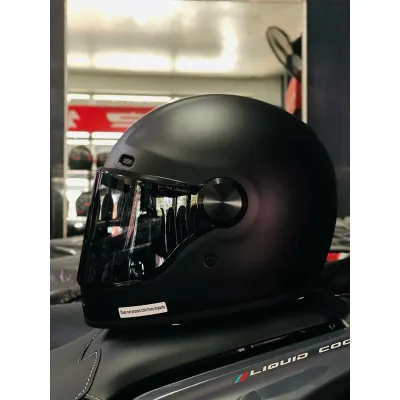
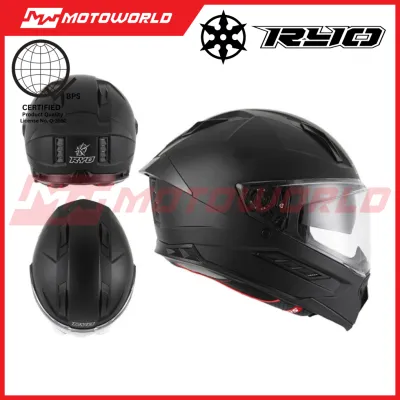
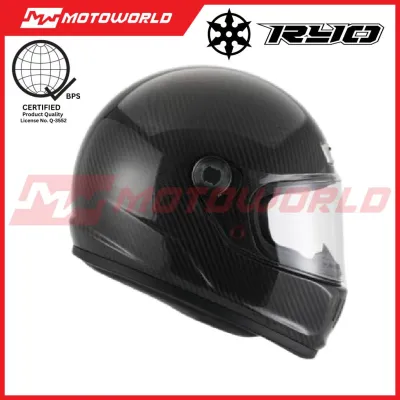
Prices are valid at publication and may change. Please refer to the product page for the latest price.
In addition to local marks, you might notice regional certifications on imported helmets, such as the PSB mark from Singapore. Issued by TÜV SÜD PSB, this certification indicates that the helmet has passed stringent testing protocols aligned with Singaporean and international safety standards. While a PSB mark is an excellent indicator of high-quality manufacturing, local regulations still require imported helmets to carry the official Philippine ICC sticker to be considered fully compliant on local roads.
To earn these certifications, helmets must pass a series of demanding laboratory evaluations. These tests generally assess impact absorption capacity, which measures how well the helmet shell and EPS liner dissipate energy during a crash. Technicians also evaluate the strength of the retention system to ensure the chinstrap remains securely fastened under extreme tension, alongside testing the helmet’s peripheral vision clearance and penetration resistance. For exact technical thresholds, testing velocities, and specific environmental conditions used during these evaluations, riders should consult the official BPS documentation or the manufacturer’s technical manual.
Why Certification Matters for Your RYO Full Face Helmet
Choosing a certified RYO full face helmet is not just a matter of personal safety; it is also a strict legal obligation under Philippine traffic laws. Republic Act No. 10054, also known as the Motorcycle Helmet Act, mandates that all motorcycle riders and passengers wear standard-compliant protective helmets while operating on any public road or highway. Riding with an uncertified helmet, or one lacking the required BPS markings, can result in traffic citations, confiscation of your driver’s license, and substantial monetary penalties.

Beyond avoiding legal trouble, a certified full-face helmet offers superior structural protection compared to open-face alternatives. The full-face design of an RYO helmet provides comprehensive coverage for your head, face, and crucial jaw area. During a motorcycle accident, statistics show that the chin and face are highly vulnerable to direct impacts. A certified full-face helmet features a reinforced chin bar designed to absorb these frontal forces, preventing severe facial trauma and dental injuries that open-face helmets cannot protect against.
Using uncertified or counterfeit riding gear exposes you to catastrophic risks on the road. Substandard helmets often use cheap plastics instead of impact-resistant polycarbonate or fiberglass shells, causing them to crack or shatter easily upon impact. Furthermore, in the event of an accident, riding with uncertified gear can complicate or even invalidate personal accident insurance claims, as insurance providers often require proof that the rider was wearing legally compliant safety equipment. Investing in a genuine, certified helmet ensures that both your physical well-being and financial protections remain intact.
How to Verify Genuine Marks on RYO Helmets
With counterfeit safety stickers occasionally circulating in the market, knowing how to inspect your RYO full face helmet for authentic markings is vital. Genuine ICC stickers are typically applied to the rear of the helmet shell, often near the base, and feature distinct security elements. These stickers are printed on holographic material that reflects light in a rainbow pattern when tilted, and they contain a unique serial number and the official BPS logo.
To verify the authenticity of your helmet’s certification, you can cross-check the printed serial number using official verification tools. The Bureau of Philippine Standards provides public registries and mobile applications that allow consumers to scan the QR code on the sticker or manually input the serial number to confirm its validity. Additionally, purchasing your helmet from authorized RYO dealers or official brand stores ensures that the product has passed through legitimate customs and clearance channels, guaranteeing the sticker’s authenticity.
When inspecting a helmet, be on the lookout for common red flags that indicate tampered or fake labels. Genuine ICC stickers are designed to destroy themselves or leave a distinct pattern if someone attempts to peel them off and transfer them to another helmet. If a sticker appears loose, has uneven edges, lacks a holographic sheen, or displays blurry, low-resolution printing, it is highly likely to be counterfeit. If you encounter any suspicious markings on a newly purchased helmet, you should immediately reject the product and report the retailer to the Department of Trade and Industry.
Frequently Asked Questions (FAQ)
Is it legal to ride with a helmet that only has international marks but no local certification?
No, it is not legally sufficient to ride on Philippine roads with a helmet that only carries international safety marks like DOT, ECE, or PSB. While these foreign certifications indicate that the helmet meets high global safety standards, local traffic laws specifically require the physical presence of a PS or ICC sticker issued by the Bureau of Philippine Standards. To comply with local regulations and avoid fines, any imported helmet must go through the official BPS clearance process to receive its local ICC sticker before use.
What should I do if the certification sticker on my helmet peels off or fades?
If the ICC or PS sticker on your helmet peels off, fades, or becomes unreadable over time, you should take steps to preserve alternative proof of compliance. Keep your original purchase receipt, the helmet’s original packaging, and any warranty cards or manufacturer documentation in a safe place, as these can serve as secondary evidence of a legitimate purchase. You should avoid buying loose replacement stickers from unauthorized online marketplaces, as these are illegal and counterfeit; instead, consult an authorized RYO retailer or contact the Bureau of Philippine Standards for official guidance on re-verification.

Community discussion
Share your experience or ask a question. Comments are reviewed before publication.