
Upgrading to a racing ignition coil does not automatically guarantee a better spark or improved engine performance for every vehicle. A truly effective spark depends heavily on your specific engine modifications, cylinder pressures, and spark plug gap requirements rather than the coil alone. For most daily-driven vehicles running factory-spec engines, the stock ignition coil is already engineered and optimized to match the original spark plug specifications, factory dwell times, and standard electrical loads.
If you are considering a universal racing ignition coil, you must verify its primary and secondary resistance, voltage output limits, and physical fitment against your specific spark plug type and vehicle wiring harness. Without these checks, installing a high-output coil on a standard setup can lead to premature wear or electrical strain.
Stock vs. Racing Ignition Coils: Core Differences
To understand which component fits your vehicle, you must look at how stock and aftermarket racing coils are designed to operate. Stock ignition coils are built to meet the exact electrical parameters of a factory engine, balancing longevity, heat dissipation, and consistent energy delivery under normal driving conditions. They are designed as direct plug-and-play units that match the vehicle’s original engine control unit (ECU) programming.
Products mentioned in this guide
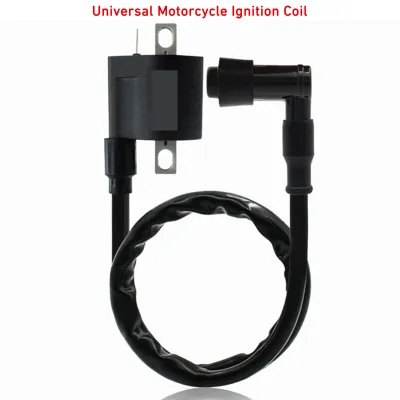
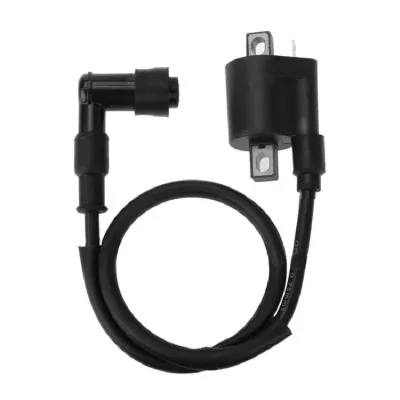
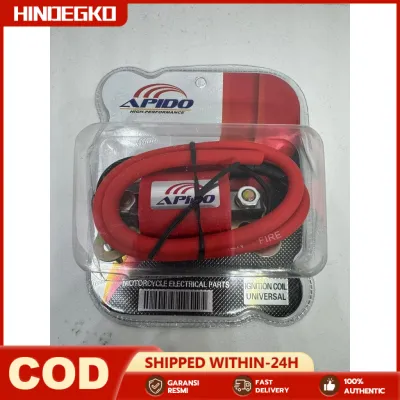
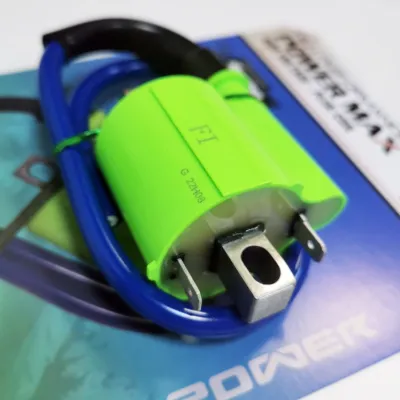
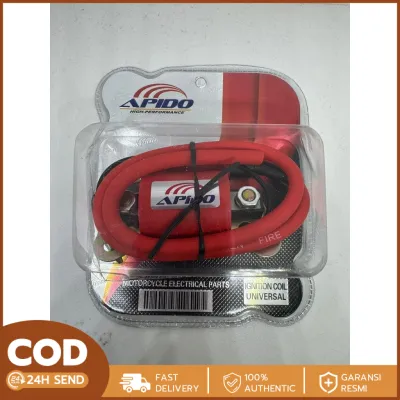
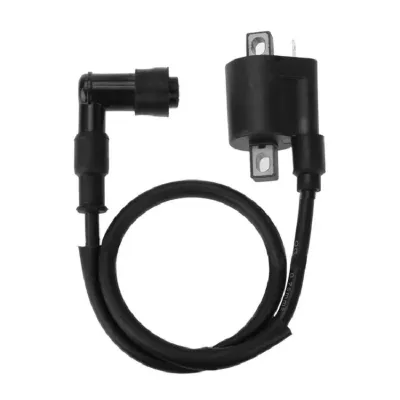
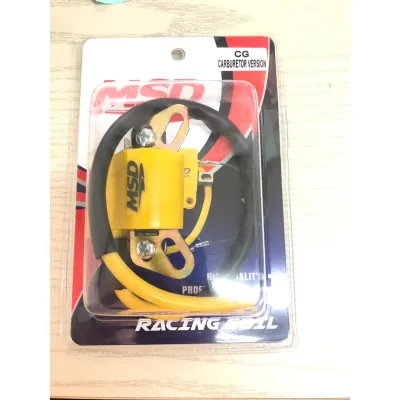
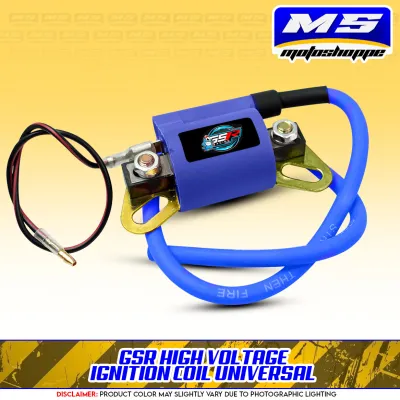
Prices are valid at publication and may change. Please refer to the product page for the latest price.
In contrast, aftermarket racing ignition coils are typically engineered with different internal winding ratios to alter the primary and secondary resistance. To determine these differences for a specific product, you should read the product labels and manufacturer data sheets carefully. Racing coils often aim to deliver higher voltage outputs or sustain energy over a wider spark plug gap, which is useful in high-rpm or high-compression environments where the air-fuel mixture is harder to ignite.
However, these design goals mean that a racing coil may have lower primary resistance, which increases the current draw through the ignition system. If your vehicle’s wiring and ECU are not designed to handle this increased current, it can lead to overheating components or damaged drivers within the engine computer. Physical fitment also differs significantly; while stock coils slide directly onto the spark plug or mount to factory brackets, universal racing coils often require custom mounting brackets, custom spark plug wires, or modified wiring harness connectors.
Matching the Coil to Your Spark Plug Type
The relationship between your ignition coil and your spark plugs is highly dependent on physics, specifically the voltage required to bridge the spark plug gap. The gap size, electrode material (such as copper, platinum, or iridium), and the pressure inside the combustion chamber dictate how much electrical energy is needed to create a reliable spark. Larger gaps and higher cylinder pressures—common in turbocharged or supercharged engines—require higher voltage to ionize the air-fuel mixture and initiate combustion.

Before changing your coil setup, you must check your spark plug manufacturer’s specifications for the required ignition energy and thermal limits. Standard copper spark plugs have different electrical resistance and wear characteristics compared to fine-wire iridium or platinum plugs. If you pair a high-output racing coil with a standard-gap spark plug without verifying the entire ignition system’s limits, the excess energy can accelerate electrode wear and degrade the plug’s internal resistor.
Furthermore, high-voltage outputs place immense stress on the insulation of your ignition system. Standard spark plug boots, ceramic insulators, and ignition wires may not be rated to contain the higher voltage of a racing coil, leading to electrical arcing. Arcing occurs when the spark jumps from the boot or wire directly to the engine block instead of traveling through the spark plug electrode, resulting in engine misfires, rough idling, and potential damage to sensitive electronic sensors.
Compatibility Checks for Universal Racing Coils
If you decide to proceed with a universal racing ignition coil, performing a thorough compatibility check is essential to prevent electrical failures. You should follow a systematic verification process before purchasing or installing any aftermarket ignition components:
- Wiring Harness and Pinout Verification: Inspect your vehicle's factory wiring diagram and compare it with the universal coil's documentation. You must verify the pinout configurations, connector types, and wire gauges to ensure the factory harness can safely deliver power to the new coil without overheating.
- ECU and Dwell Time Compatibility: The ECU controls the dwell time, which is the duration the coil's primary circuit is charged before releasing the spark. Racing coils often require specific dwell times to reach their designed energy output without overheating. You must verify whether your factory ECU can be adjusted or if it requires an aftermarket engine management system to control these parameters safely.
- Charging System Capacity: High-energy ignition coils can place a higher continuous load on your vehicle's electrical system. Inspect your alternator's output and the condition of your battery to ensure they can handle any altered electrical draw, especially during hot tropical days when accessories like the air conditioning system are running at maximum capacity.
- Physical Mounting and Environmental Protection: Universal coils do not always fit in the factory location. You must plan for secure mounting brackets that isolate the coil from excessive engine vibration and high heat. In humid or tropical climates, ensuring the connections are sealed against moisture is critical to prevent corrosion and electrical tracking.
Installation Safety and Maintenance Boundaries
Working on a vehicle’s ignition system involves high-voltage components that can deliver dangerous electrical shocks and damage sensitive vehicle electronics. Before starting any installation or inspection, always disconnect the negative battery terminal to isolate the electrical system. You must strictly follow your vehicle-specific service manual for all disassembly, torque specifications, and electrical testing procedures.
Because modifying an ignition system can alter engine calibration and emissions, you should consult a qualified automotive electrician or professional tuner. They can perform ECU remapping, verify ignition dwell times, and ensure that high-voltage wiring modifications comply with safety standards. Attempting to run high-output coils on uncalibrated systems can lead to catastrophic engine damage if the ignition timing or spark energy is incorrect.
Regular maintenance is vital to keep an upgraded or stock ignition system functioning reliably. During routine inspections, look for signs of physical degradation:
- Inspect Coil Boots: Check the rubber boots for cracking, hardening, or discoloration, which indicate heat damage or electrical leakage.
- Apply Dielectric Grease: Apply a thin layer of high-quality dielectric grease to the inside of the spark plug boot to seal out moisture and prevent the boot from sticking to the ceramic insulator.
- Check for Arcing Marks: Look for thin, carbonized lines (carbon tracking) on the ceramic portion of the spark plugs or the inside of the coil boots, which indicate that the spark is bypassing the plug.
- Monitor Wire Resistance: Use a digital multimeter to check the resistance of spark plug wires against the manufacturer's wear limits, replacing any wires that show excessive resistance.
Decision Framework: Choose Stock or Upgrade to Racing?
To help you decide on the best path for your vehicle, use this conditional framework based on your current engine state and performance goals:
Choose Stock Coils If:
- Your engine is unmodified or has basic bolt-on upgrades (such as a cold air intake or cat-back exhaust).
- You are using factory-recommended spark plug types and gap sizes.
- Your primary goals are daily reliability, fuel efficiency, and direct plug-and-play installation without the need for custom wiring or ECU tuning.
- You want to avoid spending thousands of pesos (₱) on unnecessary upgrades and added maintenance complexity.
Choose Racing Coils If:
- Your engine features significant internal modifications, such as increased compression ratios, aftermarket camshafts, or high-boost forced induction.
- You are running wider spark plug gaps or specialized racing spark plugs that explicitly require higher voltage to ignite dense fuel mixtures.
- You have an adjustable aftermarket ECU or access to a professional tuner who can calibrate dwell times and ignition maps to match the coil's specifications.
- You have upgraded the vehicle's wiring harness and charging system to support the increased electrical demand.
Verify First If:
- You are considering a "universal" kit that claims to fit all models. You must verify the primary resistance, physical mounting space, and connector compatibility before making a purchase.
- You experience ignition breakup or misfires at high RPMs on a modified engine, as this indicates your current ignition system has reached its physical limits.
Frequently Asked Questions (FAQ)
Will a racing ignition coil improve fuel economy on a stock engine?
No, installing a racing ignition coil on an otherwise stock engine will not provide a noticeable improvement in fuel economy. Fuel efficiency is determined by the engine’s air-fuel ratio, mechanical efficiency, and the factory ECU’s programming. Because a stock ignition coil already provides sufficient energy to completely burn the fuel mixture under standard conditions, adding more spark energy does not alter the combustion process. You should verify specific manufacturer claims and focus on routine maintenance, such as replacing worn spark plugs, to maintain optimal fuel economy.
Can I use a universal racing coil without tuning the ECU?
Using a universal racing coil without tuning the ECU is highly discouraged and can risk damaging your vehicle’s electrical system. Factory ECUs are programmed with specific dwell times tailored to the electrical characteristics of stock coils. If a racing coil has lower primary resistance, it may draw excessive current during the factory dwell cycle, leading to coil overheating, ignition misfires, or blown ECU drivers. You should consult a professional tuner to verify if your ECU can be calibrated to support the electrical specifications of the new coil before installation.

Community discussion
Share your experience or ask a question. Comments are reviewed before publication.