
Selecting the right SC-Project muffler for your motorcycle requires balancing your riding environment, performance goals, and local regulations. Whether you navigate the congested streets of Metro Manila daily or spend your weekends carving mountain roads, your exhaust choice directly impacts your bike’s power delivery, weight, and sound profile. Finding the ideal match involves understanding how different muffler designs, materials, and compliance levels align with your specific motorcycle model and riding habits.
A mismatched exhaust can lead to poor engine performance, legal complications, or physical fitment issues that ruin your riding experience. For instance, a track-oriented exhaust installed on a daily commuter might cause excessive noise violations, while a street-legal slip-on might not provide the high-RPM flow required for dedicated track days. By understanding the design characteristics, material properties, and intended use cases of different muffler series, you can make an informed decision that enhances your motorcycle’s capabilities without compromising reliability.
Understanding SC-Project Muffler Series and Design Types
To select the ideal exhaust, you must first understand the fundamental design categories offered by SC-Project. The most basic distinction lies between slip-on mufflers and full exhaust systems. Slip-on mufflers replace only the rear silencer portion and the immediate link pipe, leaving the stock header pipes and catalytic converter in place. This design is highly popular because it is relatively easy to install, cost-effective, and preserves the motorcycle’s original emissions compliance and low-end engine tuning.
Products mentioned in this guide
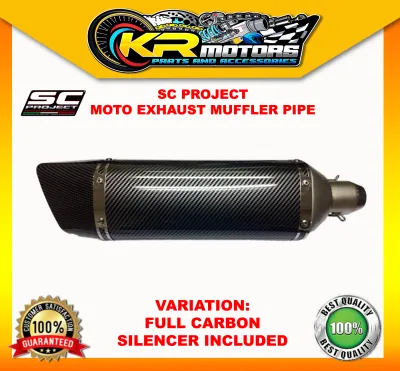
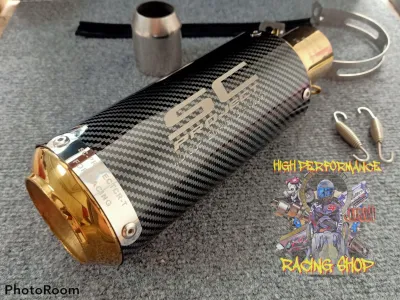
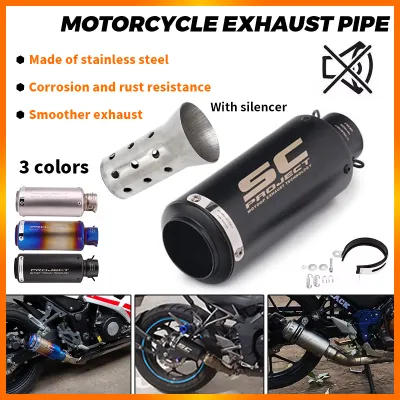
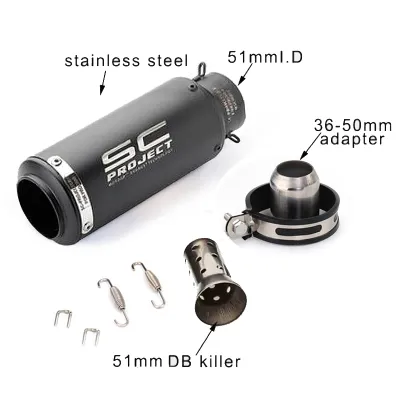
Prices are valid at publication and may change. Please refer to the product page for the latest price.
In contrast, full exhaust systems replace the entire assembly from the engine’s exhaust ports to the silencer tip. Full systems are designed to maximize gas flow and reduce weight by eliminating heavy stock components like catalytic converters and chambered resonators. However, they are significantly more complex to install, require precise engine tuning to prevent damage, and are often restricted to closed-course racing environments due to emissions and noise regulations.
The physical shape of the muffler sleeve also plays a role in both performance and aesthetics. SC-Project offers various shapes, including classic round canisters, oval designs, and modern conical or asymmetrical profiles. Round and oval sleeves generally provide larger internal volumes, which helps dampen high-frequency noise and produce a deeper, more resonant exhaust note. Conical and compact designs are often favored for sportbikes and naked motorcycles because they offer greater lean-angle clearance and a more aggressive, race-inspired appearance.
Sleeve materials are another critical consideration, with carbon fiber, titanium, and stainless steel being the primary options. Carbon fiber is exceptionally lightweight and has low heat retention, meaning it cools down quickly after riding, which is a safety benefit if you carry passengers or soft luggage. Titanium offers an outstanding strength-to-weight ratio, high corrosion resistance, and a distinct aesthetic that develops a blue-purple patina when exposed to high exhaust temperatures. Stainless steel is the heaviest of the three but provides excellent structural durability and impact resistance at a more accessible price point.
Internal baffle designs further define how a muffler behaves. Straight-through designs feature a perforated inner tube wrapped in sound-dampening packing material, allowing exhaust gases to exit with minimal restriction, which optimizes high-RPM power but increases noise levels. Baffled or chambered designs force exhaust gases through a more complex path to reduce decibel levels, making them more suitable for street use. Before purchasing, always verify specific model availability, sleeve options, and official specifications for your exact motorcycle make, model, and year on the manufacturer’s website.
Matching Muffler Models to Your Riding Style
Aligning your exhaust selection with your primary riding style ensures that the modification enhances, rather than hinders, your daily riding experience. A proper decision framework balances your personal noise tolerance, weight reduction goals, and aesthetic preferences against the practical realities of where you ride. The fundamental trade-off exists between street-legal homologated models, which prioritize compliance and balanced power delivery, and track-oriented racing variants, which focus purely on weight savings and high-RPM performance.

Daily Commuting and Street Riding
For riders who use their motorcycles for daily commuting and urban street riding, homologated (street-legal) mufflers are highly recommended. These models are designed to comply with strict noise and emissions standards, often featuring non-removable dB killers or internal baffling systems. Using a compliant exhaust ensures that your motorcycle remains respectful of residential neighborhoods and avoids attracting unwanted attention from law enforcement during your daily route.
In stop-and-go urban traffic, maintaining low-end torque and smooth power delivery is far more valuable than chasing peak high-RPM horsepower. Homologated mufflers are engineered to maintain sufficient backpressure, which helps prevent the loss of low-end torque that often occurs when installing unrestricted racing exhausts. This ensures that your motorcycle accelerates smoothly from a standstill without hesitating or stalling in heavy traffic.
Riders in the Philippines must be particularly mindful of local traffic and environmental laws regarding aftermarket exhaust modifications. The Land Transportation Office (LTO) and various local government units enforce strict regulations on exhaust noise, with limits often set around 99 decibels measured at a specified distance and engine speed. Operating a motorcycle with an excessively loud, non-compliant exhaust can lead to heavy fines, roadside citations, and the confiscation of the aftermarket part. Choosing a certified, street-legal model is the most reliable way to enjoy an upgraded exhaust note while remaining fully compliant with local laws.
Long-Distance Touring
Long-distance touring demands an exhaust system that prioritizes rider comfort, durability, and physical compatibility with touring gear. When spending hours in the saddle, a loud or high-pitched exhaust note can quickly lead to helmet resonance, rider fatigue, and even hearing damage. For touring, look for muffler models that offer moderate sound levels and a deeper, more subdued tone that blends into the background at highway cruising speeds.
Physical clearance and heat management are also critical when configuring a touring motorcycle. If you ride with a pillion passenger or use soft saddlebags and hard panniers, you must ensure that the muffler does not interfere with mounting brackets or passenger footpegs. Furthermore, the exhaust gases must exit cleanly without blowing directly onto luggage, which could melt synthetic fabrics or overheat sensitive gear. Carbon fiber or titanium sleeves are highly beneficial here due to their superior heat dissipation properties compared to traditional steel.
Touring exposes your motorcycle to a wide range of harsh environmental conditions, from sudden tropical downpours to high humidity and coastal salt air. To prevent premature wear and rust, prioritize mufflers constructed from high-grade titanium or premium stainless steel, paired with robust, corrosion-resistant mounting hardware. Ensuring that all brackets and springs are securely fitted will prevent vibrations from loosening the exhaust system over long, bumpy highway journeys.
Track and Performance Riding
For riders dedicated to closed-course track days and competitive racing, performance and weight reduction are the primary objectives. Racing-specific mufflers are engineered to maximize exhaust gas velocity by utilizing straight-through internal designs and eliminating restrictive catalytic converters. This unrestricted flow allows the engine to breathe more efficiently at high RPMs, helping you squeeze out every bit of available performance on the track.
These track-focused models typically lack internal dB killers and are constructed from ultra-lightweight materials like thin-wall titanium and carbon fiber to shed as much weight as possible from the motorcycle’s rear section. However, because they prioritize flow over sound suppression, they produce extremely high decibel levels that far exceed street-legal limits. Consequently, these models are strictly designated for racing use and are not legal for operation on public roads.
It is important to note that installing a high-flow racing exhaust or a full system significantly alters the engine’s volumetric efficiency. Without the restriction of the stock exhaust, the engine will draw in more air, leading to a lean air-fuel mixture if left unadjusted. To prevent engine overheating, valve burning, and severe internal damage, performance exhausts almost always require professional ECU remapping or the installation of an aftermarket fuel tuning module to correct the fueling parameters.
Verifying Fitment, Compatibility, and Legal Compliance
Before purchasing any aftermarket muffler, you must verify that the product is physically compatible with your specific motorcycle and legally compliant with local road regulations. Never assume that a muffler designed for a specific engine size or brand will fit another model. Even minor differences in model years, frame designs, or engine variants can result in different mounting bracket locations, link pipe diameters, and sensor thread sizes. Always cross-reference the manufacturer’s official fitment chart using your exact motorcycle year, make, model, and engine variant.
Understanding the installation differences between slip-on mufflers and full exhaust systems is also essential for a successful upgrade. A slip-on installation is generally straightforward, as it retains the stock header pipes, catalytic converter, and oxygen (O2) sensors. This means you rarely have to worry about sensor relocation or complex routing. A full exhaust system, however, requires removing the entire stock assembly, which involves replacing exhaust port gaskets, carefully routing headers around the radiator and oil filter, and reinstalling or relocating delicate O2 sensors.
For street riders, verifying legal compliance is just as important as physical fitment. Many street-legal SC-Project mufflers are delivered with official homologation certificates, such as European E-mark certification, which is laser-engraved directly onto the muffler body. These products often include a physical certification card that matches the engraving. It is highly recommended to keep this certification card stored safely with your motorcycle’s registration documents, as it serves as official proof of compliance if you are stopped by traffic enforcers or during routine vehicle inspections.
Finally, avoid the temptation of universal-fit mufflers or cheap adapter kits. Genuine SC-Project mufflers are engineered with model-specific link pipes and mounting brackets designed to align perfectly with your bike’s original mounting points. Attempting to force a mismatched exhaust onto your motorcycle using universal brackets or flexible piping can create severe exhaust leaks, put undue stress on the engine exhaust studs, and potentially damage your motorcycle’s swingarm or bodywork.
Installation, Tuning, and Maintenance Boundaries
Proper installation and regular maintenance are vital to ensuring your aftermarket exhaust performs reliably without causing damage to your motorcycle. Before beginning any installation work, always consult your motorcycle’s official service manual alongside the exhaust manufacturer’s step-by-step instructions. Ensure you have the proper tools on hand, including a calibrated torque wrench to avoid over-tightening fasteners, spring puller tools for secure spring installation, and high-temperature anti-seize compound for the exhaust joints and sensor threads.
Establishing clear tuning boundaries is critical for engine longevity. While a simple slip-on muffler typically runs safely on the stock ECU map because the catalytic converter remains intact, any modification that removes the catalytic converter, alters the header pipes, or modifies the air intake system requires professional ECU tuning. Running a motorcycle with an uncalibrated air-fuel mixture can lead to lean running conditions, characterized by engine popping on deceleration, high operating temperatures, and eventual engine failure. Always consult a professional tuning specialist to determine if your specific setup requires a custom fuel map.
Maintaining your exhaust system is especially important in tropical climates where high humidity and heavy rain can accelerate wear. Clean carbon fiber or titanium sleeves only when the exhaust is completely cool to the touch. Use mild dish soap, warm water, and a soft microfiber cloth to gently remove road grime, tar, and dirt. Never use abrasive scrubbing pads, steel wool, or harsh chemical solvents like acetone, as these will permanently damage the protective clear coat on carbon fiber or scratch the delicate finish of titanium.
Always be prepared to stop the installation or operation if you encounter unexpected issues. If you find that the mounting brackets do not align naturally without forcing them, if you detect exhaust gas leaking from the joints after tightening, or if an engine warning light appears on your dashboard after starting the bike, do not attempt to ride. These are clear stop conditions that require immediate attention. Turn off the engine and consult a qualified professional mechanic to inspect the system and correct the issue before taking the motorcycle back on the road.
Frequently Asked Questions (FAQ)
Do I need to remap my ECU if I only install a slip-on muffler?
In most cases, installing a slip-on muffler does not require ECU remapping because the stock catalytic converter and primary exhaust restrictions remain in place, keeping the engine’s air-fuel ratio within the stock ECU’s self-adjusting parameters. However, if you combine the slip-on with a high-flow aftermarket air filter, or if you notice flat spots in power delivery, consulting a tuning professional is highly recommended. Always check the specific product manual for manufacturer recommendations.
How can I clean and maintain a carbon fiber SC-Project muffler?
To maintain carbon fiber, wash it regularly with mild soap and lukewarm water using a clean microfiber cloth. Avoid spraying high-pressure water directly at the exhaust seams or inlet/outlet joints, as this can degrade the internal packing material. Never use abrasive cleaners or harsh solvents like acetone. If desired, apply a high-quality, high-temperature protective wax or spray specifically formulated and approved by the manufacturer for carbon fiber surfaces to protect against UV degradation.
Are SC-Project mufflers covered by a warranty?
Yes, SC-Project mufflers typically come with a manufacturer’s warranty, but the exact terms, duration, and coverage depend on your region and whether the product was purchased from an authorized dealer. The warranty generally covers manufacturing defects in materials and workmanship but excludes damage from improper installation, track use (for street-legal models), accidents, or lack of maintenance. Keep your original proof of purchase and warranty card safe, and consult the official SC-Project website or your local authorized distributor for specific claim procedures.

Community discussion
Share your experience or ask a question. Comments are reviewed before publication.