
Selecting the right engine oil for your Ford Ranger is one of the most critical maintenance decisions you can make to ensure long-term engine health, optimal fuel efficiency, and reliable performance. With the demanding driving conditions in the Philippines—ranging from intense tropical heat and high humidity to heavy stop-and-go traffic in urban centers—your engine oil has to work exceptionally hard. While Shell, Castrol, and Motul are all highly respected global brands, the best choice for your specific pickup depends on your engine generation, your typical driving environment, and how well a particular oil matches Ford’s strict factory specifications. Rather than looking for a single universal winner, the key is finding the formulation that aligns with your vehicle’s mechanical requirements and your daily usage patterns.
Understanding Your Ford Ranger's Oil Requirements
Before comparing the marketing claims of major oil brands, you must establish the baseline technical requirements of your Ford Ranger’s engine. Ford engines are highly sensitive to oil viscosity and chemical composition, meaning that using the wrong specification can lead to accelerated wear, increased fuel consumption, or even voided warranties. Your primary source of truth is always your vehicle’s owner’s manual, which outlines the exact viscosity grade, oil capacity, and manufacturer certification standards required for your specific model year and engine type.
Because engine oil is a critical automotive fluid, always verify your vehicle’s model year, engine type, and exact manufacturer specifications before purchase; never infer compatibility from a generic category term. For any fluid replacement or mechanical work, refer to your original vehicle documentation or consult a qualified professional to ensure safety and road legality. Additionally, ensure that any care products or engine flushes are used strictly according to their label-authorized instructions, as unapproved chemical additives can damage internal engine seals and sensors.
Products mentioned in this guide
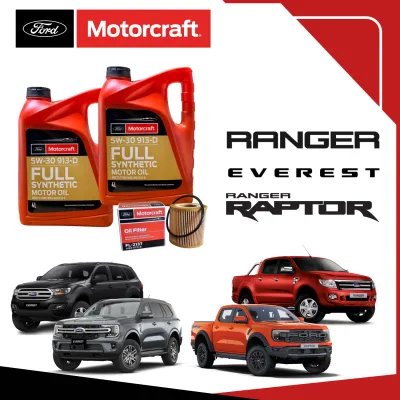
![[2012 - 2026 2.2L / 2.0L] Ford Ranger Change Oil Package - [2016 - 2026 2.2L / 2.0L] Ford Everest Change Oil Package - Genuine Motorcraft Auto Parts - 8L Fully Synthetic 5W30](https://img.lazcdn.com/g/p/5f221f18e7bba50900c7172e0e912565.jpg_400x400q80.jpg_.webp)
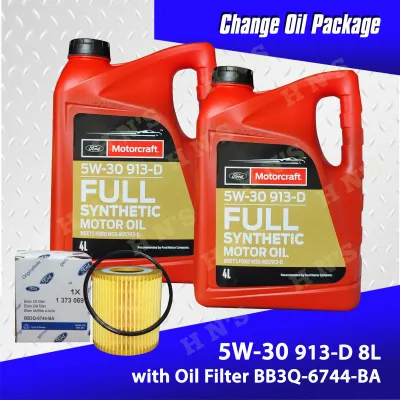
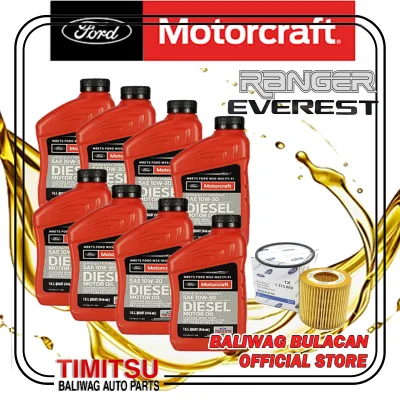
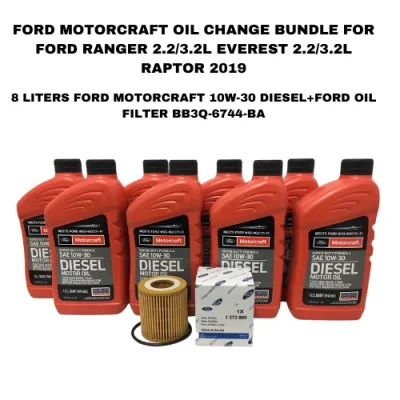
![[2012 - 2022] Ford Ranger Change Oil Package - [2016 - 2022] Ford Everest Change Oil Package - Totachi Fully Synthetic Motor Oil 5W30 (8 Liters) + Motorcraft Oil Filter](https://img.lazcdn.com/g/p/453348b8a23072baaf355cd4a2299f92.jpg_400x400q80.jpg_.webp)
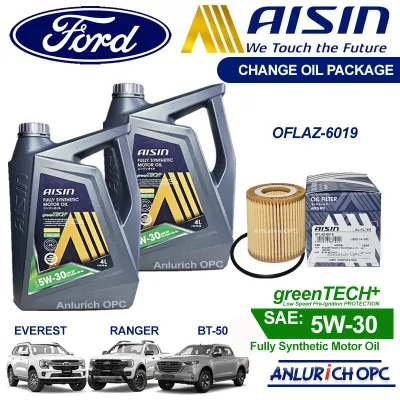
Prices are valid at publication and may change. Please refer to the product page for the latest price.
The Ford Ranger has been offered with several engine options over the years, each with distinct lubrication needs. For instance, older models equipped with the 2.2-liter or 3.2-liter Duratorq diesel engines typically require different oil specifications compared to newer models running the 2.0-liter Single-Turbo or Bi-Turbo EcoBlue diesel engines. A critical factor for modern diesel Rangers is the presence of a Diesel Particulate Filter (DPF) in the exhaust system. Engines with DPFs require low-SAPS (Sulphated Ash, Phosphorus, and Sulphur) oils to prevent the filter from becoming clogged with ash deposits. Using a standard oil not rated for DPF compatibility can lead to premature exhaust system failures and costly repairs.
To ensure compatibility, you must look beyond the viscosity rating (such as 5W-30 or 0W-20) on the front of the bottle and inspect the back label for specific Ford manufacturer approvals. Ford uses its own engineering standards, often designated by codes starting with “WSS” (for example, Ford WSS-M2C913-D for older Duratorq engines, or Ford WSS-M2C950-A for newer EcoBlue engines). These standards guarantee that the oil has been formulated to protect the specific metallurgy, timing belts, and emissions systems used in Ford powerplants. Never assume an oil is suitable simply because it shares the same viscosity grade; always verify that the exact WSS specification is printed on the product label.
Additionally, pay close attention to the oil capacity of your engine. A standard oil change for a Ford Ranger often requires between 6.5 to 9.0 liters of oil, depending on the engine displacement and whether the oil filter is being replaced at the same time. Knowing your exact capacity prevents you from under-filling your engine—which can cause severe oil starvation—or over-filling it, which can lead to oil foaming, increased pressure, and damaged seals. Always consult your manual or a certified technician to confirm these specifications before purchasing any oil or booking a service package.
Brand Positioning and Core Technology Focus
Each of the three major lubricant manufacturers—Shell, Castrol, and Motul—approaches engine protection with a distinct technological philosophy and market positioning. Understanding these core differences helps you align their product strengths with your vehicle’s operational demands.

Shell is widely recognized for its focus on engine cleanliness and active deposit control. A cornerstone of Shell’s premium synthetic lineup is its proprietary gas-to-liquid technology, which refines natural gas into a crystal-clear base oil. Because this base oil contains fewer impurities than traditional crude-derived oils, it allows for highly stable formulations that resist thermal breakdown. Shell designs its oils to actively lock away dirt, soot, and combustion byproducts, preventing them from forming harmful sludge on critical engine components. For Ford Ranger owners, this emphasis on cleanliness is particularly beneficial in maintaining consistent fuel economy and preserving turbocharger efficiency over long service intervals.
Castrol positions its technology around wear reduction and continuous surface protection, especially during high-stress driving phases. One of Castrol’s key technological focuses is addressing the vulnerability of engines during cold starts and stop-and-go driving. Their formulations often feature specialized molecules that cling to metal surfaces even when the engine is turned off, creating an extra layer of protection from the moment you turn the key. Additionally, Castrol’s premium synthetic lines utilize adaptive strength additives that physically transform under extreme pressure, reducing friction and preventing metal-on-metal contact. This makes Castrol a popular choice for drivers seeking robust daily protection against the wear and tear of urban commuting.
Motul occupies a premium, performance-oriented position in the lubricant market, with a strong heritage in motorsports and heavy-duty applications. While they offer standard passenger vehicle oils, Motul is highly regarded for its expertise in synthetic ester technology. Esters are polar molecules that naturally bond to metal surfaces, providing exceptional shear resistance and maintaining a stable oil film even under extreme thermal stress. This high-temperature stability is highly advantageous for turbocharged engines operating under heavy loads. Motul’s product lines, such as their specialized vehicle-specific formulations, are engineered to withstand severe mechanical stress, making them a preferred option for enthusiasts who demand maximum durability from their lubricants.
Matching Oil Brands to Your Driving Conditions
The ideal engine oil for your Ford Ranger is highly dependent on how and where you drive. The Philippines presents a unique set of environmental and operational challenges, from the suffocating, stop-and-go traffic of EDSA to the steep, demanding climbs of Baguio, alongside high ambient humidity and seasonal flooding. Matching your oil selection to these specific driving conditions ensures your engine remains protected where it needs it most.
For Rangers that spend most of their time navigating urban traffic, short commutes, and frequent idling, the primary engine threats are low-temperature sludge formation and cold-start wear. In these stop-and-go scenarios, the engine rarely reaches its optimal operating temperature for extended periods, which can lead to moisture accumulation and fuel dilution in the oil. If this describes your daily commute, prioritizing an oil with excellent cleaning properties and active cold-start protection is essential. Formulations that focus on keeping soot suspended and maintaining a strong protective film at low speeds will help prevent premature wear on your timing chain and valve train.
If you use your Ford Ranger as a true workhorse—frequently hauling heavy payloads, towing trailers, or tackling rugged off-road trails in rural provinces—your engine operates under significantly higher thermal and mechanical stress. High-load driving in tropical heat causes oil temperatures to spike, which can thin out the lubricant film and lead to accelerated wear. For these demanding conditions, you should prioritize an oil with exceptional high-temperature stability and high shear resistance. An oil that maintains its viscosity under extreme heat ensures that the turbocharger bearings and cylinder walls remain fully lubricated, preventing metal-on-metal friction during steep climbs or heavy towing.
High-mileage Ford Rangers require a different lubrication strategy altogether. As an engine ages, internal seals can dry out, shrink, and become brittle, leading to minor oil leaks or oil consumption. Furthermore, gradual wear on piston rings and cylinder walls can result in increased blow-by gases entering the crankcase. If your Ranger has accumulated significant mileage, look for specialized high-mileage formulations. These oils often contain seal conditioners that help restore elasticity to aging gaskets, as well as slightly higher viscosity profiles within the approved range to help seal internal clearances and reduce oil consumption.
Evaluating Ford Ranger Change Oil Packages
When shopping for a ford ranger change oil package in the Philippines, you will find a wide variety of options ranging from official dealership services to independent quick-lube centers and specialized 4×4 shops. Evaluating these packages requires looking closely at what is actually included in the advertised price to ensure you are getting genuine parts and proper service.
A standard change oil package should explicitly state the volume of oil included. Because the Ford Ranger’s diesel engines often require a large volume of oil—frequently between 7 to 9 liters—many standard packages that only include 4 or 5 liters will require you to pay extra for the additional bottles. Always confirm the exact volume of oil provided in the package price to avoid unexpected costs at the counter. Furthermore, verify the brand and specific product line being used; a package advertised with a premium brand name might use their entry-level mineral or semi-synthetic oil rather than the fully synthetic formulation your engine requires.
The quality of the oil filter is another critical component of any service package. The oil filter is responsible for trapping soot, metal particles, and debris before they can recirculate through your engine. When purchasing a package, ask whether it includes an Original Equipment Manufacturer (OEM) Ford filter or a reputable aftermarket alternative. Low-quality, unbranded filters can collapse under pressure or fail to filter efficiently, risking severe engine damage. If you are opting for an independent shop package, it is often worth requesting an upgrade to an OEM filter or a high-quality, certified aftermarket filter to ensure reliable filtration throughout your service interval.
Pricing for Ford Ranger change oil packages can vary significantly. Dealership packages are typically the most expensive, often ranging from ₱6,000 to over ₱12,000, but they offer the assurance of factory-trained technicians, specialized diagnostic tools, and guaranteed OEM parts. Independent shops and quick-lube centers often offer more competitive packages, sometimes ranging from ₱4,000 to ₱8,000 depending on whether you choose semi-synthetic or premium fully synthetic oil. When comparing these options, watch out for hidden costs such as environmental disposal fees for the used oil, shop supplies charges, or labor surcharges for skid plate removal, which is often required to access the oil drain plug and filter on a Ford Ranger.
Decision Framework: Which Brand Should You Choose?
Selecting between Shell, Castrol, and Motul ultimately comes down to aligning their specific product strengths with your driving habits, budget, and vehicle requirements. Use the following framework to guide your decision:
You should consider Shell if your primary goals are maintaining engine cleanliness, preventing long-term sludge buildup, and optimizing fuel efficiency during daily driving. If your Ford Ranger is primarily used for daily commuting, family trips, and highway driving, Shell’s focus on active deposit control and clean-running base oils provides an excellent balance of protection and efficiency. It is a highly reliable choice for keeping your engine running smoothly under normal operating conditions.
You should consider Castrol if you want robust, continuous wear protection against the harsh realities of stop-and-go traffic and frequent short trips. If your daily routine involves navigating congested city streets where your engine is subjected to constant idling and rapid temperature fluctuations, Castrol’s emphasis on surface-clinging molecules and adaptive strength additives provides critical protection during these high-wear driving phases.
You should consider Motul if you demand premium thermal stability for heavy-duty performance, off-roading, or towing. If you frequently load your Ranger to its capacity, drive through challenging terrain, or have modified your vehicle with heavy accessories like steel bumpers and larger tires, Motul’s high-temperature shear resistance and advanced synthetic formulations offer the extra margin of safety your engine needs under extreme stress.
Regardless of which brand you lean toward, the absolute first step before making any purchase is to verify that the specific oil bottle carries the exact Ford WSS approval code required by your Ranger’s owner’s manual. Brand reputation is secondary to chemical compatibility; even the most premium oil can cause issues if it does not meet the specific engineering standards set by Ford for your engine generation.
Frequently Asked Questions (FAQ)
Can I mix different engine oil brands in my Ford Ranger?
While mixing different brands of engine oil of the same viscosity and specification will not cause immediate engine failure in an emergency, it is highly discouraged as a standard practice. Different lubricant manufacturers use proprietary additive packages that are carefully balanced to work together. Mixing brands can disrupt this chemical balance, potentially reducing the oil’s overall effectiveness, anti-wear properties, or lifespan. If you find your oil level is low and need to top up, it is acceptable to add a different brand of the correct viscosity to reach a safe operating level. However, you should plan to perform a complete oil and filter change as soon as possible to restore optimal protection.
How often should I change the oil in my Ford Ranger?
The ideal oil change interval for your Ford Ranger depends on your driving conditions and the type of oil used. Under normal driving conditions with fully synthetic oil, Ford typically recommends service intervals of every 10,000 kilometers or every 6 to 12 months, whichever comes first. However, if you frequently drive in severe conditions—such as heavy stop-and-go traffic, dusty off-road environments, extremely hot tropical weather, or frequent short trips under 10 kilometers—you should shorten this interval to every 5,000 to 7,500 kilometers. Many modern Rangers are equipped with an Intelligent Oil Life Monitor (IOLM) that calculates oil degradation based on actual driving patterns; always pay attention to this system and schedule a service when prompted, regardless of arbitrary mileage rules.

Community discussion
Share your experience or ask a question. Comments are reviewed before publication.