
Deciding whether to replace your ignition coils and spark plugs at the same time depends heavily on your vehicle’s mileage, running condition, and maintenance history. While these two components work in tandem to ignite the fuel-air mixture, they wear out at different rates. In tropical climates like the Philippines, where high humidity, heavy monsoon rains, and intense stop-and-go traffic put extra stress on electrical systems, understanding when to swap both parts can save you from unexpected breakdowns.
For many vehicle owners and motorcycle enthusiasts upgrading to performance parts like a UMA ignition coil, the temptation is to replace only the component that has failed. However, pairing a brand-new, high-output ignition coil with an old, degraded spark plug can quickly compromise your engine’s efficiency. By evaluating the physical state of your ignition system and calculating the labor involved in accessing these parts, you can make a practical, cost-effective decision.
Understanding the Connection Between Ignition Coils and Spark Plugs
To make an informed maintenance decision, it helps to understand how these two components interact within your vehicle’s electrical system. The ignition coil acts as a compact transformer. It takes the relatively low voltage supplied by your vehicle’s battery and steps it up to the tens of thousands of volts required to bridge the gap at the tip of the spark plug. This high-voltage current travels from the coil, through the spark plug boot, and down the center electrode to create the spark that ignites the fuel-air mixture.
Products mentioned in this guide
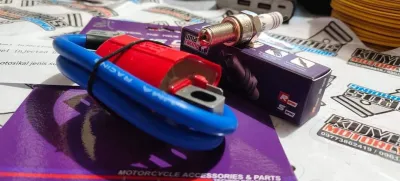
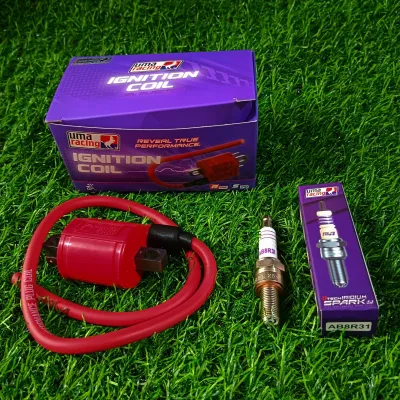
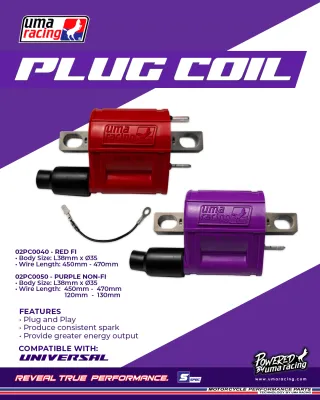
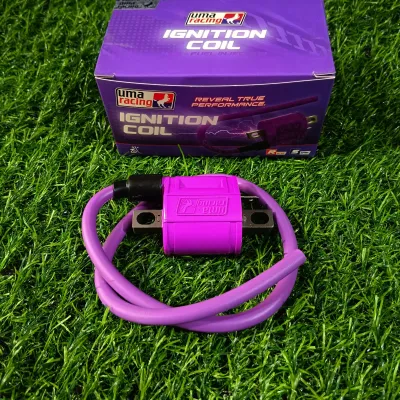
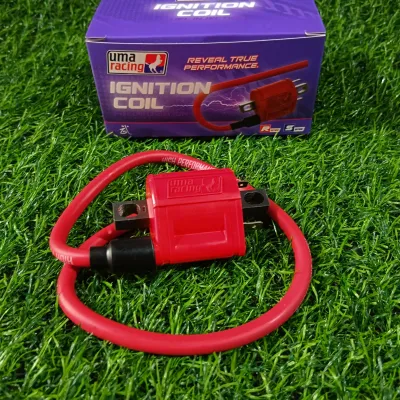
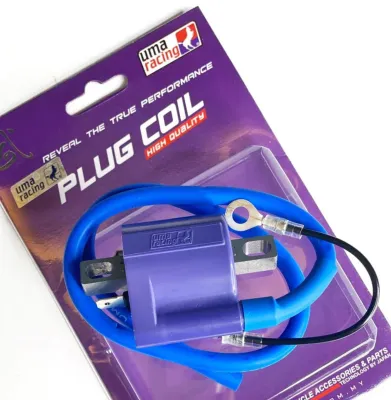
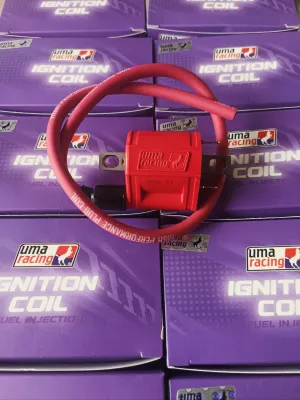
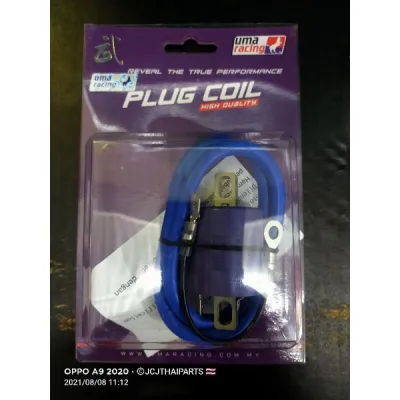
Prices are valid at publication and may change. Please refer to the product page for the latest price.
Because they are physically and electrically linked, the condition of one directly dictates the operational lifespan of the other. As a spark plug ages, the constant electrical arcing gradually erodes its metal electrodes, causing the gap between them to widen. A wider gap requires significantly more voltage to produce a spark. To meet this demand, the ignition coil must work much harder and run hotter to generate the necessary electrical charge.
Over time, this increased workload degrades the internal insulation of the ignition coil. If you install a high-performance component, such as a UMA ignition coil, alongside a worn-out spark plug, the new coil will immediately be subjected to excessive electrical resistance. This thermal and electrical stress can cause the new coil’s internal windings to short-circuit, leading to premature failure and wasting your investment in upgraded hardware.
When to Replace Both Components Together
Simultaneous replacement is highly recommended when both components have reached or exceeded their manufacturer-specified service intervals. Standard copper spark plugs typically require replacement much sooner than high-end iridium plugs or robust ignition coils. However, if your vehicle has accumulated significant mileage without a system refresh, replacing both parts at the same time ensures a clean slate for your ignition system, restoring optimal fuel economy and throttle response.

Another clear indicator for a complete system overhaul is the presence of multiple cylinder misfires or widespread ignition degradation. If your diagnostic scanner reveals misfire codes across several cylinders, it usually points to systemic wear rather than an isolated component failure. In the humid, tropical environment of the Philippines, moisture and heat acceleration can degrade the rubber boots of multiple ignition coils simultaneously, making a complete set replacement the most reliable path forward.
Labor costs and accessibility should also guide your decision. In many modern cars, accessing these parts requires removing the intake manifold and vacuum lines. On underbone motorcycles and scooters, you must remove extensive plastic fairings. Since a mechanic charges for the disassembly time, paying for this labor once to replace both components is far more economical than paying twice when the older part fails later.
When to Replace Them Separately
There are several scenarios where replacing only one of the components is entirely logical, safe, and budget-friendly. If you recently installed high-quality iridium or platinum spark plugs, they are designed to last for tens of thousands of kilometers. If an ignition coil fails prematurely during this window due to an isolated manufacturing defect or localized water damage, there is no practical reason to discard perfectly good, low-mileage spark plugs.
An isolated ignition coil failure that has been verified through proper diagnostic testing also justifies a single-component replacement. For example, if a single coil boot cracks or suffers from water intrusion after driving through a flooded street, replacing only that specific coil will restore your engine’s performance. This targeted approach allows you to address the immediate issue without spending extra money on parts that still have plenty of service life remaining.
Managing your maintenance budget is another valid reason to replace parts separately. If you are facing unexpected repair costs, prioritizing the immediate faulty component allows you to get your vehicle back on the road safely. You can budget a few thousand pesos (₱) for the remaining components and schedule their replacement for a later date, provided you monitor your engine’s performance closely for any signs of recurring misfires or rough idling.
Diagnostic Steps Before Making Your Decision
Before purchasing replacement parts, perform a systematic diagnostic check to identify the exact cause of your engine’s performance issues. Working on vehicle electrical systems carries safety risks. Ensure the engine is cool, the ignition is off, and the battery is disconnected before handling ignition components. Refer to your vehicle’s service manual for safety instructions, component locations, and torque specifications, or consult a qualified professional.
Begin your diagnosis by connecting an OBD2 scanner to your vehicle’s diagnostic port to read any stored trouble codes. Misfire codes typically range from P0300 (random or multiple cylinder misfire) to P0301 through P0308, which pinpoint the specific cylinder experiencing the issue. Identifying the affected cylinder narrows down your search and allows you to focus your physical inspection on a targeted area.
Next, visually inspect the ignition coils and spark plugs. Remove the coil from the suspect cylinder and check the housing and rubber boot for cracks, discoloration, or carbon tracking (fine, black lines resembling pencil marks). Look down into the spark plug well for engine oil or water, as a leaking valve cover gasket can submerge the boot and cause an electrical short.
To isolate the issue, perform a swap test. If your scanner indicates a misfire on cylinder one, swap its ignition coil with the coil from cylinder two, keeping the spark plugs in place. Clear the codes and run the engine. If the misfire shifts to cylinder two, the coil is faulty; if it remains on cylinder one, the issue lies with the spark plug, fuel injector, or compression.
Finally, consult your vehicle’s owner’s manual or official workshop documentation to verify the recommended maintenance schedules and exact part specifications. Ensure any replacement spark plugs match the required heat range, thread reach, and electrode gap specified by the manufacturer. If you are upgrading to an aftermarket option like a UMA ignition coil, verify its compatibility with your specific vehicle model, year, and electrical system interface to prevent electrical mismatch or mounting issues.
Frequently Asked Questions (FAQ)
Can a bad spark plug ruin a new ignition coil?
Yes, a worn or damaged spark plug can quickly ruin a newly installed ignition coil. When a spark plug’s electrode gap becomes too wide due to wear, or if the plug is fouled with carbon or oil, its electrical resistance increases dramatically. This forces the new ignition coil to output a much higher voltage to jump the gap, generating excessive internal heat that breaks down the coil’s protective insulation and leads to premature failure.
Do I need to replace all ignition coils if only one fails?
You do not strictly need to replace all ignition coils if only one fails, but it is often highly recommended if the coils are old or have high mileage. Because all the coils in your engine are subjected to the same operating conditions, heat cycles, and vibration, the remaining coils are likely nearing the end of their operational lifespan. Replacing them as a complete set prevents the inconvenience of having other coils fail one by one in the near future.
Are aftermarket ignition coils reliable for daily driving?
Aftermarket ignition coils, including performance-oriented options like a UMA ignition coil, can be highly reliable for daily driving if they are sourced from reputable manufacturers and verified for your specific vehicle. When choosing aftermarket parts, always verify that the physical dimensions, mounting positions, and electrical connector interfaces match your original equipment specifications. Be sure to purchase from authorized dealers or established online marketplaces to avoid counterfeit products, and check the manufacturer’s warranty terms to ensure long-term reliability.

Community discussion
Share your experience or ask a question. Comments are reviewed before publication.