
A failing ignition coil in your Ford Territory can quickly turn a smooth drive into a stressful, shuddering experience. Because the ignition coil is responsible for transforming the battery’s low voltage into the high-voltage spark needed to ignite the fuel-air mixture in the cylinders, any drop in its performance directly impacts how your engine runs. In the tropical climate of the Philippines, where intense engine bay heat meets high humidity and heavy monsoon rains, electrical components like ignition coils are subjected to harsh operating conditions that can accelerate their wear. Identifying the warning signs early allows you to address the issue before it escalates into costly catalytic converter damage or leaves you stranded in stop-and-go traffic.
Common Symptoms of a Failing Ignition Coil
One of the most immediate indicators of a failing ignition coil is an illuminated check engine light on your dashboard, often accompanied by a distinct engine misfire. When a coil fails to deliver a consistent spark, the fuel in that specific cylinder does not ignite properly, causing the engine to stumble or hesitate during acceleration. The vehicle’s engine control unit (ECU) detects this irregularity and triggers a warning light, which may flash under heavy load to signal a severe misfire that requires immediate attention.
You are likely to notice a significant loss of engine smoothness when your vehicle is idling. A failing coil often causes a rough idle, characterized by pronounced cabin vibrations, an erratic tachometer needle, or a sputtering sound from the exhaust. This symptom is particularly noticeable when you are idling at a red light with the air conditioning running on high, as the extra load on the engine makes it harder for a weak cylinder to keep up.
Products mentioned in this guide
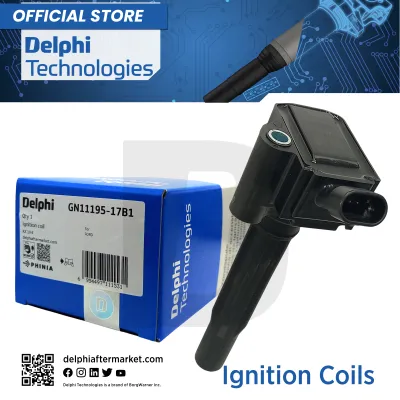
Prices are valid at publication and may change. Please refer to the product page for the latest price.
A sudden, unexplained drop in fuel economy is another common sign of ignition coil degradation. Because a weak coil cannot burn fuel efficiently, the engine has to consume more fuel to maintain its normal power output, resulting in wasted petrol and higher running costs. Additionally, you might experience difficulty starting the engine, especially on damp mornings or after heavy downpours, as moisture can seep into microscopic cracks in the coil casing and disrupt the electrical path.
Ignition Coil vs. Spark Plug: How to Tell the Difference
Because ignition coils and spark plugs work closely together to create combustion, their failure symptoms overlap almost entirely. Both issues can cause misfires, rough idling, sluggish acceleration, and poor fuel efficiency, making it easy to misdiagnose a bad spark plug as a faulty ignition coil or vice versa. Purchasing a replacement coil without verifying which component is actually at fault can lead to unnecessary expenses.

When troubleshooting ignition issues, checking the condition of the spark plugs is always the recommended first step. Spark plugs are standard wear-and-tear items with shorter service intervals than ignition coils, meaning they are much more likely to reach the end of their lifespan first. If your spark plugs are old, fouled with carbon, or have an incorrect gap, replacing them may completely resolve the misfire symptoms without the need to buy a new ignition coil.
A physical inspection can reveal a lot about a spark plug, such as oil fouling, worn electrodes, or heavy carbon deposits, which clearly indicate it needs to be replaced. In contrast, an ignition coil can suffer from internal electrical breakdown or insulation failure while looking completely pristine on the outside. Relying solely on visual appearance to judge a coil’s health is unreliable, which is why systematic testing is essential before making a purchase decision.
Safe Diagnostic Steps You Can Take at Home
To narrow down the source of the problem safely, you can connect an OBD2 scanner to your vehicle’s diagnostic port under the dashboard. A scanner will read the diagnostic trouble codes (DTCs) stored in the ECU, which typically point to the specific cylinder experiencing the misfire (such as code P0301 for cylinder 1, P0302 for cylinder 2, and so on). Pinpointing the affected cylinder is the crucial first step in determining whether a single coil is failing.
Once you know which cylinder is misbehaving, perform a careful visual inspection of the ignition coil housing and its rubber boot. Look closely for hairline cracks, burn marks, or discoloration on the plastic body, which indicate electrical arcing. Additionally, check the spark plug well for any signs of engine oil pooling; a leaking valve cover gasket can submerge the coil boot in oil, causing the electrical charge to short out before it reaches the spark plug.
If you want to confirm whether the coil itself is faulty, you can perform a “swap test” if you have basic mechanical experience and the correct tools. With the engine completely switched off and the keys removed, swap the suspected bad coil with a known working coil from an adjacent cylinder, then clear the trouble codes and run the engine. If the misfire code migrates to the new cylinder (for example, changing from P0301 to P0302), you have definitive proof that the ignition coil is defective and needs replacement. Always exercise extreme caution, as ignition systems operate under very high voltage; if you are uncomfortable handling electrical components, consult a professional technician.
When to Seek Professional Help or Replace the Coil
Ignoring a failing ignition coil and continuing to drive can lead to severe mechanical consequences. When a cylinder misfires, unburned fuel is pushed out of the combustion chamber and into the exhaust system, where it can quickly overheat and melt the delicate internal structure of the catalytic converter. Replacing a catalytic converter is significantly more expensive than replacing a single ignition coil, making prompt repairs highly cost-effective.
While a swap test can identify a bad coil, some ignition issues are caused by deeper electrical faults that require professional diagnostic tools. Damaged wiring harnesses, corroded electrical connectors, or faults within the engine control unit itself can mimic ignition coil failure. If replacing the coil does not resolve the misfire, or if you suspect an underlying wiring issue, a qualified auto electrician should inspect the system to prevent damaging new parts.
When you are ready to purchase a replacement part, always verify compatibility using your vehicle’s unique Vehicle Identification Number (VIN) or by consulting the owner’s manual. Engine configurations and electrical connectors can vary between different model years of the Ford Territory. Ensuring you have the exact part number prevents installation issues and guarantees that the new coil operates within the correct electrical specifications of your vehicle’s ignition system.
Frequently Asked Questions (FAQ)
Can I drive my Ford Territory with a bad ignition coil?
It is highly discouraged to drive your vehicle with a known bad ignition coil. Doing so can cause the engine to stall unexpectedly in heavy traffic, creating a safety hazard, and will allow raw fuel to damage your catalytic converter. If your check engine light is flashing continuously, you should park the vehicle safely and arrange to have it towed to a service center to avoid catastrophic engine or exhaust damage.
Should I replace all ignition coils at the same time?
While you can replace just the single faulty coil to save on immediate costs, replacing the entire set is often recommended if your vehicle has high mileage. Ignition coils are subjected to the same thermal stress and operating hours, meaning that when one coil fails due to age, the remaining coils are likely near the end of their lifespan as well. Replacing them as a set ensures consistent engine performance and saves you from repeated diagnostic fees and trips to the workshop.

Community discussion
Share your experience or ask a question. Comments are reviewed before publication.