
Many motorcycle riders in the Philippines find their underbone or scooter hitting a sudden performance ceiling during acceleration, leaving them wondering if upgrading the Capacitor Discharge Ignition (CDI) unit is the key to unlocking higher top speeds. Choosing between a stock and a racing CDI depends entirely on whether your motorcycle is a daily commuter requiring factory reliability and fuel efficiency, or a highly modified machine built for track performance where raised rev limits and aggressive ignition curves are necessary. While a racing CDI can unleash higher top-end power, installing it on an otherwise stock engine often yields negligible gains while increasing engine wear and fuel consumption.
How Do Stock and Racing CDIs Differ in Ignition Timing and Rev Limits?
Stock and racing CDIs differ fundamentally in how they manage spark timing relative to the piston’s position and where they cut off engine speed to prevent damage. A stock unit uses a conservative, pre-programmed ignition curve and a hard rev limiter, whereas a racing CDI features advanced, aggressive, or adjustable timing curves and a raised or completely removed rev ceiling.
In a stock CDI, the ignition timing is programmed to ignite the fuel-air mixture at a precise moment that balances fuel economy, smooth idling, and low emissions. It features a hard rev limiter that acts as an electronic governor, cutting off the ignition spark once the engine reaches a specific RPM, which is typically between 8,000 and 9,500 RPM depending on the motorcycle model. This safety net prevents the engine from spinning into a zone where mechanical components can fail.
Products mentioned in this guide
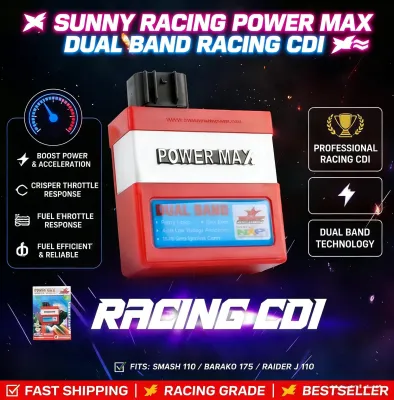
15 Lazada user ratings
🛠️Durability:okaay Perfect 🔌Compatibility:okay Versatility 🏅Performance:okay Compatibility
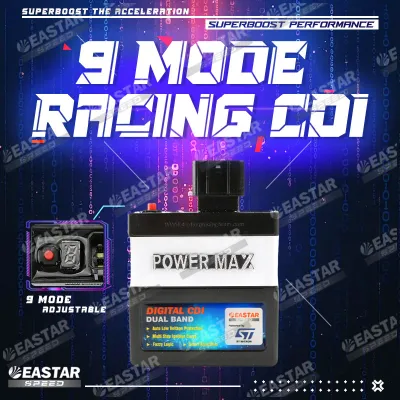
38 Lazada user ratings
the item is good at first but after a few test, engine starts but there's a delay and struggle in maintaining good engine sound. Consistent …Read full reviewShow less
the item is good at first but after a few test, engine starts but there's a delay and struggle in maintaining good engine sound. Consistent backfire is present.
Improved acceleration and throttle response, Durable construction, built to last,
Impressive 9-mode options for customization,
ang ganda bossing...madali na LNG ikabet
sayang pera,hindi gumagana
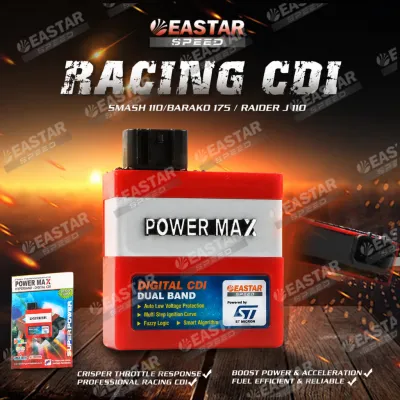
322 Lazada user ratings
🛠️Durability:mukang matibay naman 🔌Compatibility:okay lng 🏅Performance:goods na goods sa uulitin dito ulit ako bibili maayos double balot per…Read full reviewShow less
🛠️Durability:mukang matibay naman 🔌Compatibility:okay lng 🏅Performance:goods na goods sa uulitin dito ulit ako bibili maayos double balot pero wala ngalng bubble wrap
Sabi ko pang barako 175 ung dumating pang smash.chinat konpa ung seller oo daw pang barako daw Ang darating.
Improved ignition system, Durable and reliable design, Supports multiple models, Compatible with Barako 175,
Durable and reliable design, 🛠️Durability: diko pa sure pag na nakabit na 🏅Performance: sana gumanda
salamat seller at rider .. gumagana po sya
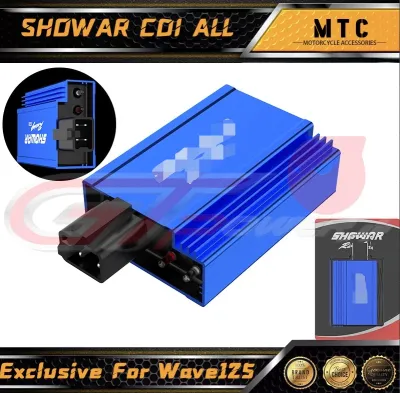
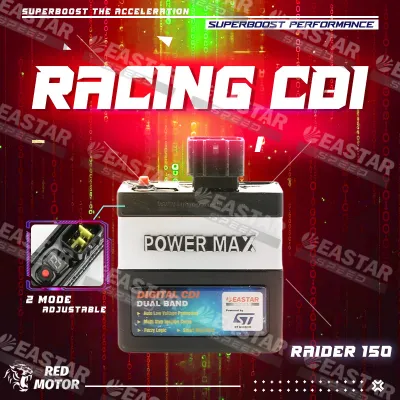
18 Lazada user ratings
Durability:Plug and play installation!,
Hindi gumagana palpak
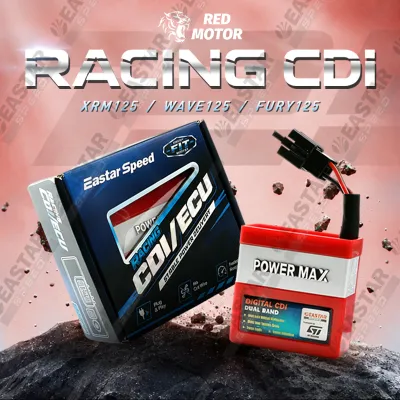
10 Lazada user ratings
Maganda at wala nang babaguhin kapag sa fury flug and play na talaga 10/10
🔨Durability:goods 🔌Compatibility:goods 🏅Performance:goods
salamat sa lagat😂
🏅Performance:good
🏅Performance:
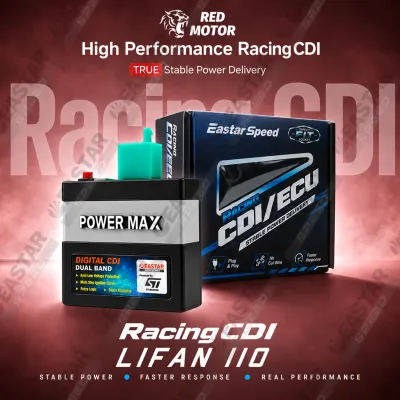
7 Lazada user ratings
Perfect fit, Easy installation,
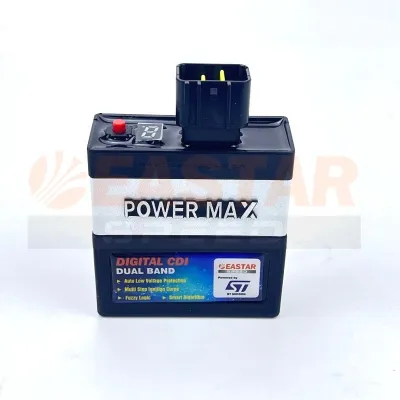
Prices are valid at publication and may change. Please refer to the product page for the latest price.
A racing CDI alters this equation by utilizing an aggressive ignition timing curve, which advances the spark earlier in the compression stroke as engine speed increases. This advanced timing allows the fuel-air mixture more time to burn completely, maximizing combustion pressure and driving the piston down with greater force at high RPMs. Some high-end racing CDIs are programmable, allowing riders to manually adjust the timing curve using micro-switches or computer software. Furthermore, a racing CDI either raises the factory rev limit significantly or removes the limiter entirely.
These technical differences directly translate to how your motorcycle behaves on the road. With a stock CDI, the engine delivers a predictable, linear power band that flattens out as you approach the factory rev limit. A racing CDI sharpens throttle response and allows the engine to continue pulling power deep into the upper RPM range, provided the mechanical components of the engine can support the increased airflow and fuel delivery.
What Are the Practical Advantages and Limitations of a Stock CDI?
The primary advantages of a stock CDI are its plug-and-play reliability, optimal fuel economy, and perfect compatibility with your motorcycle’s factory electrical system. Its main limitation is that it acts as an artificial ceiling, restricting the engine from revving past factory parameters even if you have installed high-performance engine parts.

Because a stock CDI is engineered specifically for your motorcycle’s factory configuration, reliability is its greatest strength. It operates strictly within the engine’s safe mechanical limits, minimizing thermal and physical stress on internal components like the valves, piston rings, and connecting rod. This conservative operation translates directly to long-term durability and lower maintenance costs over the lifespan of the vehicle.
Additionally, stock CDIs are optimized for fuel efficiency and emissions compliance. The ignition timing is tuned to extract the maximum distance from every liter of fuel under normal riding conditions, making it highly economical for daily travel. The power delivery is smooth and predictable, especially at low-to-mid RPMs, which makes navigating stop-and-go city traffic comfortable and safe.
However, the stock CDI has clear limitations. The primary drawback is the artificial ceiling it places on performance. If you install aftermarket performance parts, such as a high-flow exhaust or a modified camshaft, the stock CDI’s rigid timing curve and low rev limiter will prevent these upgrades from reaching their full potential. The engine will simply run out of breath or hit the rev limiter just as the aftermarket parts begin to optimize power delivery, leaving potential performance completely untapped.
What Are the Practical Advantages and Limitations of a Racing CDI?
A racing CDI provides sharper throttle response, higher top-speed potential by extending the usable RPM range, and the flexibility to tune ignition timing to match engine modifications. However, these performance gains come at the cost of increased engine wear, reduced fuel economy, and potential starting difficulties or rough idling.
The advantages of a racing CDI center on performance maximization. By advancing the ignition timing and raising or removing the rev limiter, a racing CDI allows a modified engine to breathe fully and produce power at high engine speeds. Riders will notice a significantly sharper, more immediate throttle response, as the spark timing is optimized for rapid acceleration. If your motorcycle has been modified to flow more air and fuel, the racing CDI is the key that unlocks the top-end speed and acceleration potential of those mechanical upgrades.
Despite these performance benefits, a racing CDI introduces several practical limitations and compromises that make it less suitable for everyday riding. The most significant drawback is the increased risk of engine wear and catastrophic failure. Operating an engine at RPMs beyond its factory design limits subjects the valve train, piston, and bearings to extreme mechanical stress. Without upgraded internal components, this can quickly lead to valve float, where the valves fail to close fast enough and collide with the piston.
Furthermore, the aggressive ignition curves of a racing CDI often result in a rougher, less stable idle and can make the motorcycle more difficult to start, especially when the engine is cold. Fuel economy also tends to decrease, as the engine spends more time operating at higher, less efficient RPMs. In some cases, the advanced timing can cause engine knocking or pre-ignition if low-octane fuel is used, which can rapidly destroy piston crowns and cylinder walls.
How Do You Decide Which CDI is Right for Your Specific Riding Needs?
Deciding which CDI is right for your motorcycle requires an honest assessment of how you use your machine and what modifications you have already performed. There is no universal best option; instead, the correct choice depends on balancing performance goals against reliability and maintenance requirements.
For daily commuting, utility riding, and long-distance touring, the stock CDI remains the highly practical and reliable choice. Navigating congested city streets or riding long stretches of highway demands consistent reliability, predictable power delivery, and optimal fuel economy. A stock CDI ensures that your motorcycle starts reliably every morning, runs cool in heavy traffic, and does not subject your engine to unnecessary wear. Upgrading to a racing CDI on a standard, unmodified commuter motorcycle offers virtually no practical benefit, as the stock engine components cannot utilize the extra RPMs, while you inherit the risks of reduced fuel efficiency and increased engine heat.
Conversely, if your primary goal is track days, competitive racing, or weekend sport riding on closed courses, a racing CDI becomes a highly valuable tool. This is especially true if you have already invested in mechanical engine modifications, such as a big bore kit, a high-lift camshaft, a larger carburetor, or a performance exhaust system. In these scenarios, the stock CDI acts as a bottleneck, preventing your modified engine from revving into the power band where these parts perform best. A racing CDI allows you to match the ignition timing to your specific engine setup, ensuring you extract every ounce of horsepower from your investments.
The critical takeaway is that a CDI upgrade must always be matched to the engine’s current state of tune. Installing a racing CDI as a standalone upgrade on an otherwise completely stock motorcycle is generally a poor investment. Without the mechanical modifications necessary to flow more air and fuel at high RPMs, the engine will not make any additional power, and you will simply be spinning a stock engine dangerously fast for no practical gain.
What Must You Verify Before Installing an Aftermarket Racing CDI?
Before purchasing or installing an aftermarket racing CDI, you must perform several critical compatibility and safety checks to protect your motorcycle’s electrical system and engine. Electrical modifications carry inherent risks of short circuits, battery damage, or sudden ignition failure while riding, making thorough preparation essential.
First, you must verify whether your motorcycle uses an Alternating Current (AC) or Direct Current (DC) CDI system. AC systems draw power directly from the stator’s exciter coil, meaning the motorcycle can run without a battery. DC systems, on the other hand, are powered directly by the 12-volt battery. These two systems operate on completely different voltages and wiring principles; installing an AC CDI on a DC motorcycle, or vice versa, will immediately destroy the CDI unit and can cause severe damage to your motorcycle’s main wiring harness. Always consult your vehicle’s official service manual to confirm your electrical system type.
Second, verify the exact make, model, year, and connector plug configuration of your motorcycle. Even within the same model line, manufacturers often change wiring harness pinouts during mid-generation updates. Never assume compatibility based solely on a product’s generic category name. Physically compare your stock CDI’s plug shape and wire colors with the aftermarket unit’s specifications before attempting installation.
Third, budget realistically for both the CDI unit and any necessary supporting modifications. While a basic aftermarket CDI might cost anywhere from ₱500 to ₱1,500, a high-quality, fully programmable unit can cost several thousand pesos. Additionally, you must budget for supporting mechanical upgrades. If you plan to utilize the raised rev limits of a racing CDI, you should install stiffer valve springs to prevent valve float, and you may need to adjust your carburetor jetting or fuel injection mapping to prevent the engine from running dangerously lean at high RPMs.
Finally, always prioritize safety and follow the manufacturer’s instructions precisely. If the aftermarket wiring diagram conflicts with your motorcycle’s original wiring harness, or if you are unsure how to safely configure adjustable timing curves, do not guess. Stop the installation immediately and consult a qualified motorcycle mechanic. A professional installation ensures that your electrical connections are secure, weather-sealed, and that your engine’s ignition timing is set within safe operating limits.

Community discussion
Share your experience or ask a question. Comments are reviewed before publication.