
Finding the right balance between daily reliability and enhanced engine responsiveness is a common challenge for motorcycle owners in the Philippines looking to optimize their underbone or scooter performance. While upgrading to a racing Capacitor Discharge Ignition (CDI) unit can unlock higher engine speeds and alter ignition timing for sharper throttle response, it does not automatically guarantee a massive speed increase and may introduce mechanical risks if installed without supporting modifications. Choosing between a stock and a racing CDI ultimately depends on whether you prioritize fuel economy and long-term engine durability or are willing to manage the increased maintenance, tuning requirements, and mechanical wear that come with an aggressive ignition curve.
How Do Stock and Racing CDI Units Differ in Ignition Timing and Throttle Response?
Stock and racing CDI units differ primarily in how they control the timing of the electrical spark relative to the piston’s position and whether they enforce a hard limit on engine revolutions per minute (RPM). While a stock CDI utilizes a fixed, conservative ignition curve designed to optimize fuel combustion and emissions, a racing CDI advances the ignition timing and typically removes or raises the factory RPM ceiling to allow for faster throttle response.
To understand this difference, it helps to look at the core function of motorcycle cdi tuning. The CDI acts as the brain of your motorcycle’s ignition system, receiving a signal from the pickup coil (pulser) and releasing stored electrical energy to the ignition coil at the precise millisecond required to ignite the air-fuel mixture. In a stock unit, the manufacturer programs a timing curve that ensures stable idling, smooth power delivery, and compliance with environmental regulations. This curve is engineered to prevent engine knocking (pre-ignition) across a wide range of fuel qualities and operating temperatures, meaning the spark is often slightly retarded at higher RPMs to protect internal components.
Products mentioned in this guide
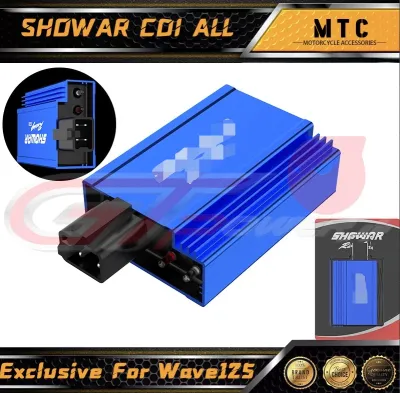
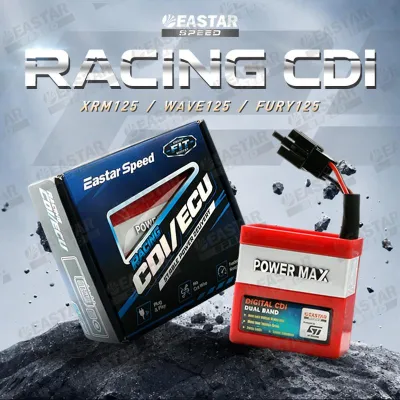
359 Lazada user ratings
🏅Performance:Excellent value for money., Improved acceleration and power!, Reliable and trustworthy brand., Easy installation and plug-and-p…Read full reviewShow less
🏅Performance:Excellent value for money., Improved acceleration and power!, Reliable and trustworthy brand., Easy installation and plug-and-play.,
🔨Durability:Satisfied with tEasy instaEnhanced engine performance., llation and plug-and-play., he quality and performance.,
Perfect fit for my XRM125., Durable and long-lasting materials., Satisfied with the quality and performance.,
Enhanced engine performance., Excellent value for money., Satisfied with the quality and performance.,
good and quality salamat seller Malakar ang kuryenti
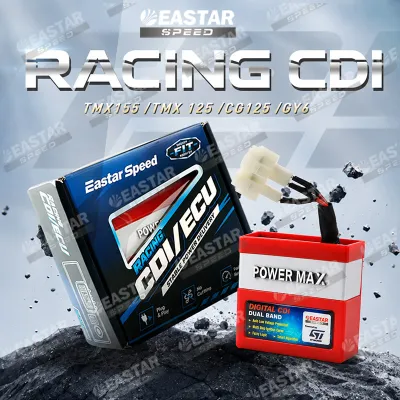
110 Lazada user ratings
Parcel received balot na balot mukang legit naman kaso dkopa na susubukan Sana gumana't at mag tagal,,, follow review ko nalang pag nasubuka…Read full reviewShow less
Parcel received balot na balot mukang legit naman kaso dkopa na susubukan Sana gumana't at mag tagal,,, follow review ko nalang pag nasubukan Kuna.. Salamat po Kay seller pti Kay Kuya rider 😊(umaandar naman kaso mas malakas prin kuryente nang stock sayang Lang pera)
Perfect fit for my TMX155, Great performance upgrade!, Improved acceleration and power, Smoother and more efficient ride, No more speed limi…Read full reviewShow less
Perfect fit for my TMX155, Great performance upgrade!, Improved acceleration and power, Smoother and more efficient ride, No more speed limit restrictions, Easy to install and use, Enhances engine performance,
Easy to install and use, Love the sleek gray color, No more speed limit restrictions, Great performance upgrade!, Easy to install and use, G…Read full reviewShow less
Easy to install and use, Love the sleek gray color, No more speed limit restrictions, Great performance upgrade!, Easy to install and use, Great performance upgrade!,
High-quality materials used, Smoother and more efficient ride, Perfect fit for my TMX155, Enhances engine performance,
dumating na at sakto at manual pa Ng cdi wiring magagamit ko Ng paggawa Ng cdi wiring salamat sa seller at lazada
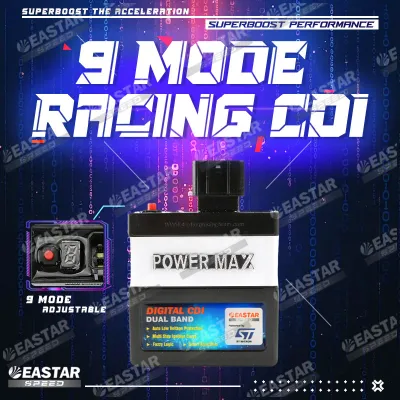
39 Lazada user ratings
Improved acceleration and throttle response, Durable construction, built to last,
goods n goods Po salamat seeler
salamat seller at riders
salamat seller at ride
🔌Compatibility:good
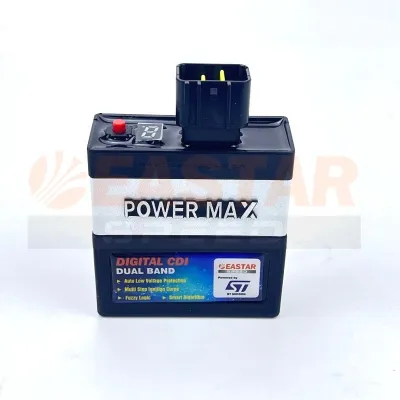
32 Lazada user ratings
Boost your top speed!, Enhance your Raider 150's performance!,
maganda. I hope it will work, hindi pa kasi namin triny.
good na goods...ganda ng performance.thanks seller
hays old breed pinadala.. ayaw gumana sa reborn😞
ok naman d pa natisting
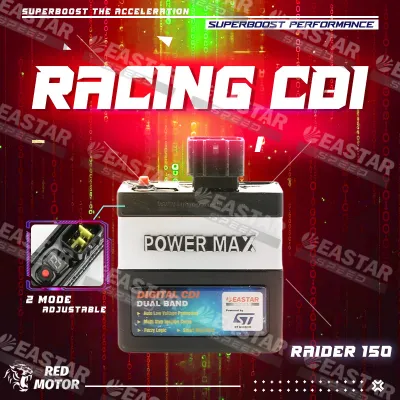
18 Lazada user ratings
Durability:Plug and play installation!,
Hindi gumagana palpak
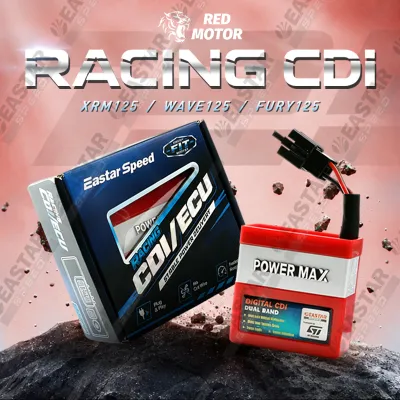
10 Lazada user ratings
Maganda at wala nang babaguhin kapag sa fury flug and play na talaga 10/10
🔨Durability:goods 🔌Compatibility:goods 🏅Performance:goods
salamat sa lagat😂
🏅Performance:good
🏅Performance:
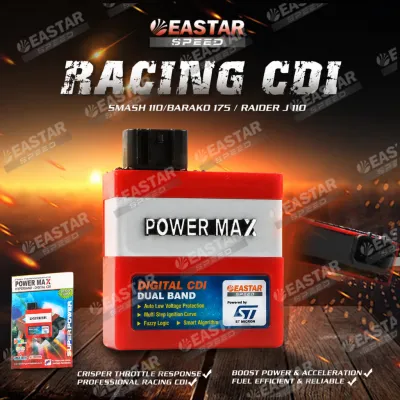
322 Lazada user ratings
🔌Compatibility:Compatible with Raider J Pro 🏅Performance:Goods na Goods
swak n swak s barako k ganda n takdo ng moto k legit n legit toga idol
🏅Performance:lumakas at umabot ng 95 kph ang takbo ni barako
🛠️Durability:good 🔌Compatibility:good 🏅Performance:good
malakas sumipa
Prices are valid at publication and may change. Please refer to the product page for the latest price.
In contrast, a racing CDI is designed to maximize combustion efficiency at higher engine speeds by advancing the ignition timing—meaning the spark fires slightly earlier in the compression stroke. This earlier ignition allows the expanding gases to exert maximum force on the piston head just as it begins its downward power stroke, which can result in a more immediate throttle response and a more aggressive power delivery. Many aftermarket racing CDIs also feature adjustable timing maps, allowing riders to manually select different ignition profiles via physical switches or programmable software to match specific engine modifications.
However, these changes are not universally beneficial for every motorcycle. Raising the rev limiter or removing it entirely does not automatically generate more horsepower; an engine can only produce power up to the physical limits of its camshaft, valves, and fuel delivery system. Before purchasing an aftermarket unit, riders must check the manufacturer’s technical specifications for the exact timing advance degrees and rev limiter thresholds to ensure they align with the engine’s physical capabilities.
What Are the Real-World Performance Trade-Offs for Daily Riding and Highway Use?
In real-world riding, a stock CDI provides smooth, predictable power delivery ideal for congested city traffic, whereas a racing CDI offers sharper acceleration at the cost of increased fuel consumption and potential engine instability at low speeds. The practical differences between these two units become highly apparent when transitioning from stop-and-go urban commutes to open highway cruising.

During daily commutes in dense traffic, low-to-mid RPM performance is critical. A stock CDI is tuned to deliver a stable idle and linear throttle response, making it easy to modulate the clutch and throttle at low speeds. A racing CDI, with its advanced timing, can sometimes make low-speed riding feel jerky or overly sensitive. If the carburetor or fuel injection system is not precisely tuned to match the advanced spark timing, the engine may suffer from hesitation, rough idling, or stalling during sudden stops.
On open highways, the differences shift toward the upper end of the RPM range. A stock CDI will eventually hit its factory-set rev limiter, preventing the engine from spinning fast enough to damage itself, which naturally caps your top speed. A racing CDI allows the engine to rev past this factory limit, potentially allowing you to extract more top-end speed if your motorcycle has the necessary gearing and engine modifications to support it. However, cruising continuously at exceptionally high RPMs places immense stress on the engine’s cooling and lubrication systems, especially in warm tropical climates.
Fuel economy is another major trade-off that riders must carefully evaluate. Because a racing CDI encourages higher RPM operation and alters the combustion cycle, it typically leads to a noticeable drop in fuel efficiency. Riders who install a racing CDI should establish a baseline mileage before the upgrade and closely monitor their actual fuel consumption over several tanks of fuel to understand the financial and practical impact on their daily commute.
How Does Motorcycle CDI Tuning Affect Engine Longevity and Electrical Compatibility?
Altering your motorcycle’s ignition timing with a racing CDI increases mechanical stress on internal engine components and requires strict verification of your vehicle’s electrical system compatibility to prevent premature failure. Without ensuring that your stator, wiring harness, and internal engine parts can handle the modified electrical and mechanical loads, installing an aftermarket CDI can lead to severe engine damage or electrical malfunctions.
Before attempting any motorcycle cdi tuning, you must verify the electrical prerequisites of your specific vehicle model and year. CDIs are generally divided into AC-powered and DC-powered units, and installing the wrong type can instantly destroy the CDI or damage the motorcycle’s wiring harness. Riders must check the stator coil output and ensure the wiring harness connector pins match the factory configuration exactly. Because electrical modifications carry inherent risks of short circuits or component damage, always refer to the original-vehicle instructions and consult a qualified motorcycle mechanic or auto-electrical specialist before performing any installation or wiring modifications.
The mechanical consequences of running an advanced ignition curve or an elevated rev limit are equally significant. Factory engine components—such as valve springs, piston rings, connecting rods, and bearings—are rated for the RPM limits established by the stock CDI. When a racing CDI allows the engine to exceed these limits, valve float can occur, where the valve springs cannot close the valves fast enough, leading to catastrophic contact between the piston and the valves. Additionally, advanced timing increases combustion chamber temperatures and pressures, which can accelerate wear on the spark plug, piston crown, and cylinder head gasket.
To safeguard your vehicle, always consult your motorcycle’s official service manual to verify the maximum safe operating limits of your stock engine components. It is also important to note that installing an aftermarket CDI will typically void any remaining manufacturer warranties and may bypass built-in safety systems, such as sidestand safety switches or tip-over sensors. If you are not experienced with electrical diagnostics and engine tuning, having a professional technician install and test the unit is the safest path forward.
Which CDI Type Best Matches Your Riding Style and Performance Goals?
Choosing the right CDI depends on whether you prioritize hassle-free daily commuting with optimal fuel economy or are willing to invest time and money into high-performance engine tuning and frequent maintenance. Aligning your choice with your actual riding habits, budget, and mechanical willingness ensures you do not compromise your motorcycle’s reliability for unneeded performance gains.
The ideal candidate for a stock CDI is the daily commuter, delivery rider, or long-distance traveler who relies on their motorcycle as a primary source of transport. For these riders, consistent starting, predictable throttle response, maximum fuel efficiency, and minimal maintenance are the highest priorities. Keeping the stock CDI ensures the engine operates within its designed safety margins, minimizing the risk of unexpected breakdowns and keeping operating costs as low as possible.
Conversely, the ideal candidate for a racing CDI is a track enthusiast, hobbyist, or experienced tuner who views their motorcycle as a performance project. These riders are comfortable performing regular mechanical inspections, understand how to adjust carburetor jetting or fuel-injection maps to match the altered ignition timing, and accept the higher fuel costs and accelerated wear associated with aggressive riding. A racing CDI is rarely a standalone upgrade; it is most effective when paired with supporting modifications such as a high-flow exhaust, an upgraded camshaft, and stiffer valve springs.
Before making a purchase, riders should go through a structured pre-purchase checklist to ensure a successful upgrade:
- Compatibility Check: Verify the CDI is specifically designed for your motorcycle's exact model, year, and electrical system (AC vs. DC).
- Budget Allocation: Allocate ₱1,500 to ₱5,000 or more not just for the CDI itself, but for supporting modifications like high-performance spark plugs, upgraded valve springs, or professional tuning services.
- Dealer Verification: Purchase only from authorized dealers or reputable manufacturers to ensure product authenticity, and verify their return and warranty policies in case of compatibility issues.
- Installation Plan: Determine if you have the tools and knowledge to perform the installation safely, or budget for professional installation by a qualified mechanic.

Community discussion
Share your experience or ask a question. Comments are reviewed before publication.