
The Honda TMX 155 remains a highly popular workhorse on Philippine roads, serving as a reliable vehicle for daily commuters, delivery riders, and tricycle operators. At the heart of this air-cooled, four-stroke engine is a small but critical component: the spark plug. To keep your motorcycle running smoothly, a standard spark plug for motorcycle tmx 155 typically needs to be replaced every 4,000 to 8,000 kilometers, though premium upgrades can extend this lifespan. However, real-world riding conditions, engine health, and maintenance habits play a massive role in how long this small component actually lasts before needing a replacement.
Expected Lifespan and Factory Replacement Intervals
To establish a reliable starting point for your motorcycle’s maintenance, always consult the official Honda TMX 155 owner’s manual. The manufacturer’s service schedule provides the most accurate baseline interval for your specific model year, outlining exactly when to inspect, clean, regap, or replace the plug. For a standard nickel-alloy spark plug, which is the traditional choice for the TMX 155, the recommended replacement interval usually falls within the 4,000 to 8,000-kilometer range. Over these kilometers, the constant electrical arcing gradually wears down the metal electrodes, widening the gap and requiring more voltage from the ignition coil to produce a spark.
Riders looking for longer service intervals often turn to premium upgrades, such as platinum or iridium spark plugs. These advanced materials feature much harder center electrodes that resist electrical and chemical wear far better than standard nickel. An iridium spark plug can easily last 15,000 to 20,000 kilometers under optimal conditions. However, even if you opt for a premium plug, it must strictly match the engine’s original heat range requirements to prevent severe engine damage. It is also important to remember that these manufacturer-recommended intervals are calculated under controlled testing conditions. In the real world, a variety of operational factors and engine conditions can cause a spark plug to degrade long before you reach the mileage limit on your odometer.
Products mentioned in this guide
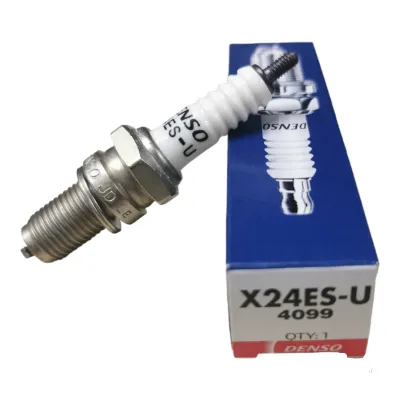
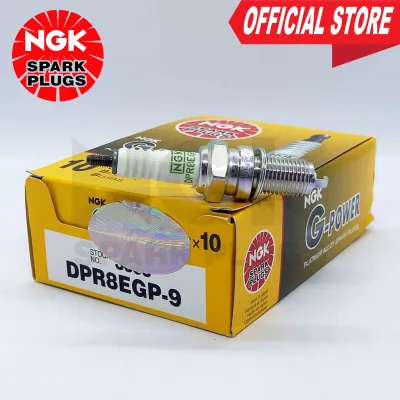
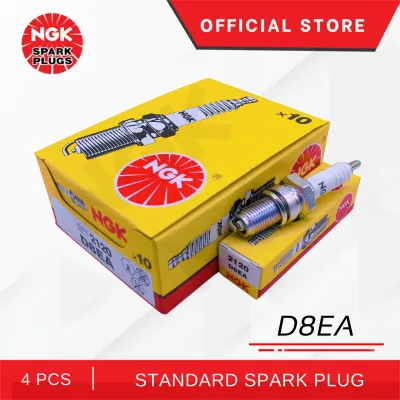
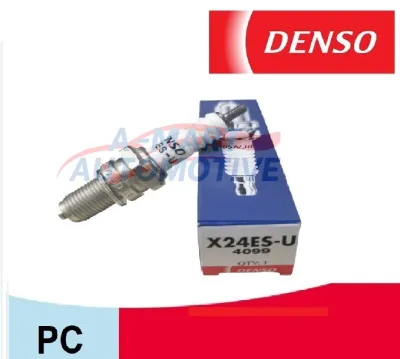
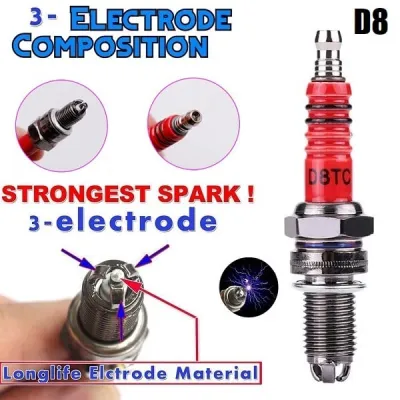
Prices are valid at publication and may change. Please refer to the product page for the latest price.
Real-World Factors That Shorten Spark Plug Life
Operating a motorcycle in the Philippines introduces unique environmental challenges that can drastically accelerate spark plug wear. The country’s intense tropical heat and high relative humidity place a heavy thermal load on the air-cooled TMX 155 engine. When an engine runs hot, the spark plug is subjected to extreme temperatures that can speed up electrode degradation. Furthermore, navigating through dusty rural roads or heavily congested urban areas forces the engine to run under demanding conditions. Dust and airborne debris can easily bypass a worn air filter, entering the combustion chamber where they interfere with the combustion process and leave deposits on the spark plug tip.

Fuel quality and underlying mechanical issues are also primary culprits behind premature spark plug failure. If you regularly fill up with low-quality or contaminated fuel, the incomplete combustion process will leave behind heavy deposits on the spark plug’s ceramic insulator. Internally, a TMX 155 engine with high mileage may suffer from worn piston rings or degraded valve guide seals. These worn components allow small amounts of engine oil to seep directly into the combustion chamber, coating the spark plug in a wet, sticky layer of oil that prevents it from firing.
Additionally, basic maintenance oversights can quickly ruin a brand-new spark plug. A dirty, clogged air filter restricts the amount of fresh air entering the carburetor, resulting in a rich fuel mixture where there is too much gasoline and too little oxygen. This rich mixture leads to incomplete combustion, producing a dry, black carbon soot that coats the spark plug tip. This carbon buildup acts as an electrical conductor, causing the spark to short-circuit along the insulator rather than jumping across the electrode gap.
Warning Signs Your TMX 155 Spark Plug is Failing
Starting and Idling Symptoms
One of the earliest and most frustrating signs of a failing spark plug is hard starting. If you find yourself repeatedly kickstarting your TMX 155 or holding down the electric starter button on cool mornings, a weak or fouled spark plug is often the culprit. After a motorcycle has been parked for a few days, moisture can accumulate, and a degraded spark plug will struggle to generate a spark strong enough to ignite the cold air-fuel mixture. A healthy ignition system should fire up almost instantly; any prolonged cranking indicates that the electrical current is struggling to bridge the eroded electrode gap.
Once the engine finally starts, pay close attention to how it behaves at a standstill. A failing spark plug will cause a rough, unstable idle, where the engine struggles to maintain a steady, smooth RPM. You might feel excessive, unusual vibrations radiating through the handlebars and footpegs as the engine misfires intermittently. The exhaust note will sound uneven and choppy rather than rhythmic and steady. In severe cases, the engine may simply die when you come to a stop at a traffic light, requiring you to constantly feather the throttle just to keep the motor running.
Acceleration and Fuel Economy Drops
Under load, the demands on your ignition system increase dramatically. If you notice a sudden drop in engine performance, such as sluggish acceleration or a distinct hesitation when you twist the throttle, your spark plug is likely failing to deliver a consistent spark. This issue becomes incredibly obvious when carrying heavy loads, pulling a tricycle sidecar, or attempting to climb steep inclines. Instead of a smooth, linear power delivery, the engine may bog down, jerk, or produce audible misfires as unburnt fuel passes through the combustion chamber without igniting.
This incomplete combustion directly impacts your wallet through a noticeable drop in fuel economy. When a spark plug misfires or produces a weak, yellow spark instead of a strong, blue one, a portion of the fuel-air mixture remains unburnt. This unburnt fuel is simply pushed out through the exhaust valve, wasting gasoline and drastically reducing your kilometers-per-liter efficiency. You may also notice darker, sootier exhaust smoke and a strong smell of raw gasoline coming from the tailpipe, both of which are clear indicators that your engine is wasting fuel due to poor ignition.
How to Visually Inspect the Spark Plug Condition
Visual inspection is an excellent, highly reliable way to diagnose the exact health of your engine and spark plug. Before you touch any tools, you must wait until the TMX 155 engine is completely cool to the touch. Attempting to remove a spark plug from a hot aluminum cylinder head carries a high risk of stripping or cross-threading the delicate metal threads, which can lead to a highly expensive and complicated engine repair. Once the engine is cool, carefully pull off the spark plug cap by gripping the boot, then use a dedicated spark plug wrench to loosen the plug in a counterclockwise direction.
Once the spark plug is removed, inspect the tip closely under good lighting. A healthy, properly functioning spark plug will have a light tan or grayish-white color on the porcelain insulator, with clean, sharp-edged electrodes. If you observe a dry, fluffy layer of black soot, the plug is carbon-fouled, pointing to a rich fuel mixture or a dirty air filter. If the tip is wet and coated in dark engine oil, you are dealing with oil fouling, which indicates internal engine wear such as failing piston rings or valve seals. A melted, blistered, or white-hot appearance on the electrodes indicates extreme overheating, which could be caused by an incorrect heat range or a dangerously lean fuel mixture.
Safety is paramount during any DIY maintenance task. If you encounter significant resistance when trying to loosen the spark plug, do not attempt to force it, as you could snap the plug or destroy the cylinder head threads. If you notice that the threads on the spark plug or inside the cylinder head are already damaged, or if you feel unsure about any part of the removal and installation process, stop immediately. Reassemble what you can without forcing it and consult a qualified professional motorcycle mechanic to handle the job safely.
Choosing the Right Replacement for Your TMX 155
Replacing a spark plug is not as simple as buying any random plug off the shelf. To ensure safe engine operation and prevent catastrophic damage, you must match the exact thread size, thread reach, and heat range specified for the TMX 155. The thread reach is particularly critical; a plug with threads that are too long can protrude too far into the combustion chamber and physically strike the piston, causing severe mechanical failure. Conversely, a plug that is too short will shroud the spark, leading to poor combustion and leaving exposed cylinder head threads to become clogged with carbon.
Always check the alphanumeric part number stamped on your old spark plug or consult the official Honda parts catalog to find the exact replacement code. Pay close attention to the heat range rating, which is typically indicated by a specific number in the manufacturer’s part code. A spark plug’s heat range determines how quickly it can transfer heat from the combustion chamber to the cylinder head. Using a plug that is too hot can lead to pre-ignition, where the glowing tip ignites the fuel before the spark occurs, potentially melting your piston. On the other hand, a plug that is too cold will fail to reach its self-cleaning temperature, causing carbon deposits to build up rapidly and foul the plug within a few days of riding.

Community discussion
Share your experience or ask a question. Comments are reviewed before publication.