
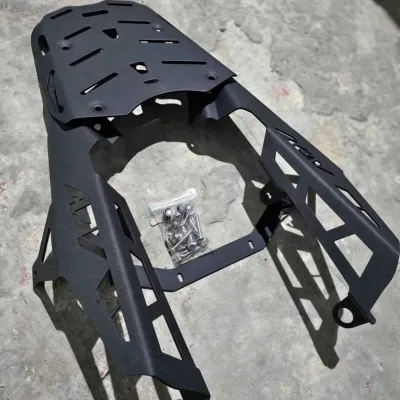
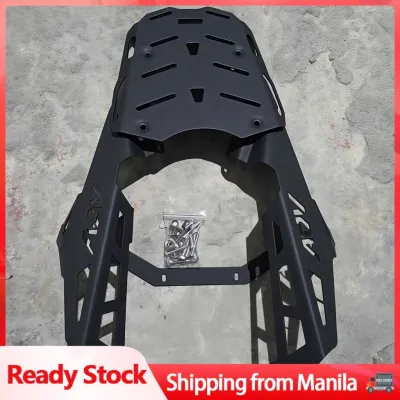
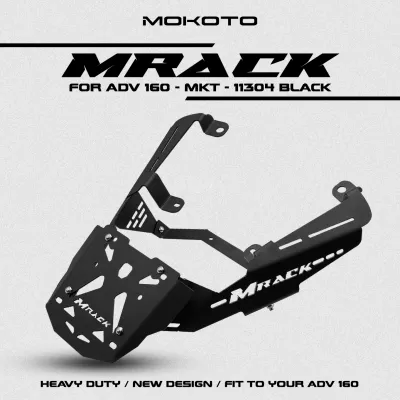
To install a top box securely on your Honda ADV 160, you must use a model-specific top box bracket designed specifically for this motorcycle’s unique mounting points. Because the rear subframe and bodywork of the ADV 160 differ significantly from other scooters, generic or non-specific brackets will not fit without dangerous modifications. Choosing a dedicated, bolt-on bracket ensures that you do not have to drill, cut, or permanently alter your motorcycle’s chassis or body panels.
Equipping your adventure scooter with a top box is one of the most practical upgrades you can make, especially for daily commuting or long-distance touring in the Philippines. However, the safety of your luggage, your passenger, and your motorcycle depends entirely on the structural integrity of the bracket you install. Understanding how the rear mounting points function and evaluating the available options will help you make an informed, safe decision.
Understanding the Honda ADV 160 Rear Mounting Points
The Honda ADV 160 features a robust rear subframe designed to handle the daily stresses of urban riding and light off-road excursions. The primary mounting points for any rear rack or top box bracket are located directly beneath the rear grab rails. These points consist of factory-threaded holes engineered into the steel subframe, providing a direct, metal-to-metal connection that transfers the weight of your luggage safely through the chassis.
Products mentioned in this guide
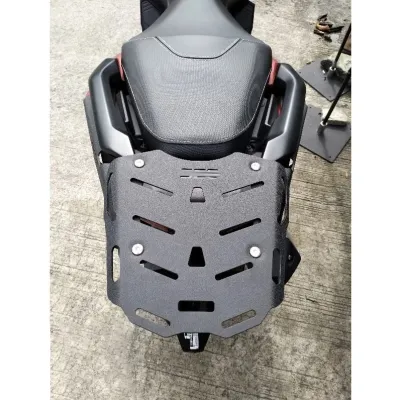
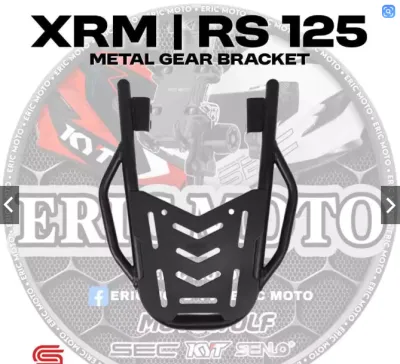
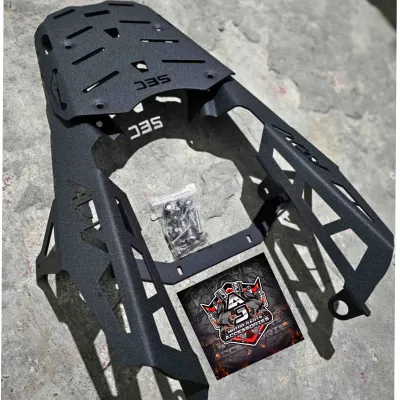
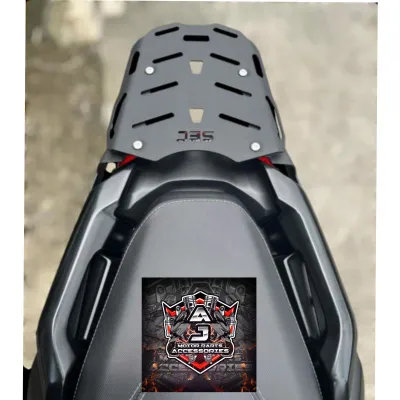
Prices are valid at publication and may change. Please refer to the product page for the latest price.
When accessory manufacturers specify a “no-modification” installation, they mean the bracket is engineered to align perfectly with these existing factory bolt holes. A true no-modification bracket requires no drilling into the steel frame, no cutting of the plastic body panels, and no bending of the bracket arms to force a fit. Preserving these factory components is essential because any alteration can weaken the structural integrity of the rear frame and create entry points for moisture, leading to hidden rust.
It is a common misconception among riders that accessories for the Honda PCX 160 are interchangeable with the ADV 160 due to their shared 157cc eSP+ engine platform. While the engine and transmission architectures are highly similar, the chassis designs, rear subframes, grab rails, and plastic bodywork are entirely different. The mounting hole spacing, pitch, and clearance angles on the ADV 160 are unique; attempting to force a PCX 160 bracket onto an ADV 160 will result in severe misalignment, frame stress, or damage to your plastics.
Key Factors for Choosing an ADV 160 Top Box Bracket
Material and Build Quality
When selecting a bracket, you will primarily choose between tubular steel, plate steel, and cast or CNC-machined aluminum. Steel brackets generally offer excellent tensile strength and flexibility under heavy loads, making them resilient against the constant vibrations of rough roads. Aluminum brackets are lighter, highly resistant to corrosion, and offer a more integrated, modern aesthetic that matches the adventure-styling of the ADV 160.

In the tropical climate of the Philippines, rust resistance is a critical factor due to high humidity, heavy monsoon rains, and salt air in coastal regions. If you select a steel bracket, ensure it features a high-quality, electrostatically applied powder-coated finish rather than standard spray paint. Powder coating provides a thick, durable barrier that resists chipping from road debris, preventing moisture from reaching the underlying metal and causing structural oxidation.
Weight Capacity and Load Distribution
A well-engineered bracket does not simply hold a box in place; it distributes the dynamic forces of the cargo forward and downward into the strongest parts of the subframe. When riding over potholes, speed bumps, or uneven provincial roads, the effective weight of your top box can multiply instantly due to G-forces. A poorly designed bracket with excessive rearward overhang acts as a lever, multiplying the stress on the rear bolts and risking subframe deformation.
Before purchasing a bracket, you must cross-reference its rated weight capacity with the maximum rear cargo limit specified in your Honda ADV 160 owner’s manual. Most factory rear racks are rated for a structural load of 5kg to 10kg. Keep in mind that this weight rating must accommodate both the empty weight of your top box (especially heavy aluminum cases, which can weigh 4kg to 6kg on their own) and the cargo you place inside it.
Passenger Comfort and Ergonomics
If you frequently ride with a pillion passenger, the physical design of the bracket will directly impact their comfort and safety. Some aftermarket brackets sit high and forward, encroaching on the passenger’s seating space or forcing them into an awkward, forward-leaning riding posture. Ensure the bracket maintains adequate clearance behind the pillion seat so your passenger can sit naturally without their back pressing uncomfortably against the front of the top box.
Additionally, the bracket should not obstruct the passenger’s access to the rear grab rails. In many bracket designs, the mounting arms run parallel to or replace the factory grab rails. If the bracket replaces the original rails, it must feature integrated handholds that are easy to grip, even when wearing riding gloves, to ensure your passenger remains secure during acceleration and braking.
Top Box Mounting System Compatibility
Top box brackets are designed to accept specific types of mounting plates, which serve as the interface between the bracket and the box itself. Proprietary quick-release systems, such as Givi’s Monokey or Monolock systems and Shad’s fitting systems, require brackets with specific mounting hole configurations. Monokey systems are engineered for heavier loads and larger cases, utilizing a highly secure three-point locking mechanism, while Monolock systems are intended for lighter, smaller top boxes.
Alternatively, many budget-friendly or local brackets feature a universal flat plate design with multiple pre-drilled slots. These universal plates allow you to bolt on the mounting base that comes packaged with generic plastic or aluminum top boxes. When choosing a bracket, ensure its physical footprint and hole pattern match the mounting plate of the specific top box model you plan to install.
Compatible Top Box Bracket Options for the ADV 160
Finding the right bracket involves balancing your budget, your preferred top box brand, and your aesthetic preferences. The market offers options ranging from premium, factory-engineered parts to highly durable third-party systems.
Official Honda OEM Brackets and Racks
For riders who prioritize a flawless fit and finish, the Honda Genuine Accessories rear carrier is the benchmark option. Designed by the same engineers who built the ADV 160, this OEM bracket guarantees perfect bolt-hole alignment and preserves the original lines of the motorcycle. It is manufactured using high-grade materials and undergoes rigorous stress and vibration testing to ensure it meets factory safety standards.
However, the OEM route has distinct limitations that you should consider before purchasing. These brackets are typically more expensive than aftermarket alternatives and are often designed to work exclusively with Honda-branded top boxes or specific compatible plates, limiting your choice of luggage. Furthermore, because they are official accessories, stock availability can be highly variable, often requiring you to place a special order through an authorized Honda 3S dealership.
Reputable Aftermarket Brands and Systems
Established global luggage manufacturers, such as Givi and Shad, offer model-specific fitting kits engineered precisely for the ADV 160. Givi’s SR series and Shad’s Top Master fitting kits are designed to bolt directly to the scooter’s subframe without modifications. These systems are highly regarded because they integrate seamlessly with their respective brands’ quick-release mounting plates, providing a secure, rattle-free connection that is easy to install and remove.
If you are considering local or regional aftermarket fabricators, which are widely available in the Philippine market, you must apply strict quality checks before buying. Inspect the quality of the weld beads; they should be smooth, continuous, and free of pinholes or slag, indicating strong penetration. Verify that the powder coating is uniform and that the mounting plates are perfectly flat, as warped plates will introduce constant, uneven stress to your motorcycle’s subframe bolts.
Avoid unbranded, “universal” multi-fit brackets that claim to fit a wide range of scooter models using adjustable sliding arms or bendable brackets. These systems compromise structural integrity because the adjustable joints represent weak points that can slip or shear under vibration. Furthermore, forcing a poorly aligned bracket to fit by bending the metal or drilling new holes into your subframe will void your warranty and create severe safety hazards.
Installation Guidelines and Safety Boundaries
Installing a top box bracket is a straightforward mechanical task, but it requires precision and adherence to safety boundaries to prevent damage to your motorcycle.
Pre-installation Checks
Before you begin the installation process, park your Honda ADV 160 on a flat, level surface using the center stand to ensure stability. Remove the rear grab rails or plastic covers as dictated by your specific bracket’s instructions, and thoroughly clean the exposed area. Inspect the subframe mounting points and the factory threads for any signs of road debris, dirt, or surface rust, and clean them using a wire brush or compressed air if necessary.
Torque and Thread Security
When mounting the bracket, always use a manual torque wrench rather than an impact driver. Refer to the Honda ADV 160 service manual or the bracket manufacturer’s instructions for the exact torque specifications of the mounting bolts. Over-tightening can easily strip the threads in the steel subframe or shear the mounting bolts, while under-tightening will allow road vibrations to gradually back the bolts out over time.
To prevent the bolts from loosening due to the constant single-cylinder engine vibrations of the ADV 160, apply a small drop of medium-strength (blue) threadlocker to the bolt threads before installation. Do not use high-strength (red) threadlocker, as this requires extreme heat to remove and can permanently damage the threads if you ever need to uninstall the bracket. Ensure the bolts thread in smoothly by hand for the first few turns to avoid cross-threading.
Clearance and Visibility
Once the bracket and your top box are mounted, perform a visual inspection from the rear of the motorcycle. The physical bulk of the top box must not obstruct the visibility of your rear turn signals, taillight, or license plate from any reasonable viewing angle behind the vehicle. Ensuring clear visibility is not only a critical safety measure to prevent rear-end collisions, but it is also a strict legal requirement enforced by the Land Transportation Office (LTO).
Post-installation Verification
Before taking your motorcycle out on the road, perform a physical shake test by grabbing the installed bracket firmly and attempting to wiggle it in all directions; there should be absolutely zero play, flexing, or rattling. Sit on the motorcycle and have a passenger sit behind you to verify that the rear suspension is not excessively compressed or bottoming out under the static weight of the setup. Finally, check that the bracket and mounting hardware do not interfere with the travel of the rear tire or mudguard when the suspension is compressed.
Safety Stop Condition
If you attempt to install the bracket and find that the bolt holes do not align perfectly with the factory mounting points, stop the installation immediately. Do not attempt to force the bolts in at an angle, do not use a hammer to bend the bracket into alignment, and do not drill new holes into your motorcycle’s subframe. Misaligned holes indicate either a manufacturing defect in the bracket or that you have been supplied the incorrect model; in either case, consult a professional mechanic or return the product to the vendor.
Frequently Asked Questions (FAQ)
Can I use a Honda PCX 160 top box bracket on the ADV 160?
No, you cannot use a Honda PCX 160 top box bracket on the ADV 160. Although both scooters utilize similar engine components, their physical chassis, rear subframe configurations, plastic body panels, and grab rail mounting points are completely different. Attempting to install a PCX 160 bracket on an ADV 160 will result in severe misalignment, which can damage your scooter’s bodywork or place dangerous, uneven stress on the mounting bolts.
Will installing an aftermarket top box bracket void my motorcycle's warranty?
Installing a bolt-on aftermarket top box bracket that utilizes the factory mounting points without any drilling, cutting, or electrical splicing generally does not void your main motorcycle warranty. However, if a poorly designed or overloaded bracket causes direct damage to your motorcycle—such as cracking the rear subframe or damaging the rear body panels—that specific damage will not be covered under the manufacturer’s warranty. Always stay within the recommended weight limits and verify warranty terms with your local authorized dealership.
Do I need to remove the rear grab rails to install the bracket?
Whether you need to remove the rear grab rails depends entirely on the design of the specific bracket you purchase. Some aftermarket brackets are engineered to mount underneath the existing grab rails, using longer bolts that pass through both the rail and the bracket into the subframe. Other designs require you to temporarily remove the grab rails to access the mounting points, while some heavy-duty brackets replace the factory grab rails entirely with integrated metal side arms.

Community discussion
Share your experience or ask a question. Comments are reviewed before publication.