
Deciding between Toyota Genuine 5W-30 and aftermarket alternatives like Shell, Castrol, or Motul comes down to matching your vehicle’s specific requirements with your driving habits and maintenance budget. While Toyota’s original equipment manufacturer (OEM) oil provides guaranteed compatibility and hassle-free dealership servicing, reputable aftermarket brands offer specialized formulations that can be more cost-effective or better suited for specific driving conditions. The key is not simply choosing a brand name, but verifying that the oil’s certifications align perfectly with the standards detailed in your vehicle’s owner’s manual.
In tropical environments like the Philippines, where high ambient temperatures, heavy traffic, and high humidity place extra stress on engines, selecting the correct oil is vital. Whether you stick with the OEM fluid or transition to a major aftermarket brand, your choice should prioritize engine protection, warranty compliance, and long-term reliability.
Understanding 5W-30 Viscosity and Toyota Engine Requirements
The “5W-30” designation on an oil bottle represents its multigrade viscosity rating, which describes how the fluid flows at different temperatures. The “5W” portion indicates the oil’s cold-flow properties, with the “W” standing for winter. Even in tropical climates without freezing winters, a lower cold-viscosity rating ensures rapid oil circulation to critical engine components immediately upon starting the vehicle, minimizing initial wear.
Products mentioned in this guide
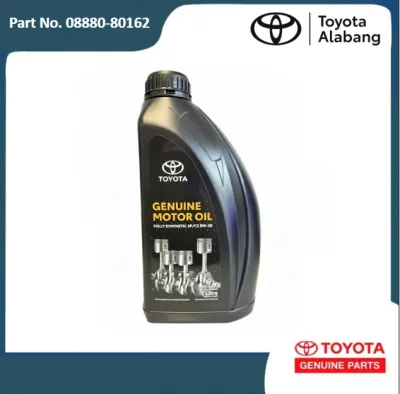
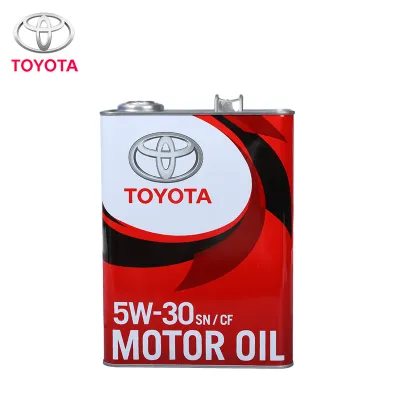
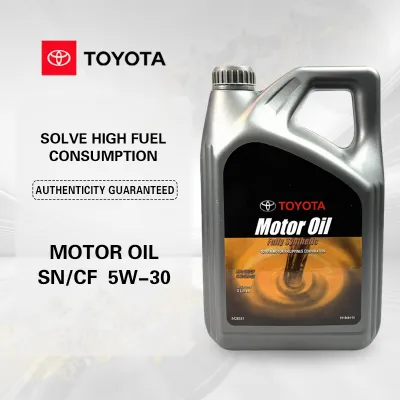
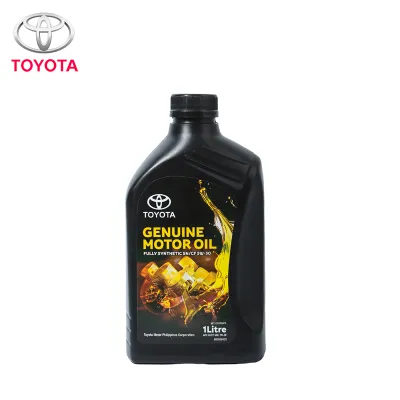
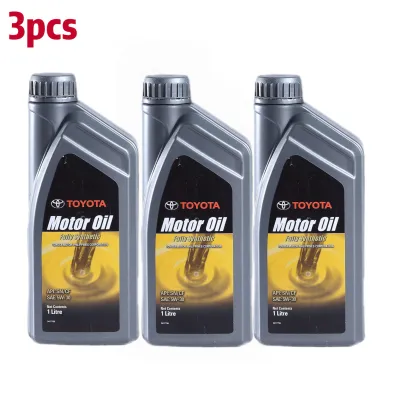
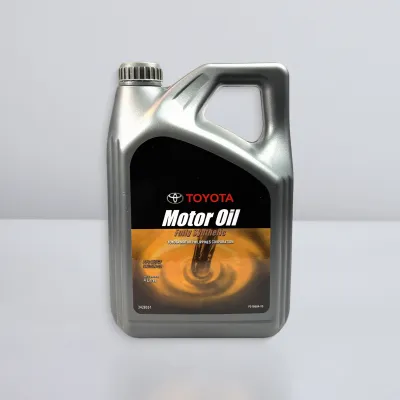
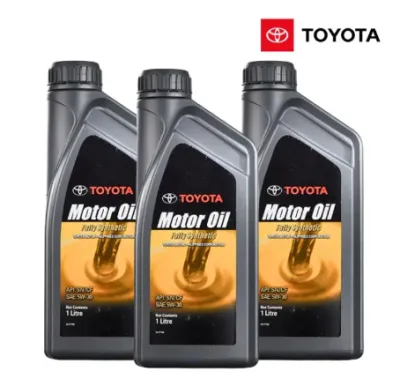
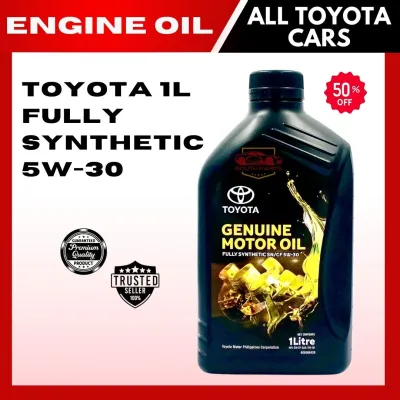
Prices are valid at publication and may change. Please refer to the product page for the latest price.
The “30” represents the oil’s operating viscosity at 100 degrees Celsius, which is the typical operating temperature of a fully warmed-up engine. This rating ensures the oil remains thick enough to maintain a protective barrier between moving metal parts under high heat, yet thin enough to promote fuel efficiency. For many modern Toyota engines, 5W-30 offers an optimal balance of protection and efficiency.
Beyond viscosity, modern engines require specific chemical standards to prevent low-speed pre-ignition, minimize timing chain wear, and control sludge. Industry standards such as the American Petroleum Institute (API) SP and the International Lubricant Standardization and Approval Committee (ILSAC) GF-6 are critical benchmarks. These specifications ensure the oil can withstand the high thermal loads of modern engines while protecting emissions control systems.
Before purchasing any engine oil, always consult your vehicle’s owner’s manual. The manual is the ultimate authority, specifying the exact API and ILSAC standards required for your specific engine model and year. Brand marketing claims should always be secondary to these official manufacturer specifications.
Toyota Genuine 5W-30: OEM Baseline and Warranty Considerations
Toyota Genuine Motor Oil (TGMO) 5W-30 is formulated to meet the exact baseline specifications of Toyota engines. When you opt for the OEM oil, you are choosing a product that has been tested and approved by the vehicle manufacturer specifically for their engine tolerances and seal materials. This eliminates any guesswork regarding compatibility or performance standards.

For owners of newer vehicles, using Toyota Genuine Oil during scheduled maintenance at an authorized dealership provides significant peace of mind. It ensures seamless warranty compliance, as the service history is documented directly within the manufacturer’s network. This official record-keeping can be invaluable if you ever need to make a warranty claim related to engine components.
However, relying solely on OEM oil has practical trade-offs. Toyota Genuine Oil is typically sold at a premium compared to standard aftermarket options, especially when purchased directly from dealership service departments. Additionally, finding TGMO in retail auto supply shops or local service centers can be difficult, as its distribution is primarily focused through authorized dealerships.
If you prefer to perform your own oil changes or use an independent mechanic, sourcing OEM oil can add logistical steps to your maintenance routine. For drivers seeking convenience outside the dealership network, this limited retail availability often prompts a look toward widely distributed aftermarket alternatives.
Evaluating Aftermarket Alternatives: Shell, Castrol, and Motul
Aftermarket lubricants offer a diverse range of options, but choosing among them requires looking past marketing slogans to verify actual product specifications. Major brands design different product tiers, meaning a brand’s reputation alone does not guarantee that every bottle on the shelf is suitable for your specific Toyota engine.
Shell is widely recognized for its Helix line of engine oils, which often emphasizes active cleansing technology. These formulations are designed to prevent the buildup of harmful sludge and deposits in engines that experience frequent stop-and-go driving. For urban drivers navigating congested city streets in high humidity, an oil focused on cleanliness can help maintain engine efficiency over time.
Castrol typically highlights wear protection and thermal stability, particularly in its GTX and Magnatec product lines. Some of these formulations are engineered to cling to engine parts even when the vehicle is turned off, aiming to provide immediate protection during the critical warm-up phase. This focus on reducing wear during starts can be beneficial for vehicles used for short, frequent trips.
Motul is often associated with high-performance and fully synthetic formulations, appealing to enthusiasts who demand high thermal stability under demanding conditions. Their products are designed to resist oil breakdown and maintain viscosity under extreme heat, making them a popular choice for drivers who frequently travel long distances or carry heavy loads.
Regardless of these brand-specific marketing focuses, you must inspect the physical label of the specific product bottle. Ensure that the exact product tier you select displays the API SP or ILSAC GF-6 certifications (or the specific older standards required by your vehicle’s model year). A premium brand name does not override the necessity of matching these exact technical specifications.
Key Comparison Dimensions for Your Decision
To make an objective decision between OEM and aftermarket oils, you should evaluate several practical dimensions that directly impact your vehicle’s maintenance.
First, master the art of reading the oil bottle labels. Look for the API “donut” symbol, which displays the service category (such as SP) in the top half, and the ILSAC “starburst” symbol, which indicates that the oil meets current fuel economy and engine protection standards. If these symbols do not match the requirements in your owner’s manual, do not use the oil, regardless of the brand.
Second, consider the overall value and cost per liter. While dealership service packages using Toyota Genuine Oil offer convenience, they often carry a higher price per liter in ₱ compared to purchasing aftermarket oil at retail auto supply shops. If you choose to buy aftermarket oil, compare the retail price per liter of reputable brands to find a balance between your budget and the desired additive package.
Third, weigh the convenience of availability. If you prefer a hands-off approach, having your oil changed at the dealership during regular service intervals is highly convenient. However, if you prefer using a trusted local mechanic, choosing a widely available aftermarket brand like Shell or Castrol ensures you can always find the exact same oil for top-offs or future changes without visiting a dealership.
| Brand | Typical Product Line | Key Marketing Focus | Required Verification Checkpoints |
|---|---|---|---|
| Toyota Genuine | TGMO 5W-30 | OEM compatibility and factory-approved formulation | Check bottle label for API/ILSAC ratings matching the owner's manual |
| Shell | Helix Series | Active engine cleaning and sludge prevention | Verify API SP / ILSAC GF-6 certification on the back label |
| Castrol | Magnatec / Edge | Wear protection during start-up and thermal stability | Verify API SP / ILSAC GF-6 certification on the back label |
| Motul | 8100 / H-Tech | High-performance synthetic formulation and heat resistance | Verify API SP / ILSAC GF-6 certification on the back label |
When to Switch, Mix, or Stick: Practical Maintenance Rules
When transitioning from Toyota Genuine Oil to an aftermarket brand, or vice versa, it is important to follow safe maintenance practices to protect your engine. Avoid mixing different brands or formulations of oil during routine top-offs. While mixing oils of the same viscosity will not cause immediate engine failure, it can dilute the specific additive packages unique to each brand, reducing their overall effectiveness.
If you decide to switch brands, always perform a complete drain and fill rather than simply adding new oil to the existing supply. This process involves draining the old oil completely while the engine is warm, replacing the oil filter with a high-quality replacement, and then filling the engine with the new oil to the recommended level. This ensures that the new additive package can perform as designed without interference from residual degraded oil.
For vehicles with high mileage that show signs of oil consumption or unusual engine noises, consult a qualified professional mechanic before changing your oil type or brand. A professional can inspect the engine for underlying mechanical issues, such as worn seals or piston rings, which cannot be resolved simply by switching oil brands.
Additionally, remember that driving conditions dictate your maintenance schedule. If you frequently drive in severe conditions—such as heavy traffic, dusty environments, short trips where the engine does not reach full operating temperature, or extreme tropical heat—you should shorten your oil change intervals. Refer to the severe maintenance schedule in your owner’s manual for the recommended intervals under these conditions.
Frequently Asked Questions (FAQ)
Can I mix Toyota Genuine Oil with Shell or Castrol?
While mixing different brands of 5W-30 oil that meet the same API and ILSAC specifications will not cause immediate mechanical damage in an emergency, it is not recommended for regular maintenance. Mixing different oils dilutes the proprietary additive packages of both products, potentially reducing their cleaning and wear-protection capabilities. For optimal engine health, always perform a complete drain and fill when changing oil brands.
Does using aftermarket oil void my Toyota warranty?
Using a high-quality aftermarket oil does not void your Toyota warranty, provided the oil meets or exceeds the exact API and ILSAC specifications detailed in your vehicle’s owner’s manual. To protect your warranty coverage, always keep detailed service records, including receipts showing the specific brand, product name, and specifications of the oil purchased, as well as the date of the service.
How often should I change 5W-30 oil under severe driving conditions?
Under severe driving conditions—such as frequent stop-and-go city traffic, short trips under eight kilometers, or operating in extreme tropical heat—you should follow the severe maintenance schedule in your owner’s manual. This typically requires changing your oil and filter every 5,000 kilometers or six months, which is more frequent than the standard interval, regardless of whether you use OEM or aftermarket oil.

Community discussion
Share your experience or ask a question. Comments are reviewed before publication.