
For most daily drivers, factory stock ignition coils provide the exact electrical output engineered for the vehicle’s standard combustion cycle. Upgrading to UMA Racing coils may offer perceived throttle response changes or aesthetic appeal, but actual performance gains depend heavily on specific engine tuning and supporting modifications. This guide helps you evaluate the specifications, compatibility, and real-world trade-offs to decide if an aftermarket upgrade is justified for your daily commute.
When evaluating your vehicle’s ignition system, it is easy to get swept up in the promise of increased horsepower. However, a standard commuter vehicle operating under typical road conditions has very different electrical demands than a highly tuned track machine. Understanding how these components interact with your engine’s computer is the first step in making an informed purchasing decision.
Understanding the Role of Ignition Coils in Daily Driving
An ignition coil acts as a compact electrical transformer within your vehicle’s engine bay. Its primary job is to step up the low voltage supplied by your car’s battery to the thousands of volts required to bridge the gap of the spark plug. This high-voltage spark ignites the compressed air-fuel mixture inside the combustion chamber, initiating the power stroke that keeps your vehicle moving.
Products mentioned in this guide
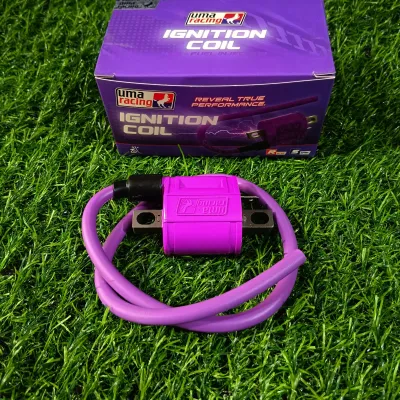
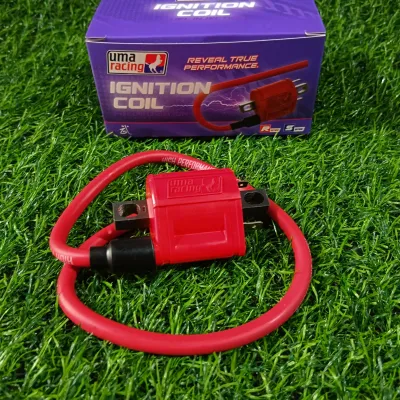
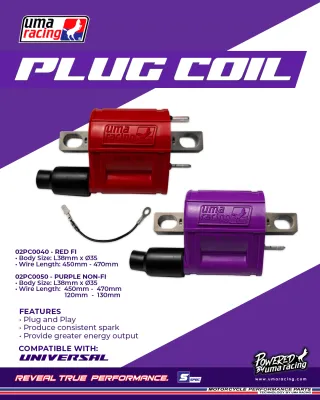
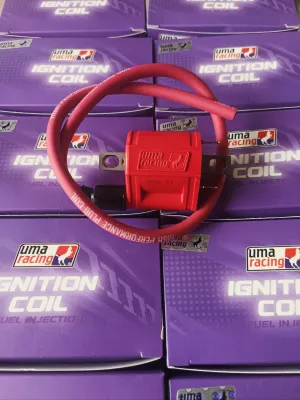
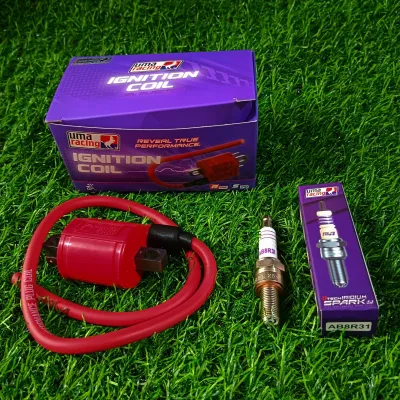
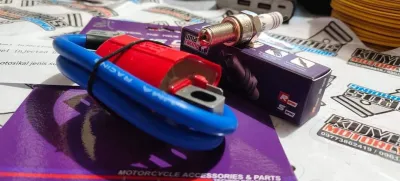
Prices are valid at publication and may change. Please refer to the product page for the latest price.
Factory stock ignition coils are engineered to deliver consistent, reliable performance over tens of thousands of kilometers while maintaining strict emissions compliance and optimal fuel economy. They are calibrated to work in perfect harmony with the factory engine control unit (ECU) settings, ensuring the spark occurs at the exact millisecond required for standard driving conditions.
In contrast, aftermarket “racing” or “performance” coils are designed to deliver a higher peak voltage or a faster saturation rate. While this sounds beneficial, a standard daily commute consisting of stop-and-go traffic and moderate highway speeds rarely demands these extreme electrical outputs. Unless your engine is running at consistently high revolutions per minute (RPM) or burning a highly modified fuel mixture, the extra electrical potential of a racing coil often remains unused.
Comparing UMA Racing and Stock Ignition Coils
When deciding between a UMA Racing ignition coil and a standard factory replacement, it is crucial to look past marketing buzzwords and focus on verifiable technical data. Many aftermarket brands promise dramatic performance improvements, but these claims must be evaluated against the physical limitations of your vehicle’s existing electrical architecture.

To make an objective comparison, you must verify the specific electrical and physical characteristics of both options. This involves checking the product labels, manufacturer data sheets, and official vehicle service manuals rather than relying on generalized online reviews. By comparing measurable specifications, you can determine whether an aftermarket coil will actually alter your engine’s combustion efficiency or simply function as an expensive replacement.
Performance and Output Specifications
The primary technical difference between ignition coils lies in their electrical resistance and voltage capacity. You should begin by checking the primary and secondary resistance values, measured in Ohms, on the product packaging or manufacturer’s specification sheet. These values must align with the tolerances specified in your vehicle’s official service manual to prevent electrical feedback or damage to the ignition driver inside the ECU.
Additionally, you must verify the maximum voltage output and the required dwell time, which is the duration the coil is allowed to charge before firing. While a performance coil may be capable of producing a higher maximum voltage, this potential is only realized if your engine management system is programmed to allow sufficient dwell time. On a completely stock ECU, the charge time is fixed, meaning a high-output coil may perform identically to a standard stock unit because it never has the time to fully saturate.
Durability and Heat Resistance
Daily driving in the Philippines presents unique environmental challenges that place severe thermal stress on ignition components. The combination of intense tropical heat, high ambient humidity, and prolonged idling in heavy urban traffic causes engine bay temperatures to soar. Under these conditions, the internal components of an ignition coil can degrade rapidly if they are not properly insulated.
To evaluate the durability of a coil, inspect the manufacturer’s specifications regarding the potting compounds and housing materials used. High-quality epoxy resins and robust outer casings are essential for preventing moisture intrusion and resisting thermal cracking over time. When comparing UMA Racing coils to OEM options, check for explicit warranty terms and expected service life intervals provided by the manufacturer to gauge how well the product is expected to withstand these harsh operating environments.
Fuel Economy and Drivability Claims
A common expectation among car owners is that installing a performance ignition coil will automatically translate to better fuel economy and sharper throttle response. In reality, a stronger spark only improves combustion efficiency if your existing stock coils are failing, degraded, or unable to cope with a modified air-fuel ratio. If your current factory coils are in perfect working order, replacing them with aftermarket units is unlikely to yield a noticeable change in your daily fuel consumption.
For drivers who wish to verify the real-world impact of an ignition upgrade, relying on subjective feel is rarely accurate. Instead, you can use an OBD2 diagnostic scanner to monitor your engine’s short-term and long-term fuel trims before and after the installation. If the aftermarket coils are truly improving combustion efficiency, the ECU will adjust the fuel trims to reflect a more complete burn, providing you with concrete, data-driven proof of any operational changes.
Installation, Compatibility, and Safety Boundaries
Working with your vehicle’s ignition system involves handling high-voltage electrical components, which requires strict adherence to safety protocols. Before purchasing any aftermarket ignition coil, you must verify that the physical dimensions, mounting brackets, and connector pinouts match your original equipment manufacturer (OEM) specifications exactly. Installing a coil with an incorrect fitment can lead to physical damage, poor electrical contact, or severe engine misfires.
Before beginning any installation or inspection, always disconnect the negative terminal of your vehicle’s battery to eliminate the risk of electrical shock or short circuits. When installing the new coils, ensure the electrical connectors click securely into place without being forced. While dielectric grease is useful for sealing the rubber boot against moisture, it must be applied sparingly and kept entirely off the metal electrical terminals, as grease on the contacts can insulate the connection and cause persistent misfires.
It is also important to recognize the limits of a simple plug-and-play installation. If you are changing to a coil with significantly different primary resistance values, your vehicle’s ECU may detect the change as a fault or fail to control the coil efficiently. In such cases, you should consult a qualified automotive technician or tuner who can verify if your engine management system requires specialized recalibration to safely accommodate the new ignition hardware.
Cost vs. Value: Evaluating the Upgrade for Your Commute
Deciding whether to purchase a UMA Racing ignition coil or stick with a standard OEM replacement ultimately comes down to a cost-benefit analysis. You should begin by researching the current retail price in Philippine Pesos (₱) for a complete set of both options from authorized local distributors. In many cases, specialized aftermarket performance components carry a noticeable price premium compared to standard, high-quality factory replacements.
For a standard daily commuter vehicle that is otherwise unmodified, paying this premium rarely yields a practical return on investment. High-quality OEM or equivalent replacement coils are specifically designed to restore factory-level performance and reliability without the added cost of “racing” branding. Investing the price difference into routine maintenance items, such as fresh spark plugs or clean air filters, will often do more to preserve your vehicle’s drivability and fuel economy.
Furthermore, you must account for potential hidden costs associated with upgrading your ignition system. A higher-output coil can place additional stress on other ignition components, potentially requiring you to upgrade to premium spark plugs with specific heat ranges or replace aging wiring harnesses. If your vehicle’s electrical system is not prepared to handle the altered load, you may end up spending more on troubleshooting and secondary repairs than you originally anticipated.
Decision Framework: Which Coil Should You Choose?
To help you make the final decision for your vehicle, consider the following conditional guidelines based on your driving needs and vehicle state.
Choose Stock Coils if: You prioritize long-term reliability, standard emissions compliance, and exact factory specifications for a daily commuter. If your vehicle is completely stock and your primary goal is to maintain a dependable, hassle-free drive to work or school, standard OEM replacement coils are the most practical and cost-effective choice.
Choose UMA Racing Coils if: Your vehicle has supporting modifications, such as a tuned ECU, forced induction, or a modified fuel delivery system, or if you are building a dedicated track car. In these scenarios, the engine’s altered combustion dynamics may require the higher voltage potential and faster saturation capabilities that performance coils are designed to provide.
Verify First if: You are currently experiencing engine performance issues like rough idling, hesitation, or misfires. Replacing your ignition coils will not fix underlying mechanical problems such as vacuum leaks, clogged fuel injectors, or worn-out spark plugs, so you must perform a thorough diagnostic check before investing in new ignition components.
Frequently Asked Questions (FAQ)
Will UMA Racing ignition coils void my car's warranty?
Installing aftermarket electrical components can potentially affect your vehicle’s powertrain warranty if the dealership or manufacturer can prove that the modification directly caused a failure. In the Philippines, warranty policies can vary significantly between different automotive brands and dealerships. Before modifying your ignition system, it is highly recommended to consult your vehicle’s warranty booklet or speak directly with an authorized service advisor to understand how aftermarket parts might impact your coverage.
Do I need to change my spark plugs when upgrading the ignition coils?
While it is not strictly mandatory to replace your spark plugs at the same time, it is highly recommended to inspect them thoroughly before installing new ignition coils. You should check the spark plug gap and look for signs of uneven electrode wear or carbon fouling. Keep in mind that higher-output coils can sometimes require spark plugs with a different heat range or a tighter gap setting to prevent spark blowout under high load, so verifying compatibility is essential.
Can I replace just one failing coil with a UMA Racing unit?
It is strongly advised against mixing different brands, ages, or output specifications of ignition coils on the same engine. Doing so can lead to uneven cylinder combustion, a rough idle, and unbalanced electrical loads across your engine’s ignition system, which will likely trigger a check engine light. If you decide to transition to UMA Racing coils, you should replace the entire set at once to ensure consistent performance across all cylinders.

Community discussion
Share your experience or ask a question. Comments are reviewed before publication.