
When you ride a motorcycle through the busy streets of Manila, Cebu, or any provincial highway in the Philippines, your helmet is your primary line of defense against severe head injuries. However, not all helmets offer the same level of protection. To ensure that the gear you wear can actually withstand a collision, the Philippine government mandates specific safety certifications: the Philippine Standard (PS) mark and the Import Commodity Clearance (ICC) sticker. Understanding these certifications is not just a matter of avoiding heavy fines from traffic enforcers; it is a critical decision that directly impacts your survival on the road.
Every time you strap on a helmet, you trust it to absorb forces that the human skull cannot handle alone. In a tropical climate where heat, humidity, and sudden downpours are daily realities, safety gear must be exceptionally resilient. Uncertified helmets often degrade quickly under intense sunlight or crack under minor stress. By learning what these certification marks mean, why they are legally required, and how to spot authentic labels, you can make an informed purchase that protects your life during every commute.
What Do PSB and ICC Marks Mean for Motorcycle Helmets?
The Bureau of Product Standards, an agency under the Department of Trade and Industry, is responsible for ensuring that consumer products meet strict safety guidelines. For motorcycle helmets, the bureau utilizes two primary marks to indicate compliance with national safety standards: the PS mark and the ICC sticker. These marks serve as visual proof that a helmet has undergone standardized safety evaluations before reaching retail shelves.
Products mentioned in this guide
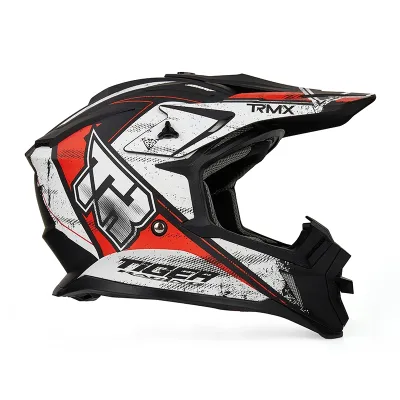
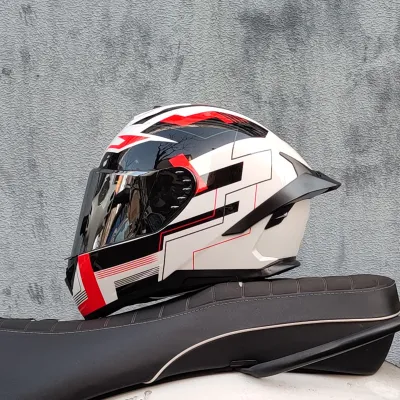
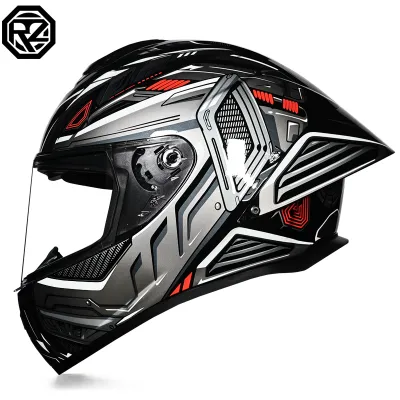
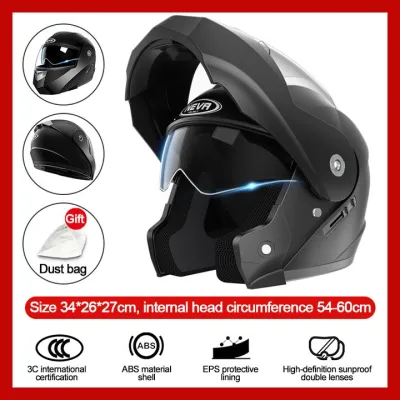
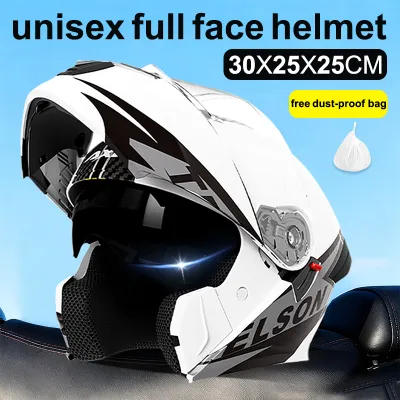
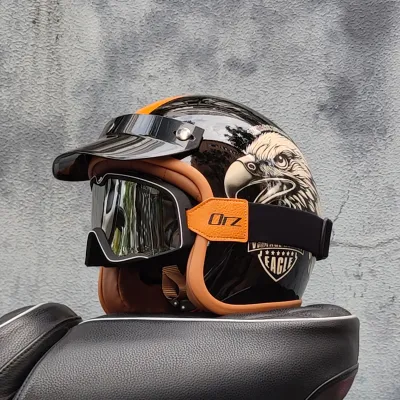
Prices are valid at publication and may change. Please refer to the product page for the latest price.
The primary distinction between the two marks lies in where the helmet was manufactured. The PS mark is typically issued to manufacturers who produce helmets locally or have long-term, consistent quality control systems verified directly by the bureau. In contrast, the ICC sticker is applied to imported helmets. Since the vast majority of premium and mid-range helmets sold in the Philippines are manufactured abroad, the holographic ICC sticker is the most common mark you will encounter when shopping for riding gear.
Visually, these marks are designed to be easily identifiable yet difficult to replicate. The official ICC sticker is a small, holographic label affixed to the back of the helmet’s outer shell. It features a unique serial number, a security hologram that shifts color when tilted under light, and the official logo of the Department of Trade and Industry. The PS mark may appear as a distinctive sticker or be printed directly onto the helmet’s packaging, user manual, or as a permanent decal on the outer shell.
When a helmet bears either of these marks, it indicates that the specific model or batch has passed rigorous laboratory testing. These evaluations check the helmet’s ability to absorb high-velocity impacts, resist penetration from sharp objects, and remain securely fastened to your head during a crash. The certification tells you that the helmet is not just a cosmetic accessory, but a piece of engineered safety equipment designed to meet baseline protective standards.
Why Certification Is Legally Required in the Philippines
In the Philippines, wearing a certified helmet is not merely a safety recommendation; it is a strict legal obligation. Under Republic Act No. 10054, also known as the Motorcycle Helmet Act of 2009, all motorcycle riders, including drivers and pillion passengers, must wear standard protective motorcycle helmets at all times while riding on public roads. This law was enacted to address the high rate of head injuries resulting from motorcycle accidents across the country.

The law specifically defines “standard protective motorcycle helmets” as those bearing the official PS or ICC marks. Wearing a bicycle helmet, a construction hard hat, a skateboard helmet, or an uncertified “novelty” helmet on public roads is a direct violation of the law. Traffic law enforcement agencies, including the Land Transportation Office and local government unit traffic enforcers, actively conduct checkpoints to verify compliance.
If you are caught riding with an uncertified helmet, or without one entirely, you face statutory penalties. These penalties begin with a fine of ₱1,500 for the first offense, rising to ₱3,000 for the second offense, ₱5,000 for the third, and ₱10,000 plus the confiscation of your driver’s license for the fourth and subsequent offenses. These escalating fines highlight how seriously local authorities view helmet safety and compliance.
Beyond the legal penalties, local road conditions make certified helmets an absolute necessity. Philippine roads present unique challenges, from unpredictable potholes and sudden weather changes to mixed traffic consisting of heavy trucks, jeepneys, tricycles, and pedestrians. A certified helmet is engineered to perform reliably under these exact conditions, offering a standardized level of energy management when unexpected incidents occur.
Furthermore, the tropical climate plays a major role in material durability. High temperatures, intense sunlight, and heavy monsoon rains can degrade low-quality plastics and adhesives rapidly. Certified helmets are constructed using UV-stabilized materials and high-grade expanded polystyrene liners that are engineered to maintain their structural integrity despite prolonged exposure to heat, humidity, and sweat.
How to Verify Authentic Certification When Buying
With the high demand for motorcycle gear, counterfeit stickers have unfortunately become common in some informal markets. To protect yourself from purchasing substandard gear, you must know how to verify the authenticity of these marks before making a purchase. A fake sticker on a low-quality helmet offers a false sense of security that can prove disastrous in an accident.
First, perform a physical inspection of the sticker. A genuine ICC sticker is holographic, meaning it reflects a rainbow spectrum when caught by the light. The print must be crisp, clear, and perfectly aligned. If the sticker looks like a cheap paper printout, has blurry text, or peels off easily at the corners, it is highly likely a counterfeit. Genuine stickers use strong adhesives designed to make removal difficult without destroying the label.
Second, pay close attention to where you buy your gear. Purchasing from authorized physical dealers, official brand stores, or reputable online marketplaces significantly reduces the risk of buying substandard helmets. Avoid buying from unauthorized roadside stalls or sketchy online sellers offering premium-brand helmets at prices that seem too good to be true. Reputable dealers can provide documentation proving their inventory has been cleared by the Bureau of Product Standards.
Third, cross-reference the external sticker with the helmet’s internal labels. Every certified helmet must have a permanent manufacturer label sewn into the comfort liner or stamped onto the expanded polystyrene foam. This label should display the brand name, model designation, manufacturing date, size, and international safety certifications. If the external ICC sticker claims the helmet is a certain model, but the internal tag shows a different name or lacks manufacturing details entirely, do not buy it.
Finally, you can verify the serial numbers printed on the ICC stickers. The Department of Trade and Industry occasionally updates its databases and verification portals, allowing consumers to check if a specific serial number corresponds to an authorized import batch. Taking a few minutes to verify these details ensures that your investment goes toward genuine, life-saving protection.
Safety Risks of Using Uncertified Helmets
Riding with an uncertified helmet is essentially the same as riding with no protection at all. Uncertified helmets, often referred to as “novelty” helmets, are typically made of cheap, thin ABS plastic or fiberglass without any internal safety engineering. They are designed to look like helmets but lack the structural components necessary to protect your brain during an impact.
The most critical component of a helmet is the expanded polystyrene liner, which sits between the outer shell and your head. In a certified helmet, this liner is carefully calibrated to compress upon impact, absorbing and dispersing the kinetic energy away from your skull. In contrast, uncertified helmets often use cheap packaging-grade styrofoam or soft sponge padding that offers zero impact absorption. During a crash, this lack of protection can lead to severe traumatic brain injuries or skull fractures.
Another major point of failure in uncertified helmets is the retention system. The chin strap and buckle must be strong enough to keep the helmet securely on your head during a violent slide or secondary impact. Certified helmets undergo pull tests to ensure the straps do not stretch excessively and the buckles do not snap under sudden load. Uncertified helmets often feature flimsy plastic clips and thin nylon straps that can easily break or slip off at the moment of impact, leaving your head completely exposed.
Furthermore, novelty helmets often lack proper coverage. They may leave the temples, the back of the head, and the jaw completely unprotected. Full-face helmets that carry genuine PS or ICC certification provide comprehensive coverage, protecting your face from flying debris, road rash, and direct impacts. Choosing an uncertified helmet means compromising on these essential safety boundaries, putting your life at risk for the sake of style or a lower price tag.
Frequently Asked Questions (FAQ)
Can I use a helmet with only international marks on Philippine roads?
Technically, under Philippine law, all helmets used on public roads must bear the local PS or ICC certification sticker. Even if your helmet has highly respected international safety certifications like the European ECE 22.06, the American DOT, or the Japanese JIS, local traffic enforcers look specifically for the holographic ICC sticker or the PS mark to confirm road legality.
If you purchased a high-end helmet abroad that only features international marks, you may need to bring the helmet and its purchase documents to a Department of Trade and Industry office to secure an official ICC clearance and sticker. To avoid this administrative hassle, it is highly recommended to purchase your helmets from local authorized distributors who sell models that already come pre-cleared and stickered for the Philippine market.
Do PSB and ICC certifications expire over time?
The certification sticker itself does not have an administrative expiration date, but the physical helmet it is attached to definitely does. Helmet manufacturers and safety organizations generally recommend replacing a motorcycle helmet every three to five years from the date of first use, or seven years from the date of manufacture, even if it has never been involved in an accident.
Over time, the protective materials inside the helmet degrade. The expanded polystyrene liner hardens and loses its ability to absorb shock, while the outer shell can become brittle due to constant exposure to the intense Philippine sun, humidity, sweat, and hair oils. Additionally, if a helmet experiences any significant impact—even a drop from a handlebar onto hard concrete—it must be replaced immediately, as the internal liner may have compressed to absorb the shock, rendering it useless for any future impacts.

Community discussion
Share your experience or ask a question. Comments are reviewed before publication.