
Navigating the busy streets of the Philippines on a motorcycle requires not only defensive riding skills but also the right protective gear. At the center of every rider’s safety setup is the motorcycle helmet, a crucial piece of equipment designed to protect the head during an impact. To ensure these helmets actually provide the necessary protection, the Philippine government mandates specific safety certifications. The Philippine Standard (PS) mark and the Import Commodity Clearance (ICC) sticker are the official seals of approval indicating that a helmet has undergone rigorous testing and meets the country’s strict safety standards. Understanding these certifications is essential for every rider looking to stay safe and legally compliant on the road.
What PSB and ICC Marks Mean for Helmet Safety
The Philippine Standard (PS) mark and the Import Commodity Clearance (ICC) sticker are mandatory certification marks issued by the Bureau of Philippine Standards (BPS), an agency under the Department of Trade and Industry (DTI). These marks serve as a consumer’s guarantee that a helmet has successfully passed specific safety and performance evaluations. While both marks signify compliance with the same national safety standards, they apply to different product origins.
The PS mark is typically issued to local manufacturers whose production facilities and products undergo regular audits and testing by the BPS. On the other hand, the ICC sticker is designated for imported helmets. Because the vast majority of premium and mid-range motorcycle helmets sold in the Philippines are manufactured abroad, the ICC sticker is the most common certification mark riders will encounter. Every imported batch of helmets must undergo inspection and sampling to secure these stickers before they can be legally distributed and sold.
Products mentioned in this guide
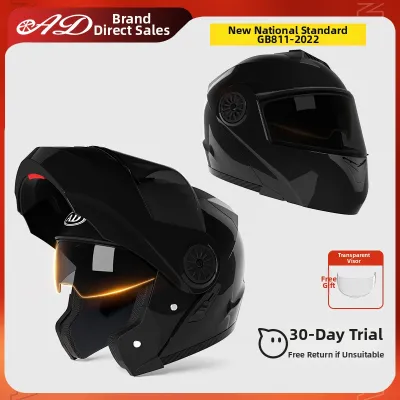
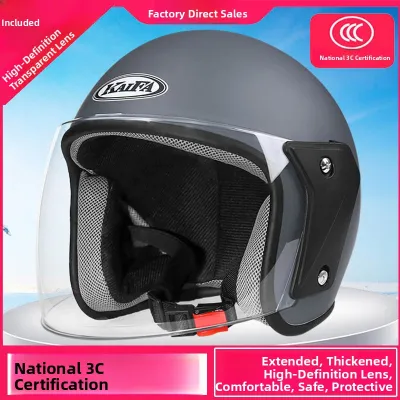
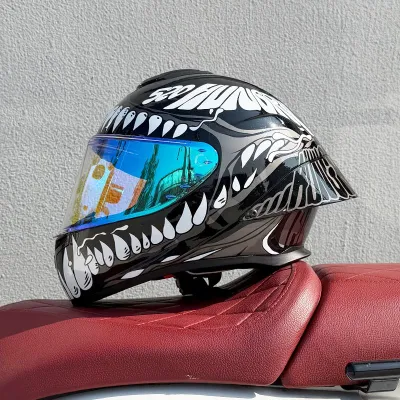
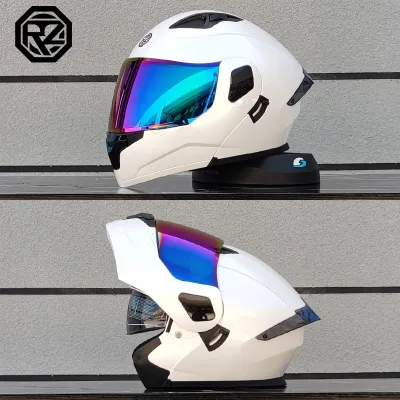
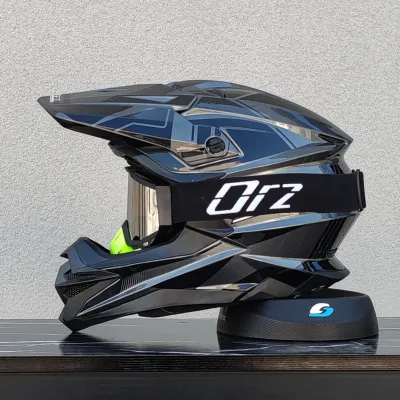
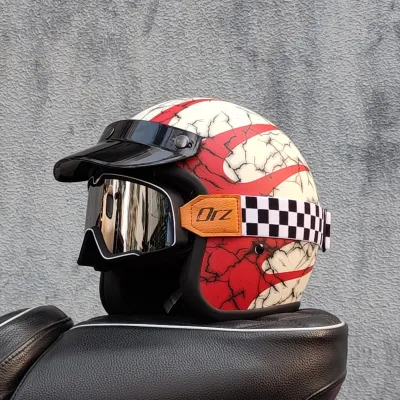
Prices are valid at publication and may change. Please refer to the product page for the latest price.
These certification marks represent a baseline safety threshold. To earn them, helmet models must demonstrate adequate performance in several critical areas, including impact attenuation, penetration resistance, and the strength of the retention system. The physical stickers or embossed marks are permanently affixed to the helmet shell, typically at the rear lower portion. This placement allows traffic enforcers and riders to easily verify the helmet’s compliance status at a glance.
Legal Requirements and Risks of Non-Certified Helmets
In the Philippines, wearing a certified helmet is not just a safety recommendation; it is a strict legal requirement. Republic Act No. 10054, also known as the Motorcycle Helmet Act of 2009, mandates that all motorcycle riders, including drivers and pillion passengers, must wear standard protective motorcycle helmets at all times while riding on any public road, highway, or street. Under this law, a “standard protective motorcycle helmet” is explicitly defined as one that bears the official PS or ICC mark.

Riding with an uncertified helmet, often referred to locally as a “novelty helmet” or a substandard “half-shell,” poses severe physical risks. These uncertified products are frequently constructed from cheap, brittle plastics that shatter easily upon impact. They often lack the essential expanded polystyrene (EPS) inner liner, which is the primary material responsible for absorbing and dispersing impact energy. Without this liner, the force of a crash is transferred directly to the rider’s skull, drastically increasing the risk of traumatic brain injuries. Furthermore, substandard chin straps and buckles are prone to snapping or releasing during a slide, causing the helmet to fly off before the head makes contact with the ground.
Beyond the physical dangers, operating a motorcycle without a certified helmet carries legal consequences. While the national law sets a baseline framework, specific fines, confiscation penalties, and enforcement checkpoints vary by local government unit (LGU) and the frequency of the violation. Traffic enforcers from the Land Transportation Office (LTO), the Metropolitan Manila Development Authority (MMDA), and local municipal police departments actively conduct roadside inspections. To avoid costly penalties and potential vehicle impoundment, riders must consult current local traffic regulations and ensure their gear is fully compliant.
How to Verify Authentic PSB and ICC Labels
With the high demand for motorcycle safety gear, counterfeit certification stickers have unfortunately become common on the market. Unscrupulous sellers often print fake ICC stickers and apply them to substandard helmets to deceive buyers. To protect yourself from purchasing unsafe gear, it is crucial to know how to inspect the visual and tactile features of genuine BPS labels.
Authentic ICC stickers possess distinct security features designed to prevent duplication. Genuine stickers feature holographic elements that shift color and reflect light dynamically when tilted. The typography on an authentic label is sharp, clear, and perfectly aligned, with a unique serial number printed on each individual sticker. Furthermore, these labels are manufactured using tamper-evident materials. If someone attempts to peel a genuine ICC sticker off a helmet, the label will tear, self-destruct, or leave behind a distinct pattern, making it impossible to transfer to another helmet.
Riders should be highly suspicious of helmets offered at unusually low prices. If a helmet is priced at only a few hundred pesos ₱ on an online marketplace or from an unauthorized roadside vendor while claiming full certification, it is highly likely a counterfeit. Before purchasing, inspect the sticker closely. If the printing appears blurry, the colors look washed out, or the sticker can be easily peeled off without tearing, stop the purchase immediately. To minimize the risk of acquiring fake certifications, always buy your gear exclusively from authorized dealers, physical specialty shops, or the official brand stores of reputable manufacturers.
Choosing a Certified Helmet: Beyond the Minimum Standard
While the local PS and ICC certifications establish the legal baseline for road safety in the Philippines, many riders choose to look for supplementary international standards to ensure maximum protection. Reputable helmet manufacturers often design their products to meet global safety benchmarks alongside local requirements. Understanding these standards helps riders make more informed decisions when browsing specialty shops.
The most common international standards found on helmets in the local market include the United States Department of Transportation (DOT) standard, the Economic Commission for Europe (ECE) standard, and the SNELL Memorial Foundation certification. The ECE standard, particularly the newer ECE 22.06, is highly regarded globally for its rigorous testing protocols, which include angled impact testing to measure rotational forces on the brain. SNELL certification is a voluntary, highly demanding standard often utilized for racing helmets. A helmet that carries both an international certification (like ECE or DOT) and a local ICC sticker offers an excellent balance of global engineering and local legal compliance.
The style of the helmet also plays a massive role in actual on-road protection. Full-face helmets provide the highest level of safety because they cover the entire head, including the chin and jaw, which are statistically the most common impact zones in motorcycle accidents. Open-face or three-quarter helmets offer convenience and better airflow in hot, humid tropical weather, but they leave the face and chin completely exposed to road rash and debris. It is important to remember that a certification applies strictly to the specific tested model and configuration; modifying a helmet by removing parts can compromise its certified safety level.
Finally, even the most highly certified helmet cannot protect a rider if it does not fit correctly. A proper helmet must fit snugly around the entire head without causing painful pressure points, and the chin strap must be securely fastened using a reliable double D-ring or micrometric buckle system. Additionally, helmets have a limited operational lifespan. The internal EPS liner degrades over time due to exposure to sweat, hair oils, and the intense tropical humidity of the Philippines. As a general rule, any helmet must be replaced immediately after a significant impact or drop, or after five years of regular use, regardless of how pristine the outer shell and the ICC sticker may appear.
Frequently Asked Questions (FAQ)
Can I use a helmet with only a DOT or ECE sticker in the Philippines?
While DOT and ECE are highly respected international safety standards, they do not automatically grant legal compliance on Philippine roads. Under national law, all helmets must bear the physical PS or ICC sticker issued by the Bureau of Philippine Standards to be considered legally compliant. If you purchase an imported helmet that only features a DOT or ECE mark, you must verify if the importer has secured the corresponding ICC sticker for that batch. The safest and most convenient route for riders is to purchase helmets that already have the official local certification sticker pre-applied by an authorized distributor.
Do second-hand helmets retain their PSB/ICC certification validity?
A second-hand helmet does not retain its practical safety certification validity, even if the physical PS or ICC sticker is still attached to the shell. The structural integrity of a helmet is highly sensitive to its history. Once a helmet experiences a drop or an impact, the internal EPS liner compresses to absorb the energy, a process that is permanent and often invisible from the outside. Additionally, older helmets suffer from material degradation due to sweat, humidity, and UV exposure. Because you cannot verify the complete history of a pre-owned helmet, using one poses a severe safety risk.
Are there exemptions for low-speed or electric scooter riders?
The legal requirements for alternative micro-mobility vehicles, such as electric scooters and low-speed electric bicycles, are governed by specific guidelines from the Land Transportation Office (LTO) and local government ordinances. Generally, operators of low-speed electric bicycles and kick scooters traveling on local barangay roads or designated bike lanes are required to wear protective helmets, which can include standard bicycle helmets. However, if you are operating a registered electric motorcycle or any two-wheeled vehicle that travels on major public roads and highways, you must adhere to the standard motorcycle helmet laws and wear a fully certified PS or ICC helmet.

Community discussion
Share your experience or ask a question. Comments are reviewed before publication.