
When shopping for a modular helmet like the SEC Whirlwind, you will frequently encounter PSB and ICC stickers. These marks are mandatory for legal sale in the Philippines, but they represent regulatory compliance rather than absolute invincibility. Understanding what these safety certifications actually guarantee about a helmet’s protection level is crucial before you make a purchase.
These certification marks serve as proof that a helmet has undergone specific quality checks, but they do not cover every aspect of real-world riding comfort or safety. To make an informed decision, riders must look beyond the stickers and evaluate the physical construction, locking mechanisms, and fit of the helmet. By learning how to decode these labels and inspect the helmet’s mechanical features, you can ensure your gear is both legally compliant and physically prepared for the road.
Decoding the PSB and ICC Marks for Motorcycle Helmets
The regulatory landscape for motorcycle helmets in the Philippines relies on specific marks to verify that safety gear meets national standards. The two most common labels you will encounter are the Philippine Standard (PS/PSB) mark and the Import Commodity Clearance (ICC) sticker. While they might appear to represent different levels of safety, they actually serve the same fundamental regulatory purpose: proving that the helmet is legally cleared for sale and use on local roads.
Products mentioned in this guide
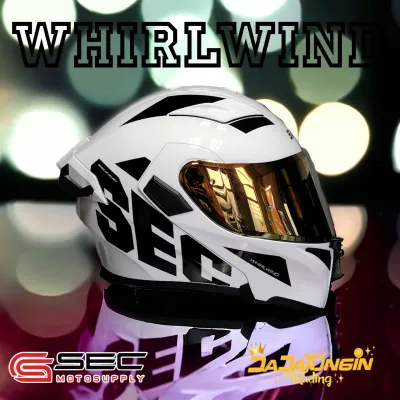
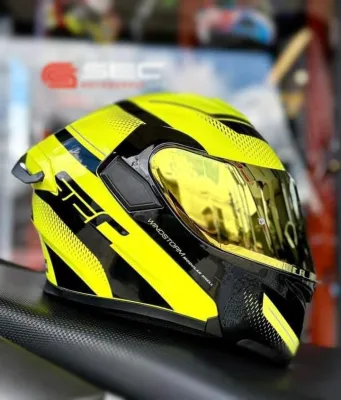
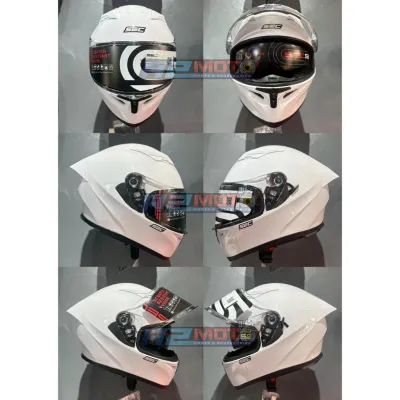
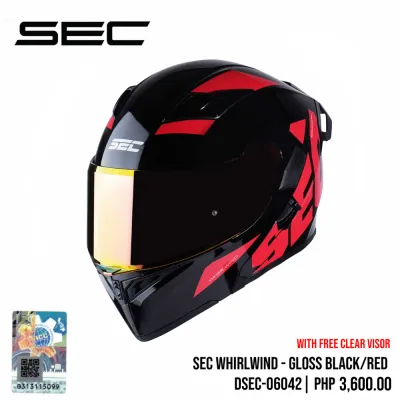
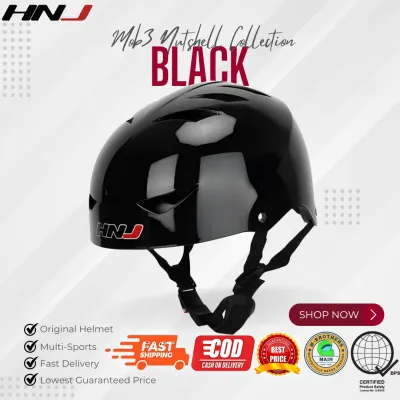
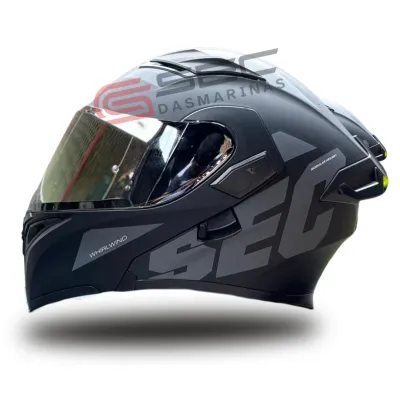
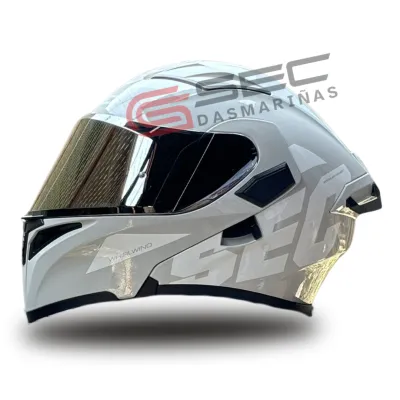
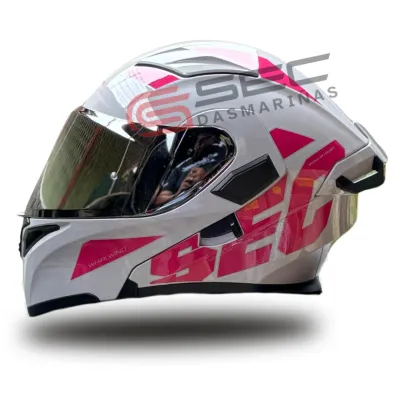
Prices are valid at publication and may change. Please refer to the product page for the latest price.
The primary difference between these two marks lies in the origin of the product and the specific supply chain path it takes. The PS or PSB mark is typically associated with products that have undergone standard compliance audits directly linked to the Bureau of Philippine Standards (BPS), often applied to locally manufactured helmets or brands with dedicated local quality control systems. On the other hand, the ICC sticker is issued for imported goods, indicating that a specific shipment of helmets has cleared the necessary customs and quality verification processes upon entering the country.
Ultimately, neither mark is superior to the other in terms of safety hierarchy. Both certifications indicate that the helmet has met the minimum regulatory requirements established by the government. When purchasing a helmet like the SEC Whirlwind, seeing either an authentic PS/PSB or ICC mark ensures that the product has passed the baseline legal requirements to be sold by authorized dealers in the Philippines.
What Baseline Safety These Certifications Actually Guarantee
While these safety stickers are essential for legal compliance, it is vital to understand what they actually guarantee. A certification sticker is not a shield of absolute safety; rather, it is a verification that the helmet meets minimum baseline safety standards. These standards typically focus on critical performance metrics, such as impact absorption capacity, penetration resistance, and the strength of the retention system (the chin strap and buckle).

For a modular helmet to pass standard certification, the testing process is highly specific. Because modular helmets feature a flip-up chin bar, standard testing protocols typically evaluate the helmet’s structural integrity with the chin bar in the locked, closed position. This means the certification guarantees impact protection primarily when the helmet is worn as a full-face unit. If you ride with the chin bar flipped up, the helmet may not provide the certified level of protection during a fall, as the open mechanism alters the distribution of impact forces.
Furthermore, safety certifications do not evaluate or guarantee the everyday comfort features of a helmet. A certified helmet can still be noisy, heavy, or poorly ventilated. Factors such as aerodynamic stability at high speeds, wind noise reduction, interior padding plushness, and visor optical clarity are completely excluded from the certification testing. These are subjective and mechanical elements that you must inspect and test yourself before buying.
How to Inspect and Verify Labels on the SEC Whirlwind
With counterfeit safety stickers occasionally circulating in the market, physically inspecting the labels on your helmet is a critical step. For a popular model like the SEC Whirlwind, you should know exactly where to look to verify authenticity. Official holographic stickers or embossed marks are typically placed on the rear of the helmet’s outer shell, where they are clearly visible to traffic enforcers.
In addition to the outer sticker, you should inspect the interior of the helmet. Genuine helmets usually feature permanent labels or stamps on the inner EPS (expanded polystyrene) liner or sewn directly into the comfort padding and chin strap. These labels often display the manufacturing date, model name, size, and specific standard codes. If these internal labels are missing, mismatched, or look poorly printed, the helmet’s authenticity is highly questionable.
When examining the ICC or PSB sticker on the outer shell, look closely at its physical characteristics. Authentic stickers are tamper-evident, meaning they cannot be easily peeled off and transferred to another helmet without tearing or leaving a distinct pattern. They also feature clear, high-resolution holographic elements and unique serial numbers. If a sticker is peeling at the edges, lacks a serial number, or looks like a simple paper printout, treat it as a major red flag and verify the dealer’s authorization status.
Evaluating Modular-Specific Features Beyond the Certification
Because certifications only cover baseline safety limits, evaluating the mechanical features of a modular helmet is essential for long-term satisfaction and safety. The defining feature of a modular helmet is its moving chin bar, which requires a robust locking mechanism. You should physically operate the chin bar multiple times, ensuring it locks into place with a positive, audible click and exhibits no lateral play or loose movement when closed.
The tropical climate of the Philippines presents unique challenges, such as sudden downpours and high humidity, making the visor system incredibly important. Check the quality of the visor seal against the helmet shell; a poor seal will allow rainwater to seep inside during a storm. Additionally, verify if the visor is Pinlock-ready or features an anti-fog coating, as rapid temperature changes can quickly cause dangerous fogging that compromises your peripheral vision and situational awareness.
Finally, consider the physical ergonomics of the helmet, including its weight and balance. Modular helmets are inherently heavier than standard full-face helmets due to the metal hinges and locking parts. A poorly balanced helmet can place immense strain on your neck muscles during long rides or stop-and-go city commutes. Ensure the interior padding fits snugly against your cheeks and crown without creating painful pressure points, as a proper fit is just as critical to your safety as the certification sticker itself.
Frequently Asked Questions (FAQ)
Can I legally ride in the Philippines with only an ICC sticker?
Yes, you can legally ride with only an ICC sticker on your helmet. An authentic, intact ICC sticker is the official regulatory mark for imported helmets in the Philippines, proving that the product has cleared the necessary safety and quality inspections required by the government. As long as the sticker is genuine, visible, and the helmet is structurally sound, it meets all local traffic equipment requirements.
Does a modular helmet need separate certifications for open and closed modes?
Most standard safety certifications primarily test and certify modular helmets with the chin bar locked in the closed position. Some premium modular helmets carry dual-homologation (often indicated by a P/J label on the chin strap or certification tag), which certifies them for safe use in both the open and closed positions. If your helmet does not have this dual certification, you should always ride with the chin bar locked in the closed position to ensure you receive the intended level of impact protection.

Community discussion
Share your experience or ask a question. Comments are reviewed before publication.