
When riding a motorcycle in the Philippines, your helmet is your primary line of defense against severe head injuries and your ticket to avoiding costly roadside fines. To ensure a helmet actually provides the protection it promises, it must carry specific safety certifications recognized by local authorities. These marks are not mere decorative stickers; they are mandatory indicators of baseline safety and legal compliance for any full-face helmet used on public roads.
Understanding these certifications helps you make an informed decision when purchasing riding gear. With various markings like SEC, PSB, and ICC circulating in the market, knowing what each signifies ensures you stay both safe and compliant with national traffic laws.
Decoding the Marks: What SEC, PSB, and ICC Actually Mean
Navigating the world of helmet certifications requires understanding the distinct regulatory roles of each mark found on helmets sold in the Philippines. The most common mark you will encounter on imported helmets is the Import Commodity Clearance (ICC) sticker. Issued by the Bureau of Philippine Standards (BPS) under the Department of Trade and Industry (DTI), the ICC sticker proves that a specific batch of imported helmets has undergone rigorous local safety testing and meets national standards.
Products mentioned in this guide
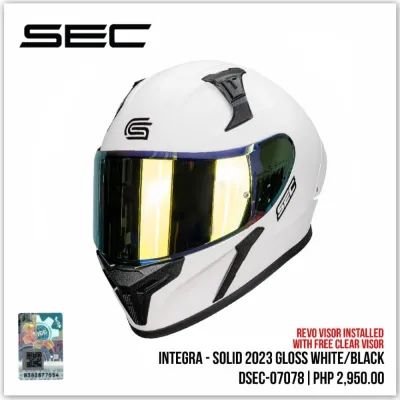
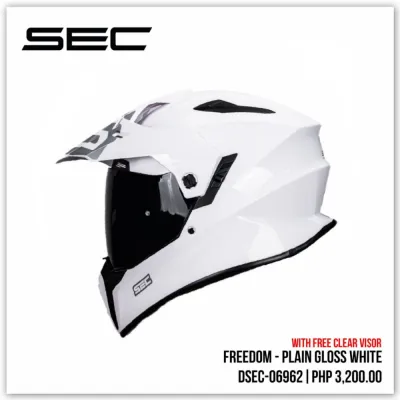
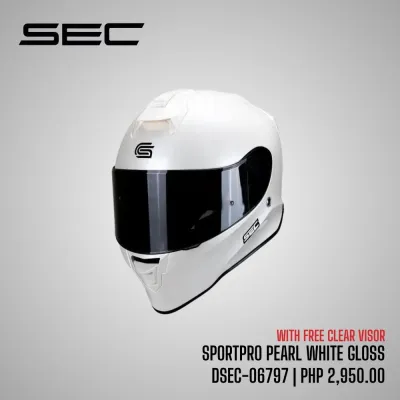
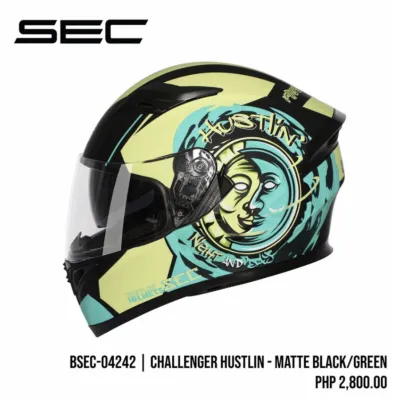
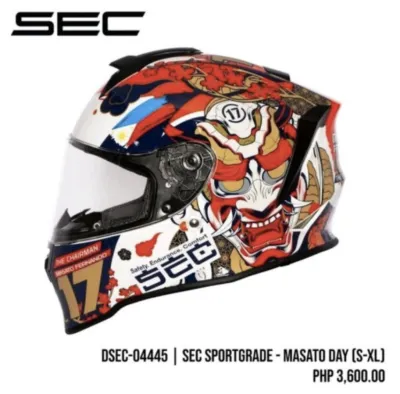
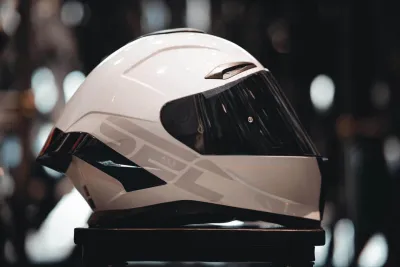
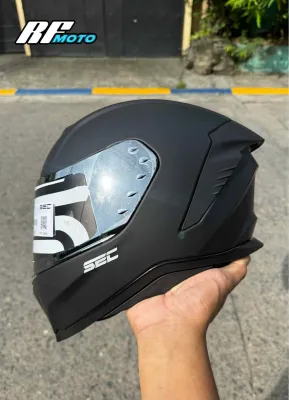
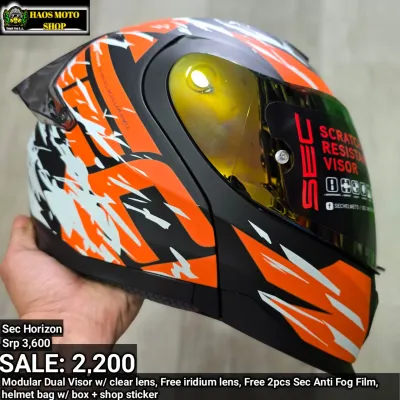
Prices are valid at publication and may change. Please refer to the product page for the latest price.
For locally manufactured helmets, the Philippine Standard (PS) quality mark serves a similar purpose. This mark indicates that the manufacturer’s production facility and products are regularly audited and tested by the BPS. On the other hand, the PSB mark is associated with Singapore’s Productivity and Standards Board. While it is a highly respected safety standard in Southeast Asia, it is an international certification rather than a local regulatory clearance, though it often indicates a helmet built to excellent structural standards.
It is also important to clarify the role of popular brands like SEC. In the local market, a “sec helmet full face” is widely recognized because the brand ensures its products carry the official ICC or PS stickers. SEC is a brand name that complies with these standards, rather than a certification body itself. When choosing a helmet, you must distinguish between these baseline regulatory approvals and advanced international safety ratings like ECE (Economic Commission for Europe) or DOT (US Department of Transportation), which measure different impact dynamics.
Why Certification Matters for Safety and Legal Compliance
Operating a motorcycle on public roads comes with strict legal responsibilities. Under Republic Act No. 10054, also known as the Motorcycle Helmet Act of 2009, all riders and passengers must wear standard protective motorcycle helmets. Riding with an uncertified helmet, a bicycle helmet, or a substandard “novelty” helmet is a direct violation of this law. Fines for non-compliance start at ₱1,500 for the first offense and can escalate up to ₱10,000 for repeated violations, alongside the potential confiscation of your driver’s license.

Beyond avoiding legal penalties, certified full-face helmets are engineered to save lives. A certified helmet features a rigid outer shell made of materials like polycarbonate, ABS, or fiberglass, paired with a thick inner liner of Expanded Polystyrene (EPS). This combination is specifically designed to absorb and distribute the violent forces of an impact. In tropical climates like the Philippines, high humidity and intense heat can accelerate the degradation of low-quality plastics; certified helmets use materials tested to withstand these environmental conditions without losing structural integrity.
During routine traffic checkpoints, Land Transportation Office (LTO) officers and local traffic enforcers look specifically for the physical ICC or PS stickers. If your helmet lacks these marks, you risk being cited for riding without a compliant helmet, regardless of how premium or expensive your gear looks. Ensuring your helmet has the correct local certification protects your wallet at checkpoints and your life on the road.
How to Verify and Choose a Certified Full-Face Helmet
To protect yourself from counterfeit products, you must know how to inspect and validate a helmet’s authenticity before making a purchase. The physical ICC or PS sticker is typically located at the back of the helmet shell or on the chin strap. A genuine ICC sticker features a unique serial number and a holographic security print that shifts color when tilted under light.
Counterfeit stickers have become increasingly common on unbranded helmets sold through unauthorized online marketplaces. You can spot these fakes by checking the quality of the sticker itself; genuine stickers are made of tamper-evident material that tears or leaves a distinct pattern if someone attempts to peel them off. If a sticker is easily removed, has blurry printing, or lacks a unique serial number, the helmet is likely uncertified.
Before buying, you can cross-reference the helmet brand and importer with the official list of certified brands maintained by the DTI-BPS. Reputable brands ensure their full-face models are officially registered and compliant. Always purchase your gear from authorized physical dealers or official brand stores to guarantee you are getting a genuine, certified product that meets all safety requirements.
Frequently Asked Questions (FAQ)
Can I use a helmet with only foreign certifications like DOT or ECE in the Philippines?
While DOT and ECE are highly respected international safety standards, they do not automatically grant legal compliance on Philippine roads. To be legally compliant, any imported helmet carrying these foreign ratings must still go through the DTI-BPS clearance process to obtain an official ICC sticker. Many reputable local distributors import dual-certified helmets that carry both the international ECE/DOT markings and the mandatory local ICC sticker, ensuring you get top-tier safety alongside full legal compliance.
Do open-face and full-face helmets require the same certification marks?
Yes, the legal requirement for ICC or PS certification applies universally to all motorcycle helmets used on public roads, regardless of whether they are full-face, modular, or open-face designs. However, while both styles can carry the same certification sticker, a full-face helmet offers significantly better physical protection. Full-face designs protect your chin, jaw, and face—areas that are highly vulnerable during a crash and are left completely exposed by standard open-face helmets.

Community discussion
Share your experience or ask a question. Comments are reviewed before publication.