
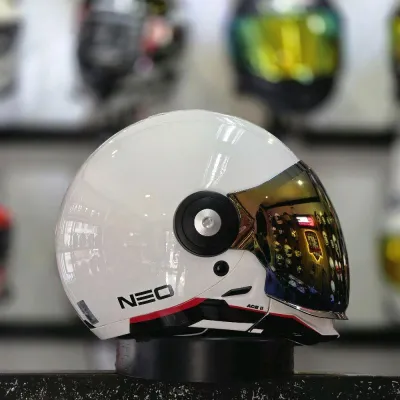
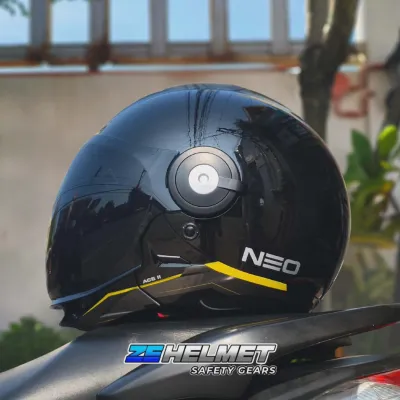
The “4-in-1” designation on the Spyder Neo Ace helmet indicates a highly adaptable modular design that allows riders to physically reconfigure their headgear into four distinct setups. By adding or removing specific components—such as the chin bar, peak visor, and face shield—you can transform the helmet to suit different riding environments, weather conditions, and speeds. Rather than a mere aesthetic choice, this modularity directly affects how the helmet manages airflow, wind noise, and physical protection.
For riders navigating diverse road conditions, understanding how these configurations function is key to getting the most out of your gear. Whether you are facing the intense heat of daily city traffic or cruising on open highways, choosing the right mode ensures a balance between comfort and safety. This breakdown explores the mechanics of the 4-in-1 system, how to transition between modes safely, and how to match each setup to your specific riding needs.
Decoding the "4-in-1" Modular Configurations
To understand the versatility of this modular helmet, it helps to look at the individual components that make up the system. The core helmet shell serves as the foundation, which can be modified using three primary removable parts: a detachable chin guard, a removable peak (or sun visor), and a clear outer face shield. By combining or removing these elements, you can transition between four primary configurations: a full-face setup, a dual-sport or adventure setup, an open-face setup with a shield, and a classic open-face trial setup.
Products mentioned in this guide
Prices are valid at publication and may change. Please refer to the product page for the latest price.
When evaluating these modes, it is crucial to consult the manufacturer’s official user manual or product labels to verify the exact configuration names and their intended uses. Not all removable parts serve the same protective function. For instance, while the outer face shield and peak visor are designed primarily for weather protection, debris deflection, and sun shading, the removable chin guard fundamentally alters the helmet’s aerodynamic profile and structural coverage.
Riders must verify whether the removable chin guard is certified to withstand direct frontal impacts or if it is intended primarily as a dust and wind deflector. This distinction is vital for safety, as some modular helmets carry specific dual-homologation ratings that certify protection in both open and closed configurations, while others are only certified for impact protection with the chin bar fully locked in place. Checking the product documentation ensures you do not overestimate the protective limits of a modified setup.
How to Switch Between Helmet Modes Safely
Reconfiguring a modular helmet requires a systematic approach to prevent damage to the retention mechanisms and ensure the helmet remains structurally sound. The transition between modes typically involves engaging or disengaging quick-release latches, sliding locks, or specialized screws. Always perform these adjustments on a clean, flat surface to avoid dropping the helmet or losing small mounting components.

Before setting out on a ride, you must visually and physically verify that every locking pin, hinge, and seal is fully seated and secure. For configurations utilizing a removable chin bar, listen for a distinct click that indicates the locking mechanisms have engaged on both sides. Give the chin bar a firm downward and outward tug to confirm it is locked into the frame. Any slight misalignment can cause the component to detach unexpectedly under wind pressure or during an impact.
Establish a strict stop condition during the assembly process: if any component resists alignment, feels loose, or fails to click securely into place, halt the process immediately. Never force a mechanism that feels jammed, as this can strip plastic threads or bend metal locking pins. If you encounter persistent resistance, disassemble the parts, inspect the tracks for dirt or debris, and try again. If the issue persists, consult the manufacturer or an authorized dealer before using the helmet.
Matching Helmet Configurations to Your Riding Scenarios
Matching the correct helmet configuration to your immediate riding environment is essential for managing comfort, heat, and safety. The fully enclosed full-face configuration is best suited for high-speed riding, highway cruising, or long-distance touring. In this mode, the helmet provides maximum aerodynamic stability, minimizes wind buffeting, and significantly reduces ambient road noise, allowing you to maintain focus during extended trips.
Conversely, open-face or peak-equipped configurations are highly beneficial for low-speed, urban commuting or light off-road riding. In tropical climates where high humidity and heavy traffic are common, riding in a fully enclosed helmet at low speeds can lead to rapid heat buildup and visor fogging. Removing the chin guard or utilizing an open-face setup maximizes ventilation, keeping you cool while providing a wider lateral field of view to spot hazards in congested city lanes.
However, before modifying your helmet’s configuration, you must verify local traffic regulations regarding helmet modifications on public roads. In the Philippines, the Land Transportation Office and Republic Act No. 10054 (the Motorcycle Helmet Act) mandate the use of certified protective helmets. Ensure that your chosen configuration complies with local enforcement standards and that your helmet retains its required safety markings, such as the Import Commodity Clearance sticker or Bureau of Product Standards print, regardless of the mode you use.
Safety, Fit, and Certification Checks
Maintaining safety and proper fit is a continuous responsibility when using a modular helmet. Every time you alter the physical structure of the helmet, you must inspect the safety certification labels. These labels, often located on the rear of the shell or sewn onto the retention strap, indicate the standards the helmet meets. Verify whether the certification applies to the helmet in all four configurations or if it is restricted to the fully assembled full-face mode.
In addition to external checks, perform an internal inspection of the protective components. Ensure that the expanded polystyrene liner and the comfort padding have not shifted, pinched, or created gaps during the reconfiguration process. The internal padding must remain snug against your cheeks and temples to absorb impact energy effectively. A loose fit caused by misaligned padding can compromise the helmet’s ability to prevent rotational injuries during a fall.
Finally, conduct routine checks on the retention system, including the chin strap and buckle mechanism. Pay close attention to the stress points and anchor areas located near the modular joints. Because modular helmets undergo frequent handling and component changes, these areas are more susceptible to wear and tear. Inspect the strap for fraying and ensure the buckle clicks securely into place, maintaining a tight, reliable fit every time you ride.
Frequently Asked Questions (FAQ)
Can I purchase replacement parts for the modular mechanisms?
Yes, replacement parts such as visors, peak shields, screws, and quick-release mechanism kits are typically available through authorized physical dealers or official brand stores. It is highly recommended to source these components directly from authorized channels to ensure compatibility. Avoid using third-party or non-OEM (Original Equipment Manufacturer) hardware, as generic screws or latches may not meet the specific stress tolerances required to keep the modular components secure under high wind loads or impact forces.
Does the 4-in-1 modular design add significant weight compared to standard helmets?
Modular helmets generally weigh more than traditional single-shell open-face or standard full-face helmets due to the additional hardware required for the conversion mechanisms. The inclusion of locking latches, reinforced anchor points, and dual-shield tracks adds physical material to the build. To manage potential neck fatigue, especially during long rides in tropical heat, it is advisable to perform a physical fitting at a local dealer to evaluate how the weight is distributed across your head and shoulders before making a purchase.
Is it safe to reconfigure the helmet while wearing it or during a ride?
No, you should never attempt to attach, detach, or adjust any modular components while wearing the helmet or while your motorcycle is in motion. Attempting to reconfigure the helmet while riding distracts you from the road and requires you to take your hands off the handlebars, creating a severe safety hazard. Always park your motorcycle in a safe, stationary, and well-lit environment, remove the helmet completely, and perform the reconfiguration carefully to ensure all locking mechanisms are properly aligned and secured.

Community discussion
Share your experience or ask a question. Comments are reviewed before publication.