
Riding a motorcycle in the Philippines means preparing for extreme weather shifts, where a clear morning can quickly turn into a torrential afternoon downpour. Protecting your gear inside your motorcycle luggage is a priority for daily commuters and long-distance riders alike. While many top boxes claim built-in water resistance, a dedicated waterproof top box cover provides an essential secondary barrier against heavy tropical rains, road grime, and intense UV exposure. Finding the right cover requires looking beyond generic size labels and focusing on material construction, seam integrity, and secure fastening systems that can withstand both high-speed highway winds and sudden monsoon storms.
Essential Design Features for Heavy Rain Protection
To keep your belongings dry during severe tropical downpours, you must look closely at how a top box cover is constructed. Standard stitching is one of the most common entry points for water. When a needle punctures fabric to sew a seam, it leaves behind thousands of microscopic holes. Under the pressure of wind and heavy rain while riding, water is easily forced through these tiny openings.
To prevent this, high-quality covers feature heat-sealed or taped seams on the interior. This manufacturing process applies a waterproof tape over the stitched seams using heat and pressure, effectively sealing the needle holes and creating a continuous barrier against moisture. When browsing options on an online marketplace, always verify if the product description explicitly mentions taped or heat-sealed seams.
Products mentioned in this guide
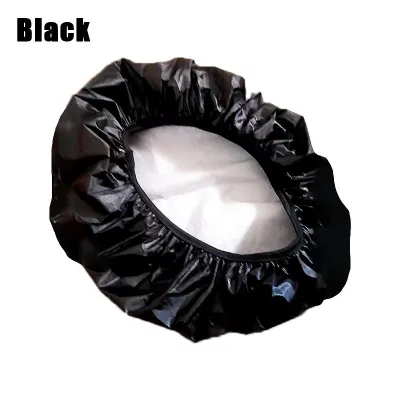
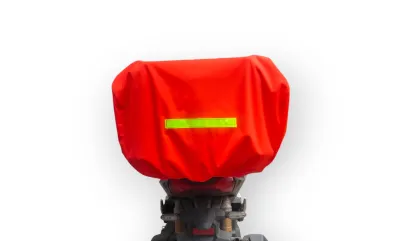
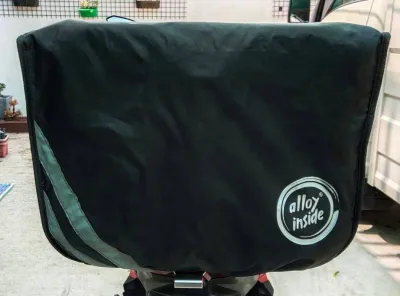
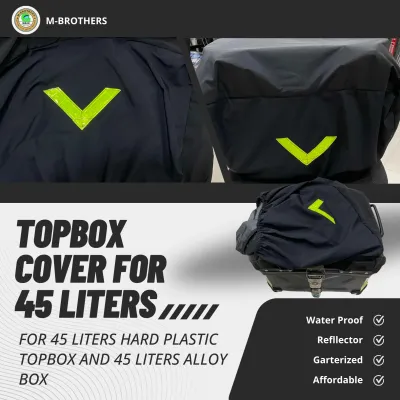
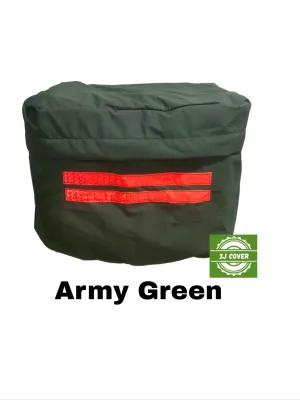
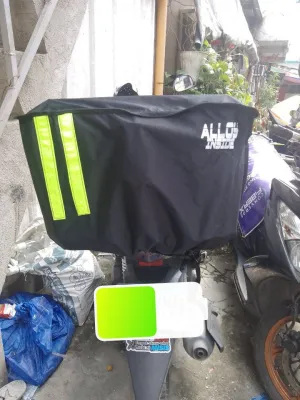
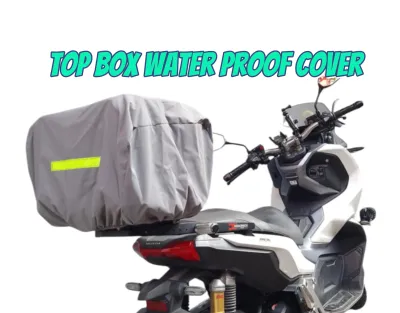
Prices are valid at publication and may change. Please refer to the product page for the latest price.
Another critical vulnerability is the zipper or entry point of the cover. Standard zippers are not waterproof; water can easily seep between the teeth and saturate the top box underneath. To combat this, look for covers that utilize waterproof zippers, which feature a rubberized or polyurethane coating over the zipper teeth to repel water.
Alternatively, a highly effective and often more durable design is a wide storm flap. A storm flap is a strip of waterproof fabric that folds completely over the zipper track, directing water away from the opening. This flap should ideally secure with hook-and-loop fasteners to prevent wind from lifting it while you are riding at higher speeds.
Securing mechanisms are equally vital for maintaining rain protection. A cover that fits loosely will flap violently in the wind, which not only degrades the material over time but can also allow wind-driven rain to blow upward under the hem. Look for covers equipped with robust securing systems, such as heavy-duty elastic hems that wrap tightly around the base of the top box.
Adjustable drawstrings with locking toggles allow you to pull the cover taut, while under-box buckle straps provide the ultimate security. These straps run underneath the mounting plate or the box itself, ensuring that the cover remains firmly attached even when facing strong gusts on open highways or elevated expressways.
How to Measure Your Top Box for a Secure Fit
Choosing a waterproof top box cover based solely on the volume capacity of your box—such as 30 liters, 45 liters, or 55 liters—often leads to a poor fit. Different manufacturers use distinct shapes, contours, and proportions to achieve these volumes. A tall, narrow 45-liter aluminum box has vastly different dimensions than a wide, shallow 45-liter plastic box. To ensure a secure fit that does not flap or tear, you must take precise physical measurements of your top box before making a purchase.

Start by measuring the maximum length, width, and height of your top box using a flexible measuring tape. When measuring, do not just measure the flat panels; you must include any protruding elements. This includes external latches, lock mechanisms, hinges, corner guards, and reflector brackets.
If your top box has an external passenger backrest pad attached to the front, or an accessory luggage rack mounted on the lid, make sure to measure across these additions as well. Failing to account for these protrusions will result in a cover that is too tight, which puts excessive stress on the seams and zippers, leading to premature failure.
Once you have these physical measurements, compare them directly against the manufacturer’s detailed sizing chart rather than relying on generic size categories like small, medium, or large. If your measurements fall between two sizes, it is generally safer to select the larger size, provided the cover features adjustable drawstrings or buckle straps to pull up the slack. A slightly larger cover with robust tensioning straps is far more functional and durable than a cover that must be stretched to its absolute limit to close.
Additionally, consider how the cover interacts with your motorcycle’s rear grab rails, tail light visibility, and passenger space. If you frequently ride with a pillion passenger, a cover that is too bulky or has loose, dangling straps can interfere with their comfort or safety. Ensure that any excess strap length can be neatly tucked away or secured so it does not dangle near the rear wheel, chain, or exhaust pipe.
Material and Construction Checks Before Purchase
The durability of a top box cover in a tropical climate depends heavily on its base material and chemical treatments. The Philippine sun can be just as damaging to outdoor gear as heavy rain. Constant exposure to intense ultraviolet (UV) radiation breaks down synthetic fibers, causing them to become brittle, fade, and eventually tear under light stress.
When evaluating covers, look for materials that specify UV-resistant coatings or treatments, such as high-denier polyester or heavy-duty nylon with a polyurethane (PU) or polyvinyl chloride (PVC) backing. The denier rating indicates the thickness of the individual threads; a higher denier generally translates to greater tear resistance and longevity.
While checking the fabric specifications, look for verified water-resistance ratings, often expressed in millimeters (such as 2000mm or 3000mm water column). This rating indicates the amount of water pressure the fabric can withstand before moisture begins to penetrate. For daily riding in areas prone to sudden, heavy downpours, a rating of at least 2000mm is recommended to ensure the fabric does not saturate and let water seep through during prolonged exposure.
Another crucial but often overlooked feature is the interior lining of the cover. While the exterior must be tough and weather-resistant, the interior should be gentle on your top box. Wind-induced flapping can cause a rough cover material to act like fine sandpaper, gradually scratching and dulling the finish of your top box, whether it is painted aluminum or textured plastic.
Look for covers that feature a soft inner lining, such as brushed polyester, microfiber, or a non-abrasive fleece layer. This lining cushions the box and prevents cosmetic damage during long rides.
Finally, inspect the quality of the hardware. Plastic buckles should be made of high-impact polymers that do not degrade or become brittle when exposed to heat and sunlight. Metal grommets or eyelets, if present for locking or drainage, should be made of rust-resistant materials like brass or stainless steel to prevent corrosion from constant exposure to humidity and rain.
Daily Usage and Maintenance for Long-Lasting Protection
Even the highest-quality waterproof top box cover will fail prematurely if it is installed incorrectly or neglected. Proper installation is the first step to ensuring effective water runoff. When putting the cover on, make sure it is pulled taut across the top surface of the box. If the cover is loose, water can pool in the sagging areas.
Standing water will eventually find its way through even the best coatings over time due to constant hydrostatic pressure. Adjust the drawstrings and buckle straps so that the cover forms a smooth, sloped profile that encourages water to shed off the sides immediately.
Regular cleaning is essential to preserve the waterproof coatings applied to the fabric. Road grime, oil splatters, dust, and salt residue from coastal riding can chemically degrade the water-repellent treatments over time. To clean your cover, avoid using harsh household detergents, bleach, or degreasers, as these chemicals will strip away the polyurethane or durable water repellent (DWR) coatings.
Instead, hand wash the cover using mild soap, lukewarm water, and a soft sponge or microfiber cloth. Never put a waterproof cover into a washing machine or spin dryer, as the mechanical agitation can delaminate the waterproof backing and ruin the taped seams.
After cleaning, or after riding through a heavy storm, proper drying is critical to prevent the growth of mold and mildew. Mold thrives in warm, humid environments, and storing a damp cover in a dark garage or inside the top box itself will quickly lead to unpleasant odors and material rot. Always hang the cover to air dry completely in a well-ventilated, shaded area before folding and storing it. Avoid leaving it to dry in direct, intense midday sunlight, as unnecessary UV exposure accelerates fabric aging.
If you notice that water has stopped beading on the surface of the cover and is instead soaking into the outer fabric layer, the durable water repellent (DWR) coating may have worn off. You can restore this water-beading performance by applying a specialized aftermarket fabric waterproofing spray designed for outdoor gear. Before applying, ensure the cover is completely clean and dry, and follow the manufacturer’s instructions for application and curing times in a well-ventilated space.
Frequently Asked Questions (FAQ)
Can I use a universal top box cover for my specific motorcycle model?
Yes, you can use a universal top box cover, but you must carefully manage the fit. Universal covers are designed to accommodate a wide range of box shapes and sizes, which means they often feature a more generous cut. While this makes them highly versatile, the primary trade-off is aerodynamic stability.
A universal cover that is too loose will flap excessively at highway speeds, creating wind drag and noise. This constant flapping can also cause the fabric to wear out quickly or snag on nearby motorcycle components. If you choose a universal cover, ensure it has highly adjustable securing features, such as multiple tensioning straps, elastic drawcords, or buckle systems, so you can customize the fit and minimize loose fabric.
How do I know if the waterproof coating on my cover is failing?
The most obvious sign of failure is water saturation. When a cover is new, water should bead up into distinct droplets and roll off the surface easily. If the fabric begins to absorb water, turning a darker color and feeling damp to the touch on the outside, the outer water-repellent coating has degraded.
Additionally, check the interior of the cover after a rainstorm. If you find damp spots, condensation buildup, or direct water leakage on your top box, the inner waterproof backing or the seam tape has likely cracked or delaminated. If the fabric itself is intact, you may be able to restore water resistance with a waterproofing spray, but if the inner lining is peeling or the seams are falling apart, it is time to replace the cover.

Community discussion
Share your experience or ask a question. Comments are reviewed before publication.