
A 51mm canister pipe diameter refers to the internal measurement of the inlet on an aftermarket exhaust muffler, commonly known as a canister. In the motorcycle modification world, this dimension is one of the most widely used standards for slip-on exhausts, particularly for small-to-medium displacement bikes. However, assuming a 51mm canister will automatically fit your motorcycle without physical verification can lead to exhaust leaks, poor engine performance, or installation failure. To ensure a secure and functional fit, you must understand how this measurement aligns with your motorcycle’s existing mid-pipe and what mechanical adjustments may be required.
How to Measure Your Existing Exhaust Pipe for a 51mm Fit
To determine if a 51mm canister pipe will physically connect to your motorcycle, you must accurately measure the mating point of your current exhaust system. This is typically the outlet of the mid-pipe or header pipe where the stock muffler detaches. Relying on manufacturer spec sheets can sometimes be misleading due to production variations, so manual measurement is highly recommended.
The most critical step is differentiating between the inner diameter (ID) and the outer diameter (OD) of the mating surfaces. For a slip-on canister to slide over your existing mid-pipe, the inner diameter of the canister inlet must match the outer diameter of the mid-pipe outlet. If you are measuring the mid-pipe, you need to measure its outside edge. If you are measuring an existing canister, you must measure the inside edge of the inlet.
Products mentioned in this guide
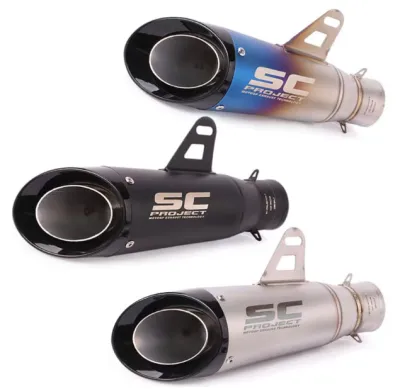
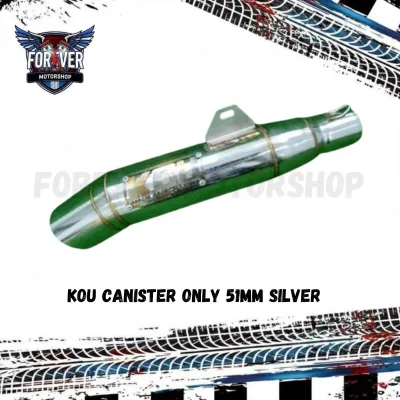
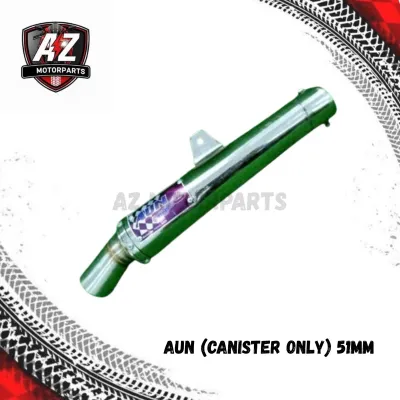
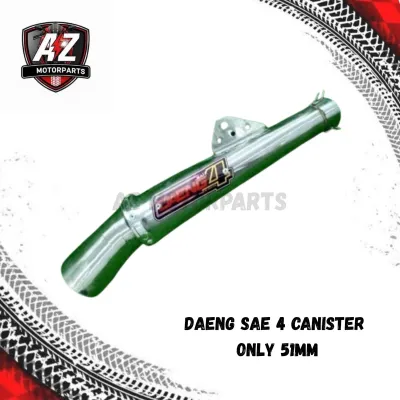
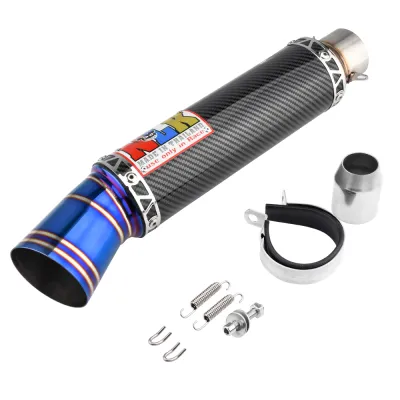
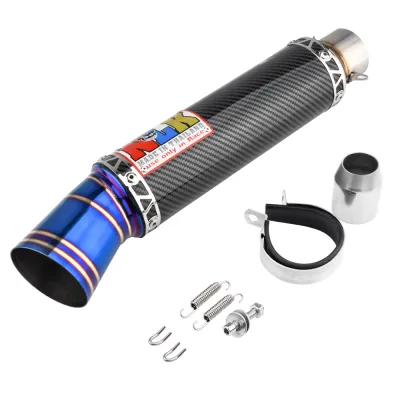
Prices are valid at publication and may change. Please refer to the product page for the latest price.
Using a digital caliper is the most reliable way to get an accurate reading. Standard tape measures or rulers lack the precision needed for exhaust tolerances, where a discrepancy of even one millimeter can cause a persistent exhaust leak. When measuring a used pipe, take readings at multiple angles around the circumference. Exhaust pipes are subjected to high heat and clamping pressure, which can cause them to become slightly ovalized over time. Taking an average of these cross-sectional measurements will give you a true picture of the pipe’s shape.
Always measure at the exact point where the slip-on joint or flange connection occurs. If your motorcycle uses a welded one-piece exhaust system, you will not have a simple slip-on joint. In such cases, installing a 51mm canister will require cutting the stock pipe, which permanently alters the factory system and requires precise marking before making any modifications.
Fitment Scenarios for a 51mm Canister Pipe
Once you have your measurements, you will likely face one of three fitment scenarios. The easiest scenario is a direct slip-on fitment. This occurs when your mid-pipe’s outer diameter matches the 51mm inner diameter of the canister pipe. With a high-quality exhaust gasket or assembly paste, the canister should slide on smoothly with minimal play, allowing you to secure it firmly using standard spring hooks or a barrel clamp.

If your mid-pipe is slightly smaller or larger than 51mm, you do not necessarily need to abandon the installation. You can use step-down or step-up adapter pipes, which are metal sleeves designed to bridge minor size differences, such as adapting a 48mm mid-pipe to a 51mm canister. When using these adapters, securing the joint with heavy-duty exhaust clamps is essential to prevent exhaust gases from escaping under pressure.
For significant size mismatches or complex frame routing, custom fabrication is the safest and most reliable route. If the gap is too wide for standard adapters, or if the angle of the mid-pipe prevents the canister from aligning with the mounting brackets, a professional exhaust shop must weld a custom mid-pipe. Attempting to force an improper fit with makeshift shims can lead to structural failure, causing the exhaust to detach while riding.
Because exhaust modifications alter the structural and thermal characteristics of your motorcycle, always consult your vehicle’s service manual before beginning. If you are uncomfortable with cutting, welding, or aligning complex pipe geometries, seek the assistance of a qualified motorcycle technician to perform the installation.
How Pipe Diameter Affects Exhaust Flow and Backpressure
Changing your motorcycle’s canister pipe diameter does more than alter its physical appearance and sound; it directly impacts engine dynamics. The exhaust system relies on the principle of scavenging, where the velocity of exiting exhaust gases creates a vacuum that helps pull the next combustion charge out of the cylinder. The diameter of the pipe plays a fundamental role in maintaining this velocity.
If you install a canister pipe that is too large for your engine’s displacement and tuning state, the exhaust gas velocity will drop. This reduction in velocity often leads to a loss of low-end torque, making the motorcycle feel sluggish when accelerating from a stop. Conversely, if the pipe diameter is too restrictive for the engine’s output, it creates excessive backpressure, which limits high-RPM performance and can cause the engine to run hot.
Because a 51mm canister alters the flow rate of exhaust gases, it frequently changes the engine’s air-fuel ratio. A freer-flowing exhaust typically causes the engine to run lean, meaning there is too much air and not enough fuel in the combustion chamber. To prevent engine overheating, valve damage, or sputtering, you may need to perform an ECU remap on fuel-injected models or carburetor rejetting on older motorcycles to restore the proper fuel balance.
Installation Checks and Safety Boundaries
Before finalizing your installation and taking your motorcycle out on the road, you must perform several critical safety and clearance checks. First, verify that the newly installed 51mm canister has adequate ground clearance and does not interfere with the rear suspension travel. Compress the rear suspension fully to ensure the canister, mounting brackets, or clamps do not contact the swingarm, rear tire, or brake caliper.
Heat management is another vital safety consideration. Aftermarket canisters can radiate intense heat, especially during prolonged idling in tropical traffic. Check that the canister is positioned far enough away from plastic body panels, electrical wiring, and brake lines to prevent melting or fire hazards. If the clearance is tight, installing a dedicated heat shield or wrapping the mid-pipe with thermal exhaust wrap is highly recommended to protect both the machine and the rider’s legs.
Finally, you must ensure your modification complies with local regulations in the Philippines. The Land Transportation Office (LTO) and local government units enforce strict guidelines regarding aftermarket exhaust noise levels and emissions. Many 51mm canisters are sold with removable baffles or dB killers. Keeping these baffles installed is often necessary to stay within legal decibel limits and avoid costly fines or vehicle impoundment during roadside inspections.
Frequently Asked Questions (FAQ)
Is a 51mm pipe the same as a 2-inch exhaust pipe?
While 51mm is mathematically equivalent to approximately 2.007 inches, they are practically interchangeable when selecting heavy-duty exhaust clamps or flexible adapters. However, you should not rely solely on nominal imperial labeling when purchasing precision slip-on components. Manufacturing tolerances and varying pipe wall thicknesses between different brands can create small gaps that prevent a gas-tight seal, making physical caliper verification essential.
Will a 51mm canister pipe fit all 150cc motorcycles?
No, a 51mm canister pipe will not fit all 150cc motorcycles automatically. Although 51mm is a highly popular inlet size for aftermarket exhausts designed for single-cylinder, small-displacement bikes, manufacturers use widely different stock mid-pipe diameters and routing paths. You must physically measure your specific motorcycle’s mid-pipe outer diameter and check frame clearance before purchasing a 51mm canister.

Community discussion
Share your experience or ask a question. Comments are reviewed before publication.