
Finding the correct coolant for your vehicle is essential for maintaining engine health and preventing catastrophic overheating, especially under the demanding driving conditions of the Philippines. Whether you are navigating the bumper-to-bumper traffic of Metro Manila, enduring the midday tropical heat, or climbing the steep, winding roads of Benguet, your vehicle’s cooling system is under constant thermal stress. Using the wrong fluid can lead to rapid corrosion, water pump failure, and expensive engine damage.
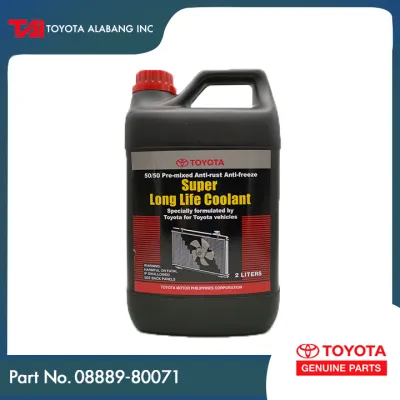
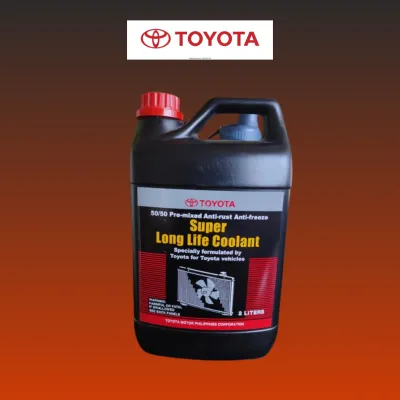
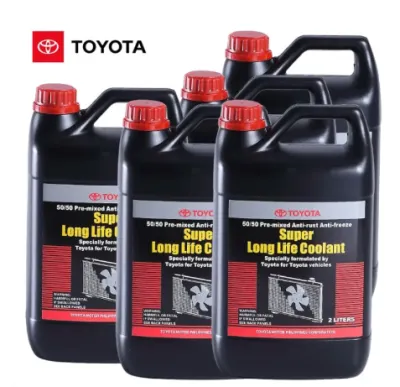
The short answer is that the Toyota Innova requires a high-quality, phosphate-based Organic Acid Technology (P-OAT) coolant that is completely free of silicates, borates, nitrites, and amines. Modern Innovas equipped with the 2.8-liter 1GD-FTV diesel engine or the 2.0-liter 1TR-FE gasoline engine require pre-mixed Toyota Genuine Super Long Life Coolant (SLLC), which is pink. Older generations, such as those utilizing the 2.5-liter 2KD-FTV diesel engine, originally shipped with Toyota Genuine Long Life Coolant (LLC), which is red and requires proper dilution. To ensure your engine remains fully protected, you must verify the exact specification in your vehicle’s owner’s manual or check the markings on the factory coolant reservoir cap before adding any fluid.
Decoding Toyota Innova Coolant Specifications: SLLC vs. LLC
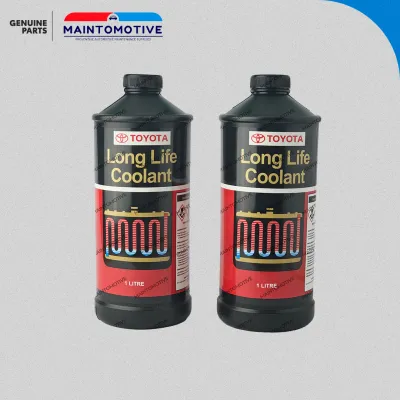
Toyota has historically utilized two primary coolant standards in its passenger vehicles and multi-purpose vehicles (MPVs): Super Long Life Coolant (SLLC) and Long Life Coolant (LLC). Understanding the differences between these two formulations is the first step in maintaining your Innova’s cooling system. SLLC is a modern, pre-mixed fluid that is dyed pink and designed for extended service intervals. LLC is an older, concentrated formulation dyed red that requires manual dilution with distilled water before use.
Products mentioned in this guide
![Toyota Long Life Coolant 1 Liter (Pink) [Ready To Use]](https://img.lazcdn.com/g/p/5460d9af0d35e1556a975577b31c4835.png_400x400q80.png_.webp)
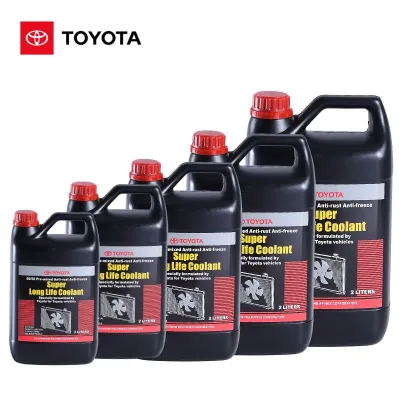
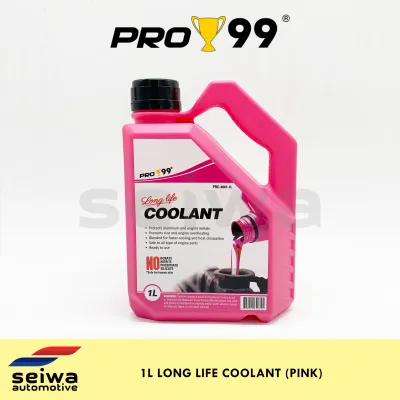
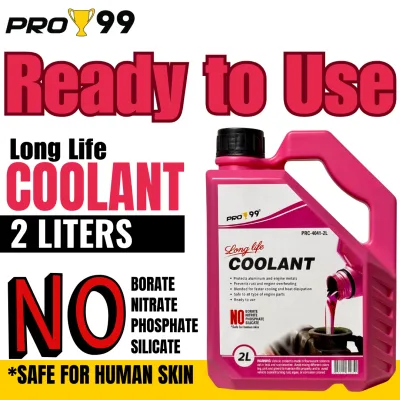
Prices are valid at publication and may change. Please refer to the product page for the latest price.
The exact coolant requirement for your Toyota Innova depends on its production year, engine type, and factory fill. The first-generation Innova (AN40), produced from 2004 to 2015, came equipped with either the 2.5-liter 2KD-FTV D-4D common-rail diesel engine or the 2.0-liter 1TR-FE gasoline engine. Many of these older models originally utilized the red Long Life Coolant (LLC) from the factory. The second-generation Innova (AN140), introduced in late 2015 and powered by the 2.8-liter 1GD-FTV diesel or the updated Dual VVT-i 1TR-FE gasoline engine, is factory-filled with the pink Super Long Life Coolant (SLLC). Always consult your specific vehicle’s owner’s manual or inspect the coolant reservoir cap to confirm which specification your vehicle currently requires.
These coolants are formulated with specific chemical properties tailored to Toyota’s engine metallurgy. Toyota engines feature aluminum cylinder heads, aluminum engine blocks, and water pumps with specialized silicon carbide seals. To protect these components, Toyota utilizes a Phosphate Organic Acid Technology (P-OAT) formulation. The phosphates provide immediate, highly effective passivation of aluminum surfaces, protecting them from cavitation and corrosion. At the same time, the organic acids provide long-term protection as the phosphates are slowly depleted over thousands of kilometers.
Crucially, Toyota’s cooling systems are designed to operate without silicates. Traditional green coolants used in older American or European vehicles often rely on silicates for corrosion protection. However, silicates are highly abrasive and can act like fine sand inside your Innova’s cooling system. Over time, these abrasive particles wear down the delicate water pump seals, leading to premature coolant leaks and water pump failure. Furthermore, silicates can precipitate out of the solution, forming a thick scale that clogs the radiator’s micro-tubes and reduces heat transfer efficiency.
Using generic, universal, or incorrect coolants in your Toyota Innova carries severe risks. If you mix a silicate-based coolant with a phosphate-based coolant, the additives can react chemically and drop out of solution. This reaction forms a thick, gelatinous sludge that settles in the lowest parts of your engine block, heater core, and radiator. Once this sludge forms, it blocks the flow of coolant, leading to localized hot spots, warped cylinder heads, blown head gaskets, and eventual engine seizure. To avoid these catastrophic failures, you must stick strictly to the specified P-OAT, silicate-free chemistry.
OEM vs. Aftermarket Coolants: Making the Right Choice for Your Engine
When it is time to service your cooling system, you must decide between purchasing Genuine Toyota fluids from an authorized dealership or opting for reputable aftermarket alternatives. Both paths have distinct advantages and trade-offs regarding cost, convenience, and long-term peace of mind. Weighing these factors carefully will help you make the best decision for your budget and your vehicle’s warranty status.

Genuine Toyota coolants offer the highest level of certainty and security. Because they are the exact fluids used to fill your Innova at the factory, they guarantee a 100% match with your engine’s metallurgy and gasket materials. Choosing OEM fluids eliminates any chemical guesswork, preserves your vehicle’s manufacturer warranty, and ensures that the corrosion inhibitors behave exactly as the engineers intended. For owners of newer Innovas under active dealership warranty, using Genuine Toyota SLLC is highly recommended to avoid any potential warranty claim disputes.
On the other hand, high-quality aftermarket coolants present a compelling alternative, primarily due to their wider availability and lower cost. In the Philippines, sourcing genuine fluids can sometimes require a trip to a major dealership, which may not be convenient if you live in provincial areas. Reputable aftermarket coolants are widely stocked in local auto supply stores, major hardware chains, and trusted online marketplaces. Additionally, aftermarket options often come at a more economical price point, making them an attractive choice for budget-conscious owners of older, out-of-warranty Innovas.
If you decide to purchase an aftermarket coolant, you must follow a strict checklist to ensure compatibility. Never choose a product based solely on its color, as manufacturers can use any dye they prefer. Instead, read the product label carefully and verify the following criteria:
- Specification Compliance: The label must explicitly state that the fluid is compatible with Toyota specifications or meets Japanese Industrial Standard (JIS) K 2234.
- Chemical Formulation: The product must be a phosphate-based Organic Acid Technology (P-OAT) fluid.
- Additive Exclusions: The label must clearly state that the formulation is completely free of silicates, borates, nitrites, and amines.
- Target Vehicle Type: Many reputable brands label these products specifically for "Asian Vehicles" or "Japanese Cars."
You must also understand the difference between pre-mixed and concentrated coolants before making a purchase. Pre-mixed coolants, typically labeled as “50/50,” are diluted at the factory with high-purity deionized or distilled water. They are ready to pour directly into your reservoir or radiator, eliminating the risk of mixing errors. Concentrated coolants, conversely, must be manually mixed with water before being added to the system.
If you choose a concentrated coolant, you must mix it strictly with pure distilled water, which is easily obtained at local supermarkets and auto supply shops. Never use tap water, well water, or mineral water to dilute coolant. Tap water in the Philippines often contains high concentrations of minerals such as calcium and magnesium. When subjected to the intense heat inside your Innova’s engine, these minerals precipitate out of the water and form hard scale deposits. This scale coats the internal passages of the engine and radiator, acting as an insulator that traps heat and eventually clogs the cooling system.
Top Coolant Picks for Toyota Innova: OEM and Compatible Alternatives
Selecting the right coolant for Toyota innova involves matching your vehicle’s generation and your personal maintenance preferences with a trusted product. Below is a structured guide to the top coolant categories and reliable brands available in the Philippine market, along with buying advice to help you avoid counterfeit products.
Toyota Genuine Super Long Life Coolant (SLLC)
This is the premier choice for Toyota Innova owners who prioritize absolute certainty, maximum component longevity, and factory-spec performance. It is the default recommendation for second-generation Innovas and any vehicle still covered by the manufacturer’s warranty.
- Why Choose It: Toyota Genuine SLLC is pre-diluted to a 50/50 ratio, meaning it requires no additional water and is ready for immediate use. It is engineered specifically to protect the aluminum alloys and silicon carbide water pump seals used in the 1GD-FTV and 1TR-FE engines. It offers an exceptionally long service life, protecting against corrosion and cavitation without forming scale or degrading hoses.
- Buying Advice: Due to its popularity, counterfeit Toyota fluids are a known risk in the local market, especially on online e-commerce platforms. To protect your engine, purchase Genuine SLLC only from authorized Toyota dealerships or highly reputable physical auto parts distributors. When buying, closely inspect the packaging: look for crisp, clear label printing, a secure tamper-evident cap seal, and a clearly printed batch code on the bottle. Avoid listings that offer the product at prices significantly lower than established dealership rates.
Aisin and OEM-Supplier Alternatives
This category is ideal for cost-conscious Innova owners who want OEM-equivalent quality and chemical formulation without paying the dealership price premium.
- Why Choose It: Aisin is a core member of the Toyota Group and serves as the original equipment manufacturer for many of Toyota's vital engine and drivetrain components, including water pumps. Aisin's aftermarket coolants, such as the Aisin Ultra Long Life Coolant, are formulated to match Toyota's SLLC and LLC specifications. They provide the exact same P-OAT, silicate-free protection required to keep your water pump operating smoothly.
- Buying Advice: Aisin coolants are widely available in reputable local auto supply shops and authorized online stores. Ensure you select the correct version for your vehicle: Aisin offers a pink formulation (matching SLLC) and a red formulation (matching LLC). Verify that the packaging explicitly states compatibility with Toyota vehicles and confirms the silicate-free, phosphate-based chemistry.
High-Quality Aftermarket Brands for Asian Vehicles
This option is best suited for drivers who need a reliable, widely accessible coolant for routine maintenance or emergency top-ups, and who prefer globally recognized automotive care brands.
- Why Choose It: Major global brands produce specialized coolant lines engineered specifically for Japanese and Korean vehicles. Examples include Prestone Asian Vehicles (Pink or Red) and Valvoline Zerex Asian Vehicle. These products are formulated as phosphate-OAT (P-OAT) fluids that are completely free of silicates and borates. They are engineered to handle the extreme operating temperatures of tropical climates and heavy stop-and-go driving.
- Buying Advice: These products are highly accessible and can be found in most major home improvement centers, hardware stores, and automotive retail chains across the Philippines. When purchasing, strictly avoid generic "universal" coolants, which are often dyed green or yellow and claim to work in "all makes and models." These universal fluids often contain silicates or lack the specific phosphate levels required to protect Toyota's aluminum components. Always read the back label to confirm the fluid is designed for Toyota or Asian vehicles.
Safe Practices for Checking and Topping Up Coolant
Routine cooling system maintenance is a straightforward task that you can perform at home, but it requires strict adherence to safety protocols. Working with a vehicle’s cooling system carries an inherent risk of severe thermal burns. Always prioritize safety and consult your vehicle’s owner’s manual before performing any maintenance or inspection.
To check your coolant level safely, park your Innova on a flat, level surface and allow the engine to cool down completely. Locate the translucent plastic coolant reservoir tank in the engine bay. Without removing the cap, visually inspect the fluid level against the molded markings on the side of the tank. The coolant level must sit between the “LOW” (or “MIN”) and “FULL” (or “MAX”) lines. If the fluid level is at or below the lower line, a top-up is required.
Critical Safety Warning: Never open the radiator cap or the coolant reservoir cap when the engine is hot or warm. The cooling system operates under high pressure when the engine is running. If you open the cap while the system is hot, pressurized, boiling-hot liquid and steam will spray out violently. This can cause severe, life-altering burns to your face, hands, and body. Always wait several hours until the engine is completely cold to the touch before opening any part of the cooling system.
When topping up the system, you must follow the rule of chemical consistency. Only add coolant that matches the type and color of the fluid currently in your system. If your reservoir contains pink SLLC, top it up only with pre-mixed pink SLLC or a certified compatible aftermarket pink P-OAT coolant. If you do not know what type of coolant is currently in your Innova’s system—for example, if you recently purchased the vehicle pre-owned—do not risk mixing different products. Mixing incompatible formulas can degrade the corrosion inhibitors or cause gelling. In this scenario, it is safest to have the entire system flushed and refilled with fresh, verified coolant.
It is also important to distinguish between a simple reservoir top-up and a complete system flush. Adding a small amount of pre-mixed coolant to the plastic reservoir tank is a safe and simple task that you can perform yourself. However, performing a complete system flush—which involves draining the old fluid from both the radiator and the engine block, flushing out accumulated contaminants, refilling the system, and purging trapped air—is a highly technical procedure.
If air pockets are trapped inside the cooling system during a refill, they can block the flow of coolant and create localized hot spots within the engine. This issue, known as an airlock, can cause rapid engine overheating and severe cylinder head damage. Properly bleeding or “burping” the cooling system often requires specialized vacuum-fill tools or specific spill-free funnels. If you are not experienced in this procedure or lack the proper equipment, it is highly recommended to have a qualified professional mechanic perform the full flush and refill to ensure your system is completely free of air pockets.
Frequently Asked Questions (FAQ)
Can I mix pink and red Toyota coolants?
Mixing Toyota’s pink Super Long Life Coolant (SLLC) and red Long Life Coolant (LLC) is highly discouraged. While both are formulated by Toyota, they utilize different chemical additive packages and have different service life ratings. Pink SLLC is a newer, pre-mixed formulation designed for extended change intervals, whereas red LLC is an older concentrate that requires manual dilution. Mixing them can compromise the extended-life properties of the pink coolant, reduce the overall level of corrosion protection, and potentially lead to additive dropout or gelling over time. If you decide to transition your older Innova from red LLC to pink SLLC, you must perform a complete system flush to remove all traces of the old fluid before refilling with the new pink coolant.
Is it safe to use distilled water instead of coolant in an emergency?
In a severe road emergency—such as a sudden coolant leak or extreme engine overheating—adding clean distilled water to the system is acceptable as a temporary measure to safely drive your vehicle to the nearest service center. However, water alone lacks the essential corrosion inhibitors, rust preventatives, and water pump lubricants provided by proper coolant. Running on pure water or a highly diluted mixture will lead to rapid rust formation, cavitation damage on the water pump impeller, and scale buildup. Furthermore, water has a lower boiling point than a proper 50/50 coolant mixture, making your engine much more prone to boiling over in heavy traffic. Never use tap water, well water, or mineral water, as their mineral content will damage the system. Once the emergency is resolved, have the leak repaired immediately, and have the system professionally flushed and refilled with the correct 50/50 coolant mixture.
How often should I change the coolant in my Toyota Innova?
You must consult your specific Toyota Innova owner’s manual for the authoritative maintenance schedule, as intervals vary depending on the model year, engine type, and driving conditions. Generally, Toyota’s factory-fill Super Long Life Coolant (SLLC) is rated for a very long initial interval, often up to 160,000 kilometers (or 80,000 miles) or 5 to 7 years. Subsequent replacements using aftermarket or dealer-supplied fluids typically require shorter intervals, such as every 80,000 kilometers or 3 to 4 years. Regardless of mileage, you should perform regular visual inspections of the coolant reservoir. If you observe that the fluid has turned brown, looks cloudy, contains visible rust particles, or has a burnt smell, these are immediate indicators that the coolant has degraded and must be flushed and replaced to protect your engine.

Community discussion
Share your experience or ask a question. Comments are reviewed before publication.