
The correct engine oil viscosity for your Toyota HiAce depends on its specific model year, engine type, and the manufacturer’s official specifications. Because the HiAce is a workhorse frequently subjected to heavy passenger loads, commercial deliveries, and high ambient temperatures in the Philippines, choosing the right viscosity is critical for maintaining engine health and preventing premature wear. To help maintain proper protection, you must always verify the exact requirements in your vehicle’s owner’s manual before purchasing any oil change package.
Understanding Engine Oil Viscosity Grades
Engine oil viscosity refers to how easily the oil flows at specific temperatures, which is standardized by the Society of Automotive Engineers (SAE). The viscosity grade is expressed as a number combination like “5W-30” or “15W-40,” where each part of the code represents a distinct performance characteristic.
The first number, followed by the letter “W” (which stands for winter), indicates the oil’s low-temperature fluidity. A lower number before the “W” means the oil remains more fluid in cold conditions, allowing it to circulate rapidly through the engine during a cold start to minimize initial friction.
Products mentioned in this guide
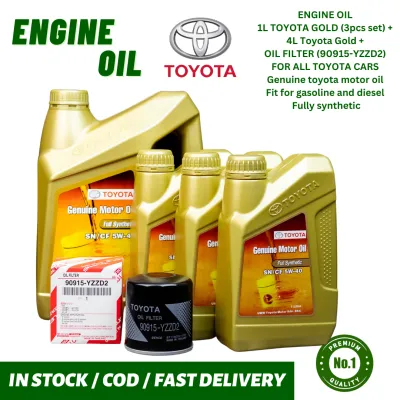
![Toyota Fully Synthetic Engine Oil 5W-40 [7 Liters + Oil Filter] Oil Change for Diesel/Gas Innova | Fortuner | Hilux | HiAce](https://img.lazcdn.com/g/p/2fc5bf859773f8a323da623cf2c1ab01.png_400x400q80.png_.webp)
![Toyota Fully Synthetic Engine Oil 5W-30 [7 Liters + Oil Filter] Oil Change for Diesel/Gas Innova | Fortuner | Hilux | HiAce](https://img.lazcdn.com/g/p/3fa4e9d55e7a2ff8145bec23918a679a.png_400x400q80.png_.webp)
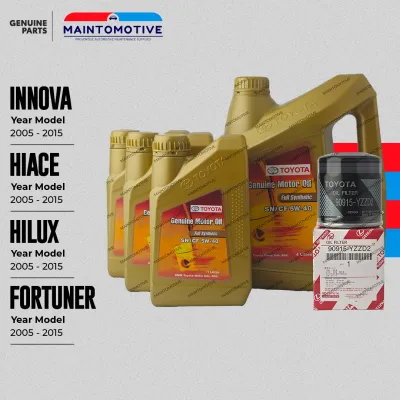
![Toyota 5W-30 Fully Synthetic Engine Oil [7 Liters + Oil Filter] Change Oil Package for Diesel/Gas Innova | Fortuner | Hilux | HiAce](https://img.lazcdn.com/g/p/f94f6c7fe479eb042e9d1d1d208498c6.png_400x400q80.png_.webp)
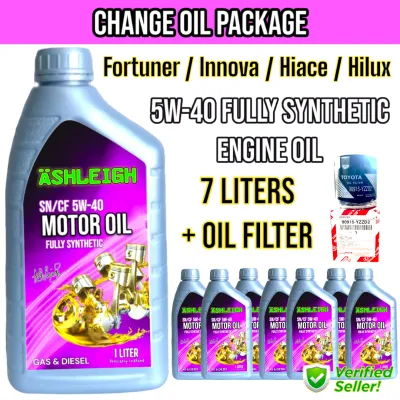
![Toyota 5W-40 Fully Synthetic Engine Oil [7 Liters + Oil Filter] Change Oil Package for Diesel/Gas Innova | Fortuner | Hilux | HiAce](https://img.lazcdn.com/g/p/0ad299108ee36f4be3229bee56b6d447.png_400x400q80.png_.webp)
Prices are valid at publication and may change. Please refer to the product page for the latest price.
The second number represents the oil’s operating viscosity at high temperatures, specifically at 100 degrees Celsius. A higher second number indicates a thicker, more robust oil film that resists thinning under extreme heat and heavy engine loads, which is vital for protecting internal components during long highway drives.
Selecting the correct viscosity ensures that the oil film is neither too thin to protect the engine nor too thick to flow efficiently. Deviating from the manufacturer’s design requirements can lead to increased fuel consumption, poor lubrication, or accelerated wear on critical engine components.
How to Find the Correct Viscosity for Your Toyota HiAce
To find the precise engine oil viscosity recommended for your specific Toyota HiAce, your primary resource should always be the vehicle’s official Owner’s Manual. Look for the “Specifications” or “Maintenance” section, which outlines the approved SAE viscosity grades and performance standards, such as API (American Petroleum Institute) or ACEA (European Automobile Manufacturers’ Association) classifications.

You can also check the engine bay for physical indicators of the recommended oil type. Manufacturers often print the recommended viscosity grade directly on the oil filler cap or place a dedicated maintenance label near the radiator support or under the hood.
In tropical climates like the Philippines, where high humidity and elevated ambient temperatures are constant, the manufacturer may list alternative viscosity options in the manual. For instance, while a thinner oil like 5W-30 might be recommended for fuel efficiency, a thicker option like 10W-40 or 15W-40 might be permitted for heavy-duty commercial operations or high-load transport.
Any decision to use an alternative viscosity must be strictly based on the conditions and temperature ranges specified in your manual. Never assume a viscosity grade is suitable without verifying that it aligns with the manufacturer’s official temperature-viscosity chart for your specific engine model.
Evaluating a HiAce Change Oil Package: What to Check Before Buying
When shopping for a hiace change oil package from a local service center or an online marketplace, you must carefully verify that the included oil matches your vehicle’s exact specifications. Do not rely solely on generic package titles; instead, cross-reference the oil’s viscosity grade and API/ACEA certifications with the requirements in your Owner’s Manual.
Confirm that the package provides a sufficient volume of oil for your specific engine. The oil capacity of a Toyota HiAce varies significantly depending on the engine generation and whether you are performing a standard oil change or replacing the oil filter at the same time. Ensure the package includes enough liters to fill the engine to the proper level on the dipstick.
The quality of the oil filter included in the package is just as critical as the oil itself. Verify that the filter is either an original equipment manufacturer (OEM) part or a high-quality aftermarket replacement that meets or exceeds original specifications to prevent oil pressure drops or filtration failures.
Finally, always request and retain a detailed receipt or service record that specifies the exact brand, viscosity, and volume of oil used, along with the filter part number. Keeping these records is essential for tracking your maintenance intervals and preserving your vehicle’s warranty coverage.
When to Consult a Professional for Your Oil Change
If you have misplaced your Owner’s Manual and cannot confirm the correct oil specifications through official channels, you should consult an authorized Toyota dealer or a certified professional technician. Operating a HiAce with the incorrect oil type can lead to severe engine damage that may not be covered by insurance or warranties.
For vehicles still under the manufacturer’s warranty, having your oil change performed by qualified personnel at an authorized service center is highly recommended. Using non-approved fluids or failing to document professional maintenance can lead to warranty disputes if an engine issue arises in the future.
Additionally, you should stop a routine oil change immediately and seek professional diagnostic help if you observe abnormal conditions in the drained oil. Finding metal shavings, a milky or emulsified appearance (indicating coolant contamination), or a strong smell of fuel in the old oil are signs of internal engine issues that require immediate professional attention.
Frequently Asked Questions (FAQ)
Can I mix different engine oil viscosity grades in my Toyota HiAce?
Mixing different engine oil viscosity grades or brands is generally not recommended as a routine practice because it can alter the oil’s chemical balance and overall performance. While modern oils are designed to be compatible, mixing them can dilute the specific additive packages and compromise the oil’s ability to protect your engine under high loads. In emergency top-up situations where the exact oil is unavailable, prioritize the emergency guidance in your Owner’s Manual and schedule a complete oil change with the correct viscosity as soon as possible.
Does using a thicker oil improve engine protection for an older HiAce?
Using a thicker oil in an older HiAce is a common practice, but it is not always necessary or beneficial. While older engines may experience increased internal clearances due to normal wear, blindly switching to a significantly heavier oil can restrict oil flow during cold starts and increase operating temperatures. Any adjustment to a higher viscosity grade should be based on a professional technician’s physical assessment of the engine’s condition and oil pressure, rather than assuming it is required simply because of high mileage.

Community discussion
Share your experience or ask a question. Comments are reviewed before publication.