
The correct engine oil viscosity grade for your Toyota depends entirely on your specific model, engine type, and production year. While modern Toyotas frequently require ultra-low viscosity oils like 0W-16 or 0W-20 to optimize fuel efficiency and protect tight engine tolerances, older models or heavy-duty utility vehicles may specify 5W-30 or even 10W-40.
To ensure your engine remains protected under the intense tropical heat and stop-and-go traffic of the Philippines, you must match the exact viscosity grade and performance standards set by the manufacturer. Using the wrong oil can lead to accelerated engine wear, reduced fuel economy, or issues with sensitive engine components.
Where to Find the Exact Oil Specification for Your Toyota
The definitive source for your vehicle’s oil requirements is the owner’s manual. Look under the “Specifications,” “Maintenance,” or “DIY Maintenance” sections. This document lists the primary recommended viscosity grade alongside acceptable alternatives for specific temperature ranges.
Products mentioned in this guide
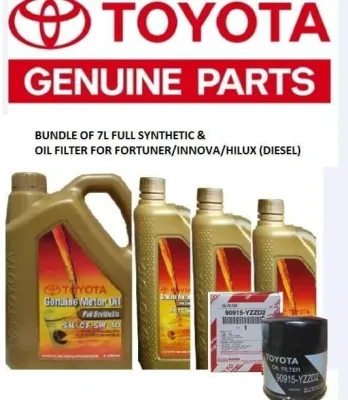
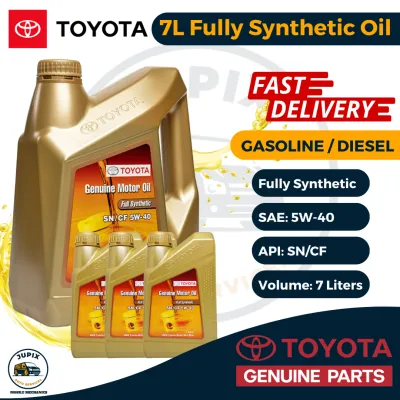
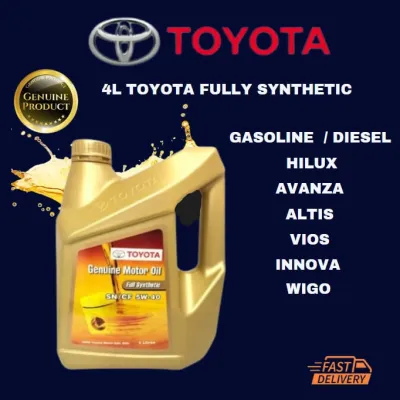
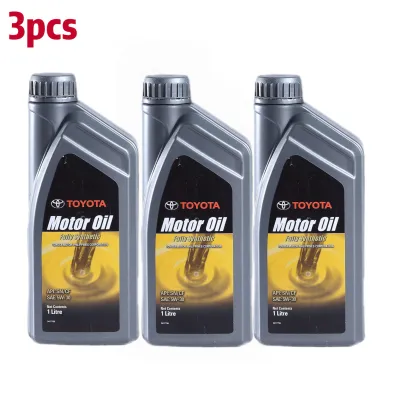
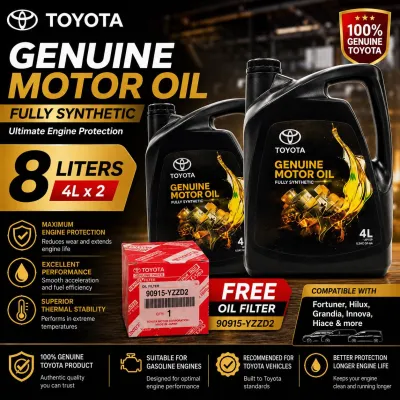
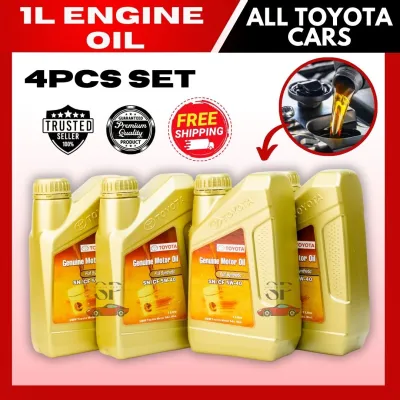
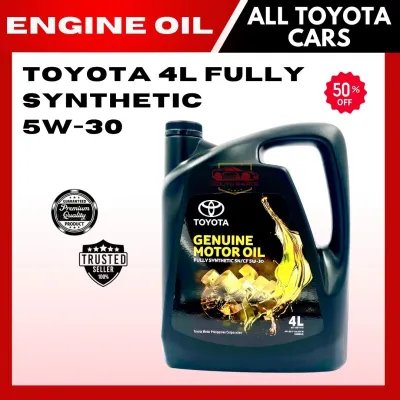
Prices are valid at publication and may change. Please refer to the product page for the latest price.
If you do not have the manual on hand, pop the hood and inspect the engine’s oil filler cap. In most modern Toyota vehicles, the factory-recommended viscosity grade (such as 0W-20) is stamped directly onto the plastic cap for quick reference during routine maintenance.
For absolute certainty, especially if your vehicle has undergone an engine swap or if you drive an imported model, contact an authorized Toyota dealership service department. Providing your Vehicle Identification Number (VIN) allows the service team to pull up the exact factory build sheet and confirm the precise oil specifications.
Decoding Toyota Oil Viscosity Grades (e.g., 0W-16, 5W-30)
The letters and numbers on an engine oil bottle represent its flow characteristics at different temperatures, standardized by the Society of Automotive Engineers (SAE). The number preceding the “W” (which stands for Winter) indicates the oil’s cold-flow properties. A lower number, such as 0W or 5W, means the oil remains highly fluid at low temperatures, allowing it to pump rapidly through the engine block during a cold start to prevent metal-on-metal contact.

The second number (such as 16, 20, or 30) represents the oil’s operating viscosity, measured at 100°C (the typical operating temperature of an internal combustion engine). This number indicates the thickness and strength of the protective oil film when the engine is fully warmed up.
Lower operating viscosity numbers (like 16 or 20) reduce internal fluid drag, allowing the engine to spin more freely and improve fuel efficiency. Conversely, higher numbers (like 30 or 40) provide a thicker, more robust oil film that can withstand higher mechanical loads and shear forces, though at the cost of slightly higher internal resistance.
When to Consider Alternative Viscosity Grades
As engines age, internal clearances between moving parts can gradually widen due to natural wear. While some drivers consider switching to a slightly thicker oil to reduce oil consumption or quieten engine noise, you should only do this if your Toyota owner’s manual explicitly lists the thicker grade as an acceptable alternative.
In the Philippines, vehicles frequently face extreme ambient temperatures, prolonged idling in heavy traffic, and demanding climbs up steep terrain. Under these severe operating conditions, or when towing heavy loads, a slightly higher viscosity grade may be permitted by the manufacturer to maintain adequate film strength. Always verify this allowance in the temperature-viscosity chart provided in your manual.
Blindly switching to a significantly thicker oil without manufacturer approval can impair the operation of Toyota’s Variable Valve Timing (VVT-i) system. These systems rely on precise oil pressure and flow rates through tiny passages to adjust valve timing; oil that is too thick can trigger check engine lights, sluggish performance, or premature component wear.
Synthetic vs. Conventional: Does the Base Oil Matter?
Modern ultra-low viscosity grades, such as 0W-16 and 0W-20, are formulated almost exclusively as full synthetic oils. Conventional mineral oils simply cannot achieve these thin flow rates while maintaining the necessary thermal stability and film strength required to protect modern engine components.
Full synthetic oils offer superior resistance to thermal breakdown, lower volatility, and better sludge prevention compared to conventional or synthetic blend oils. If your Toyota specifies a synthetic grade, substituting it with conventional oil can lead to rapid oil degradation, especially under the high-temperature demands of tropical driving.
Beyond viscosity, you must check the oil bottle for current industry certifications. Look for the American Petroleum Institute (API) “Donut” or “Starburst” marks, ensuring they meet or exceed the standards specified in your manual, such as API SP or ILSAC GF-6A. These certifications guarantee the oil contains the necessary additives to prevent low-speed pre-ignition (LSPI) and timing chain wear.
Step-by-Step: Verifying Your Next Oil Purchase
Before purchasing any engine oil, cross-reference the viscosity grade (e.g., 0W-20) and the required API/ILSAC specifications directly with your Toyota owner’s manual. Do not rely solely on generic retail catalog recommendations.
Determine the exact oil capacity of your engine, including the volume required when replacing the oil filter. This capacity is listed in the specifications section of your manual. Ensure you purchase enough liters to complete the fill without under-filling or overbuying.
Compare prices in ₱ across authorized auto supply stores, official brand flagship stores, or reputable service centers. Be cautious of unusually cheap offers on online marketplaces, as counterfeit engine oils can cause catastrophic engine failure. Always inspect the bottle’s security seals, batch codes, and labels for signs of tampering before pouring.
Frequently Asked Questions (FAQ)
Can I mix different oil viscosity grades in my Toyota?
Mixing different oil viscosity grades is highly discouraged because it alters the oil’s engineered flow characteristics in unpredictable ways. While modern engine oils are generally compatible and will not react chemically to form sludge, mixing a 0W-20 with a 10W-40 results in an intermediate viscosity that may not meet the precise lubrication requirements of your engine. Avoid topping off with a different grade unless it is an absolute emergency to prevent oil starvation; if you must do so, schedule a complete oil and filter change as soon as possible to restore the correct specification.
Is it safe to use 5W-30 instead of 0W-20 if the recommended oil is unavailable?
Using 5W-30 as a temporary substitute for 0W-20 is generally safe in an emergency, but it should not become a permanent habit unless your owner’s manual explicitly permits it. The thicker 5W-30 oil can increase internal friction, slightly reducing fuel economy and potentially affecting the responsiveness of the Variable Valve Timing (VVT-i) system. If you must use 5W-30 to top off or complete an urgent oil change, refer to the emergency substitution guidelines in your manual, and ensure you transition back to the recommended 0W-20 grade at your very next scheduled service interval.

Community discussion
Share your experience or ask a question. Comments are reviewed before publication.