
When purchasing a kids helmet in the Philippines, the presence of an official safety certification mark is the single most critical factor in verifying that the gear will actually protect your child’s head during an accident. On busy Philippine roads—where families navigate congested urban streets, active provincial highways, and unpredictable weather—ensuring your young passenger wears a legally compliant, thoroughly tested helmet is a non-negotiable safety step.
While many parents naturally prioritize appealing cartoon designs, bright colors, or budget-friendly price tags, these visual elements offer zero structural protection. Understanding the exact meaning of local safety marks, knowing how to verify their authenticity, and recognizing the physical limitations of safety gear are vital skills for every parent and guardian.
Decoding the PS and ICC Certification Marks
The government body responsible for regulating product safety and quality standards in the country is the Bureau of Philippine Standards (BPS), an agency operating under the Department of Trade and Industry (DTI). When researching safety gear, parents often encounter confusing terminology, particularly the acronym “PSB.” In the local market, “PSB” is a common misnomer; the actual Singaporean standard is regulated by the Product Standards Board (PSB), whereas the authentic Philippine certification is known simply as the PS (Philippine Standard) mark.
Products mentioned in this guide
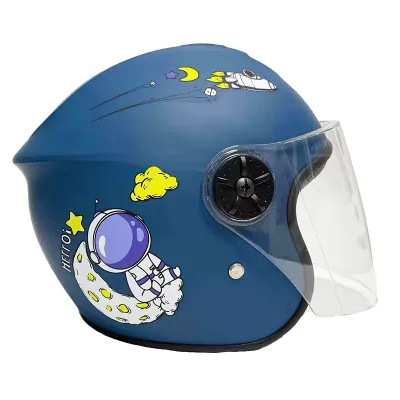
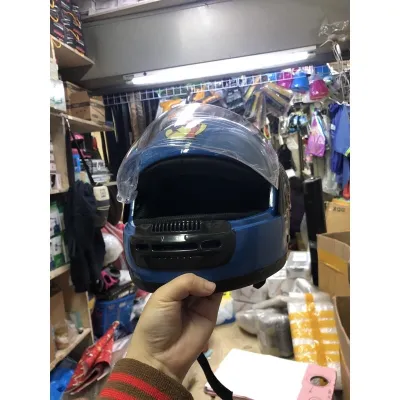
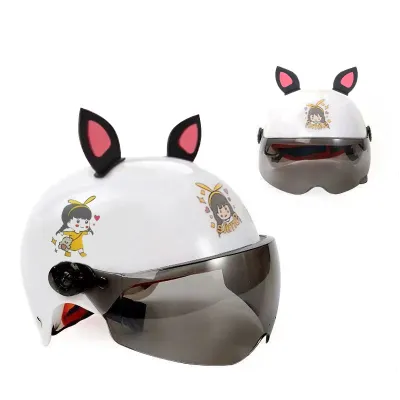
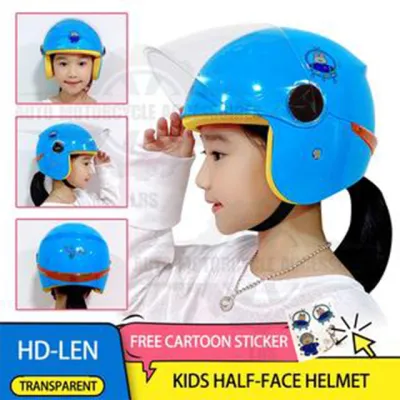
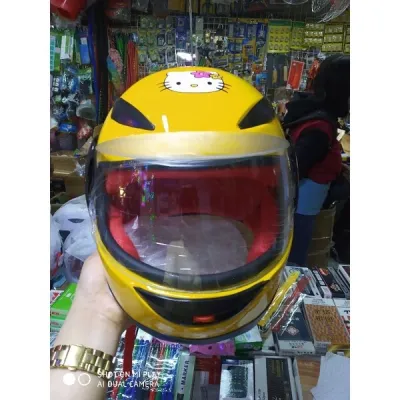
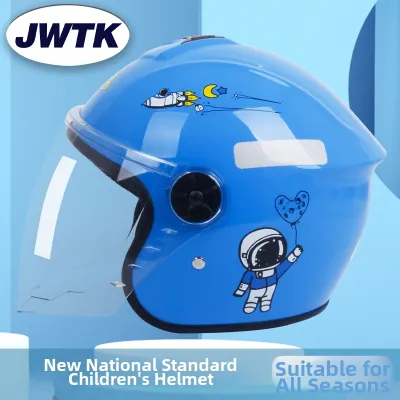
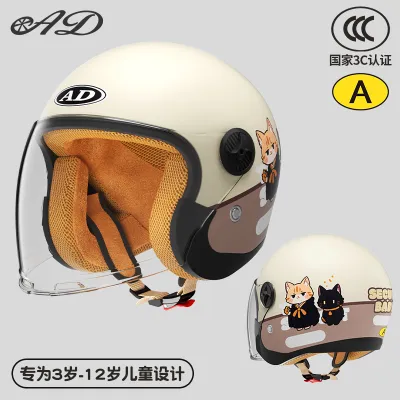
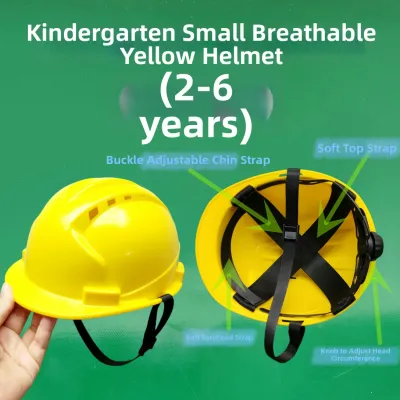
Prices are valid at publication and may change. Please refer to the product page for the latest price.
To ensure complete clarity, the BPS utilizes two distinct certification pathways depending on where the safety gear was manufactured:
- The PS Quality and/or Safety Mark: This certification is issued to locally manufactured products. To earn this mark, a Philippine manufacturer must undergo regular, rigorous factory audits and submit their products to continuous laboratory testing. This process verifies that the factory maintains a consistent production standard and that every batch of helmets meets Philippine National Standards (PNS).
- The ICC (Import Commodity Clearance) Mark: Because a vast majority of motorcycle helmets sold in the Philippines are manufactured abroad, the DTI relies on the ICC system. Every imported shipment of helmets must undergo strict sampling and laboratory testing by the BPS before being cleared for distribution. The ICC sticker proves that the imported product meets the exact same safety thresholds as locally produced gear.
When a kids helmet undergoes official BPS testing, it is subjected to intensive physical challenges designed to simulate real-world crash scenarios. These tests evaluate key safety dimensions:
- Impact Absorption: The helmet is dropped from specific heights onto steel anvils to measure how much shock is transferred through the shell and foam to the child's head.
- Retention System Strength: The chin strap and buckle are subjected to sudden, heavy loads to ensure they will not stretch, slip, or snap during an accident.
- Penetration Resistance: A pointed steel striker is dropped onto the outer shell to confirm that sharp road debris cannot pierce through to the skull.
- Peripheral Vision: Technicians verify that the helmet shell and visor design do not block the child's field of view, allowing them to remain aware of surrounding traffic.
The Safety Risks of Uncertified Kids Helmets
Choosing an uncertified helmet to save money exposes a child to severe, life-threatening vulnerabilities. Cheap, uncertified helmets are widely available on online marketplaces and roadside stalls, often selling for as low as ₱300 to ₱500, but they fail to perform when a crash occurs.

Impact Protection Failure Certified helmets are lined with high-grade, high-density Expanded Polystyrene (EPS) foam, which acts as a crumple zone by collapsing slowly to absorb kinetic energy. Uncertified alternatives frequently use cheap packaging styrofoam or hard, hollow plastic. In a collision, these materials do not compress; instead, they transfer the entire force of the impact directly to the child’s fragile skull and developing brain, which can result in catastrophic traumatic brain injuries.
Retention System Breakage If a helmet does not stay secured to the head during a fall, it cannot protect the rider. Uncertified helmets often feature flimsy plastic buckles and thin, poorly stitched polyester straps. Under the sudden tension of a fall, these components can easily snap or shear off, causing the helmet to fly away before the child’s head makes contact with the pavement.
Toxic Materials The tropical climate of the Philippines means children sweat heavily inside their riding gear. Uncertified helmets are often manufactured using cheap, unregulated industrial paints, low-grade plastics, and synthetic inner linings. When mixed with sweat and friction, these materials can leach toxic chemicals or cause severe contact dermatitis, skin rashes, and chemical burns on a child’s sensitive skin.
The “Toy Helmet” Trap Many products marketed online as “kids helmets” are actually classified as novelty toys or costume accessories. They may feature popular cartoon characters or mimic the shape of professional racing gear, but they offer absolutely no structural protection. Without a legitimate PS or ICC certification, a helmet must be treated strictly as a toy and should never be used on public roads.
How to Verify Authentic Certification Marks
Counterfeit safety gear is a persistent issue in the market, making it essential for parents to know how to inspect and verify the legitimacy of safety stickers before making a purchase.
Visual Inspection Begin by locating the physical PS or ICC mark on the helmet. On genuine products, the PS mark is typically molded directly into the inner EPS foam liner, embossed on the outer shell, or printed on a durable, high-quality label. The ICC mark is issued as a unique, tamper-resistant holographic sticker with a distinct metallic sheen and embedded security patterns that prevent clean removal or duplication.
Reading the Mark Details A genuine certification sticker is never generic. It must feature specific, legible details, including:
- A unique license or certificate number (typically starting with a "Q" code for PS marks, or a specific serial sequence for ICC marks).
- The registered name of the manufacturer or authorized importer.
- The specific standard reference, such as PNS UNECE 22.05 or 22.06, indicating compliance with United Nations regulations adopted by the Philippines.
Spotting Fakes Counterfeiters often print cheap paper copies of ICC stickers or apply generic, unverified “DOT” (US Department of Transportation) or “CE” (European Conformity) stickers to make a product look legitimate. While international standards are highly respected, a helmet is not legally compliant for road use in the Philippines unless it has been officially processed and stickered with a local PS or ICC mark. If the sticker is blurry, lacks a serial number, or peels off easily like ordinary paper, the helmet is likely counterfeit.
Verification Steps To guarantee authenticity, cross-reference the license or certificate number printed on the sticker with the official database on the DTI-BPS portal. If the retailer cannot provide a Certificate of Conformity, or if the printed number does not match any registered product in the government database, do not buy the helmet.
Crucial Fit and Usage Checks Beyond Certification
Even a fully certified helmet cannot protect a child if it does not fit correctly or is poorly maintained. Parents must perform regular physical checks to ensure the safety gear remains functional.
The Fit Test To ensure a secure and protective fit, follow these standard steps:
- Alignment: The helmet must sit completely level on the child's head, positioned low enough to cover the forehead. It should not tilt backward, exposing the forehead, or forward, obstructing the child's vision.
- Side Straps: The straps must form a clean "V" shape directly beneath and around the ears without twisting.
- Chin Strap: Fasten the strap snugly. You should only be able to fit one or two fingers between the strap and the child's chin. When the child opens their mouth wide, the helmet should pull down slightly against the top of their head.
Weight and Neck Strength Children have weaker neck muscles and a higher head-to-body mass ratio than adults. Placing a heavy helmet—even a certified one—on a young child can cause severe neck strain or whiplash during sudden braking. Always select a lightweight helmet designed specifically for children, featuring a scaled-down shell size and appropriate weight distribution, rather than a heavily padded adult helmet.
Post-Impact Replacement The protective EPS foam liner inside a helmet is designed to deform and collapse upon a single major impact to absorb shock. This structural damage is permanent and cannot be repaired. If the helmet is involved in any significant drop or crash, it must be replaced immediately, even if the outer plastic shell shows no visible cracks or scratches.
Routine Inspection The intense tropical sun and high humidity of the Philippines can accelerate the degradation of plastics, adhesives, and foam liners. Regularly inspect your child’s helmet for safety hazards:
- Check if the inner EPS foam feels brittle, loose, or powdery.
- Inspect the straps for any fraying, tears, or weakened stitching.
- Verify that the buckle clicks securely into place and does not slip when pulled.
- Clean the helmet shell and liner using only mild soap and warm water as specified by the manufacturer; harsh chemical cleaners can compromise the structural integrity of the outer shell.
Frequently Asked Questions (FAQ)
Can my child use a certified adult helmet if it fits their head?
No, an adult helmet is unsafe for a child even if the head circumference seems to match. Adult helmets are engineered with a heavier outer shell and thicker EPS foam designed to absorb the high-velocity kinetic energy of a much heavier adult head. A child’s neck cannot safely support this extra mass, and the stiff foam will not deform properly under the lower impact force of a child’s head, rendering the protection ineffective.
Are bicycle helmets and motorcycle helmets certified the same way?
No, they are certified under completely different safety standards. Bicycle helmets are designed for lower-speed falls and feature large ventilation slots to keep the rider cool at low speeds. Motorcycle helmets require significantly higher impact absorption, penetration resistance, and full-face or substantial shell coverage to handle high-speed traffic accidents. A certified bicycle helmet does not provide adequate protection for motorcycle or e-bike riding and must never be used for those activities.
What should I do if I discover my child's helmet lacks a PS or ICC mark?
If you discover your child’s helmet lacks these mandatory safety marks, stop using it for road travel immediately. Under Republic Act No. 10054 (the Motorcycle Helmet Act of 2009) and related DTI administrative orders, selling uncertified helmets is illegal in the Philippines. You should return the product to the retailer and request a refund. If the seller refuses or if you suspect they are distributing counterfeit safety gear, you can file a formal complaint with the DTI or report the business directly to the BPS to protect other families.

Community discussion
Share your experience or ask a question. Comments are reviewed before publication.