
Selecting the right interior accessories is a key part of personalizing your driving experience. While many drivers focus on aesthetic upgrades, the gear shift knob is one of the primary physical touchpoints in any manual or gated automatic vehicle. Upgrading to a carbon shift knob offers a distinct blend of functional performance and visual refinement. Real carbon fiber is highly valued in automotive engineering for its high strength-to-weight ratio, and when applied to a shift knob, it delivers a tactile, mechanical connection to your transmission that standard plastic or heavy leather handles cannot match.
Beyond the sport-inspired appearance, carbon fiber possesses excellent thermal properties. In tropical climates like the Philippines, where cabin temperatures can soar rapidly when parked under direct sunlight, metal shift knobs can become painfully hot to touch, while leather can degrade and become sticky over time. Carbon fiber, particularly when finished with high-quality resins, does not retain heat in the same manner as solid aluminum or steel, allowing for a much more comfortable grip even after hours of exposure to intense midday heat.
Crucial Fitment Checks: Thread Size and Adapters
Before purchasing any aftermarket shift knob, verifying physical compatibility with your vehicle’s shifter shaft is the absolute first step. A shift knob that does not fit securely poses a significant safety risk, as it can slip or spin during a critical gear change, leading to missed shifts or a temporary loss of vehicle control. You must determine whether your vehicle uses a threaded shifter shaft or a non-threaded (push-on) design. Most manual transmissions use threaded shafts, but the diameter and thread pitch vary widely across different automotive manufacturers.
Products mentioned in this guide
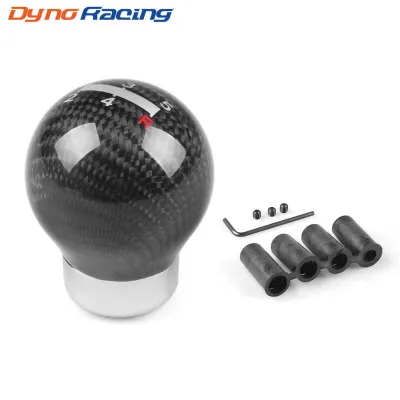
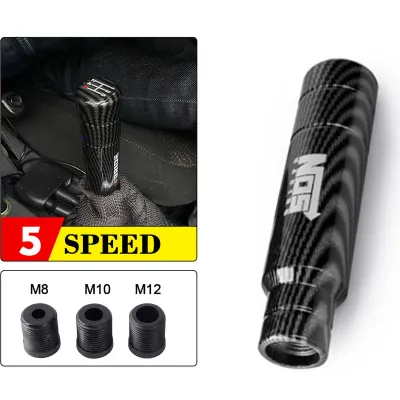
![[COD] Transform Your Cars Drive With 5 Speed Carbon Fiber Style Gear Knob Fits Most Shaft Sizes](https://img.lazcdn.com/g/p/c67adeac488161fa3713e7a9273159a8.jpg_400x400q80.jpg_.webp)
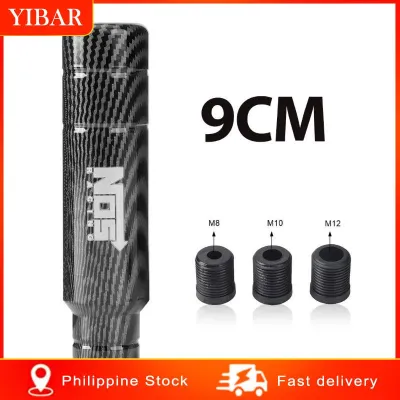
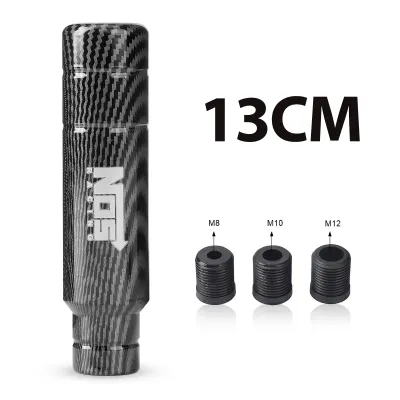
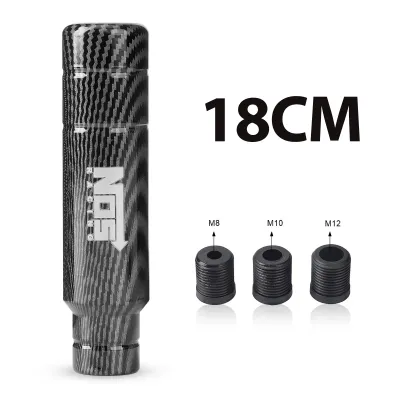
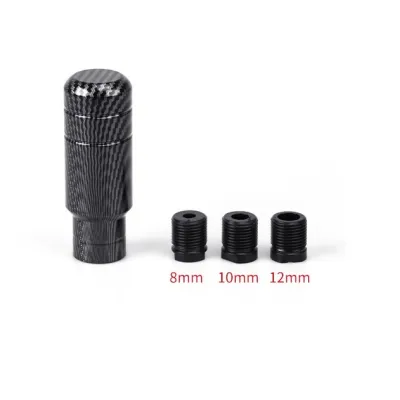
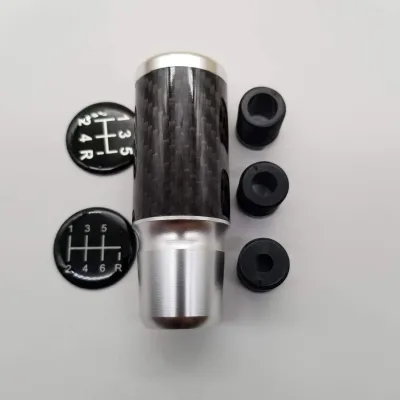
Prices are valid at publication and may change. Please refer to the product page for the latest price.
To ensure a precise fit, consult your vehicle’s service manual or use a thread pitch gauge to measure the shifter shaft. Common Japanese thread sizes include M10x1.25 (often found on Mitsubishi, Mazda, and Nissan vehicles) and M10x1.5 (typical for Honda and Acura). European and American vehicles may use entirely different metric or imperial thread pitches, or they may utilize non-threaded collar designs that require specific adapter brackets. Never attempt to force a shift knob with the wrong thread pitch onto your shifter shaft, as this will permanently strip the metal threads of the shaft or damage the internal structure of the knob.
Many aftermarket carbon shift knobs are sold as universal kits that include plastic or brass thread adapters. While these adapters allow a single knob model to fit multiple thread sizes, you must exercise extreme caution. Cheap plastic adapters can easily strip under the mechanical stress of daily shifting, causing the knob to wobble or detach. If you must use an adapter, high-quality brass or aluminum inserts are highly recommended. Avoid relying on universal knobs that use side-mounted set screws to clamp onto a non-threaded shaft; these set screws frequently back out over time due to cabin vibrations, creating a hazardous driving condition.
Additionally, you must measure the depth of the threaded hole inside the carbon shift knob. If the threaded bore is too shallow, the shifter shaft will bottom out before the base of the knob sits flush against the shifter boot or collar. This leaves an unsightly gap and can place unnecessary leverage on the upper threads, increasing the risk of structural failure. Always cross-reference the manufacturer’s exact dimension drawings with your vehicle’s shifter shaft clearance before completing your purchase from any online retailer.
Finding the Right Weight for Your Driving Style
The weight of a shift knob directly influences the physical effort, speed, and overall sensation of changing gears. There is a common misconception that a heavier shift knob is always superior, but the ideal weight actually depends heavily on your vehicle’s transmission design and your personal driving preferences. Carbon fiber is naturally an incredibly lightweight material, and a pure, unweighted carbon shift knob typically weighs between 60 to 100 grams. This featherweight construction provides a highly direct, raw, and mechanical connection to the gearbox, allowing you to feel every detent and synchro alignment through your fingertips.

For drivers who engage in spirited driving or track days, a lightweight carbon knob is often preferred. It allows for rapid, precise wrist movements without adding inertia to the shift linkage, which can help prevent accidental over-shifting. However, because a lightweight knob does not assist the shift with momentum, you must supply all the physical force required to push the gear selector into place. This can make notchier or older transmissions feel stiff and demanding during daily commutes.
To address this, many manufacturers produce weighted carbon shift knobs. These hybrid designs feature a heavy brass, steel, or tungsten core wrapped in an authentic carbon fiber outer shell, pushing the total weight to anywhere between 300 and 500 grams. The added mass acts as a counterweight, using kinetic energy to smooth out the resistance of the shift linkage. Once you initiate the shift, the weight of the knob carries the selector smoothly into gear with minimal effort. If you drive a daily commuter with a heavy or notchier transmission, a weighted carbon knob offers a more comfortable, fluid shifting experience while retaining the premium look and feel of carbon fiber.
Choosing the Best Shape and Ergonomics
The shape of your shift knob dictates how you grip it and how physical force is distributed through your hand. Different driving styles, hand sizes, and ergonomic preferences require distinct shapes to maximize comfort and control.
Spherical and Round Shapes
The classic spherical or ball-shaped knob is the most traditional design and remains highly popular for good reason. A round knob fits naturally into the center of the palm, allowing you to grip it from almost any angle—whether you prefer to shift with an overhand grip or a side-palm push. This versatility makes spherical carbon knobs excellent for daily driving, as they accommodate natural adjustments in hand positioning during long trips.
Teardrop and Ergonomic Shapes
Teardrop and anatomically contoured knobs are engineered specifically to mimic the natural resting curvature of a closed human hand. These shapes typically feature a wider, rounded top that tapers down to a narrower base, providing a comfortable resting ledge for your fingers. By distributing the shifting forces more evenly across the palm and fingers, ergonomic designs significantly reduce hand fatigue during long drives, heavy traffic jams, or extended track sessions.
Cylindrical and Extended Shapes
Cylindrical, tall, or extended shift knobs are heavily inspired by rally and drift car setups. These taller knobs bring the shift point physically closer to the steering wheel, reducing the time your hand spends moving between steering and shifting. A cylindrical shape is ideal for drivers who prefer to grab the shifter from the side rather than the top, utilizing a precise, wrist-driven motion. However, because a taller knob acts as a longer lever, it will slightly increase the physical throw distance between gears, which may feel less crisp on standard-throw shifters.
Evaluating Carbon Finish and Build Quality
With the market flooded with various interior accessories, distinguishing between authentic, high-quality carbon fiber and cheap imitations is essential to ensuring durability and value. True carbon fiber shift knobs are crafted from woven carbon filaments bound together by a high-strength polymer resin. To identify real carbon fiber, look closely at the weave pattern under bright light; authentic carbon displays a distinct three-dimensional depth, where the light reflects differently off the individual fiber bundles as you rotate the knob. In contrast, hydro-dipped plastic or vinyl-wrapped imitations appear completely flat, often showing repeating, pixelated patterns or distorted graphics near sharp curves.
When choosing a genuine carbon knob, you must also decide between a glossy or a matte finish. A glossy clear coat accentuates the deep, intricate layers of the carbon weave, giving the interior a high-tech, luxury appearance. Glossy finishes are also exceptionally easy to maintain, as dirt and oils from your hands can be wiped clean with a simple cloth. However, they are more susceptible to showing fine hairline scratches over time. A matte finish, on the other hand, offers a subtle, stealthy look that blends seamlessly with modern satin or leather interior trims. While matte finishes excel at hiding minor scratches and swirl marks, they can absorb oils from your skin more readily, requiring more frequent deep cleaning to prevent the surface from looking greasy.
Regardless of the finish style, the quality of the protective clear coat is paramount. The interior of a vehicle parked outdoors in tropical regions is subjected to extreme ultraviolet (UV) radiation and intense heat. Low-quality resins without UV-inhibiting additives will rapidly degrade, turning a cloudy yellow color or cracking under thermal expansion. Ensure the manufacturer explicitly states that the knob features an automotive-grade, UV-resistant clear coat to guarantee that the finish remains crystal clear for years to come. In the local market, high-quality carbon shift knobs typically range from ₱1,500 to over ₱6,000, depending on whether they feature a weighted core and premium UV protection.
Installation Safety and Maintenance Tips
Installing a new shift knob is generally a straightforward, reversible process, but it must be executed carefully to avoid damaging your vehicle’s interior components. Before beginning, consult your vehicle’s manufacturer instructions to safely remove the original knob. Many factory knobs simply unscrew counterclockwise, but some may be secured by hidden clips, set screws, or plastic collars that require specific removal techniques. Once the old knob is removed, thoroughly clean the shifter shaft threads with a soft brush to remove any residual grease or old thread sealant.
When installing your new carbon shift knob, always thread it onto the shaft by hand first to ensure the threads align smoothly. Never use excessive force, pipe wrenches, or pliers, as metal tools can easily scratch the delicate clear coat or crush the lightweight carbon fiber structure. Thread the knob down until it is snug, ensuring it aligns correctly with your shift pattern diagram if applicable. Avoid using permanent, high-strength thread-locking compounds unless specifically recommended by the manufacturer; these compounds require extreme heat to disassemble, which will destroy the carbon fiber resin if you ever need to remove the knob in the future. If a thread-locking agent is required, use a mild, removable blue compound sparingly.
Maintaining your carbon shift knob requires minimal effort but demands the correct products to preserve the outer finish. For daily cleaning, simply wipe the surface with a clean, dry microfiber cloth to remove dust and fingerprints. For deeper cleaning, check the product’s label and use only a mild, non-abrasive automotive interior cleaner that is explicitly safe for plastics and clear-coated surfaces. Never use harsh solvents, acetone, or abrasive scrubbing pads, as these chemicals will strip the protective UV clear coat, leaving the raw carbon fiber vulnerable to environmental degradation and permanent physical damage.
Frequently Asked Questions (FAQ)
Will a carbon shift knob get hot in the sun?
While any material left inside a closed vehicle under intense sunlight will absorb some heat, carbon fiber performs exceptionally well compared to alternative materials. Unlike solid metal shift knobs (such as billet aluminum or steel), which act as thermal conductors and can become hot enough to cause discomfort, carbon fiber has low thermal conductivity. It does not retain heat as intensely and cools down much faster once the vehicle’s air conditioning is turned on, making it a highly practical choice for warm climates.
Can I use a carbon shift knob on an automatic car?
Yes, but compatibility is highly dependent on your automatic shifter’s mechanism. If your vehicle features a gated shifter or a straight-pull selector that does not require a physical lockout button to change gears, you can typically use a standard threaded carbon shift knob, provided the thread size matches the shaft. However, if your automatic shifter utilizes a push-button lockout mechanism to shift out of Park or Neutral, you must purchase a specialized carbon shift knob designed specifically for automatic transmissions, which incorporates an integrated button or a spring-loaded collar to actuate the lockout cable.

Community discussion
Share your experience or ask a question. Comments are reviewed before publication.