
Choosing the right Zebra helmet for your daily ride in the Philippines comes down to balancing your personal budget with your specific riding habits, while never compromising on basic safety. Whether your budget is under ₱2,000 for a basic commuter helmet or extends beyond ₱5,000 for advanced features, your helmet remains your primary line of defense on the road. Navigating the congested streets of Metro Manila during a humid afternoon commute or embarking on a weekend tour across provincial highways requires gear that can handle both impact protection and tropical weather. Zebra offers a wide range of helmets categorized into entry-level, mid-range, and premium tiers, allowing riders to find an option that fits their wallet while keeping them safe and comfortable.
Core Safety Checks for Any Zebra Helmet
Before looking at style, color, or price, you must verify that any helmet you consider meets strict safety standards. In the Philippines, every legitimate motorcycle helmet must carry official certification marks. Look for the Import Commodity Clearance (ICC) sticker or the Philippine National Standard (PNS) mark, which are typically affixed to the back of the helmet shell or sewn onto the chin strap. Additionally, international certifications such as the Economic Commission for Europe (ECE) standard or the Department of Transportation (DOT) rating provide further assurance that the helmet has undergone rigorous impact testing.
A thorough physical inspection of the helmet is equally critical before you make a purchase. Gently pull back the comfort liner to inspect the Expanded Polystyrene (EPS) foam inner shell. This shock-absorbing layer should be completely smooth, uniform, and free of any indentations, hairline cracks, or crumbling sections. The outer shell must also be free of deep scratches, stress fractures, or soft spots, which can compromise the structural integrity of the helmet during an accident.
Products mentioned in this guide
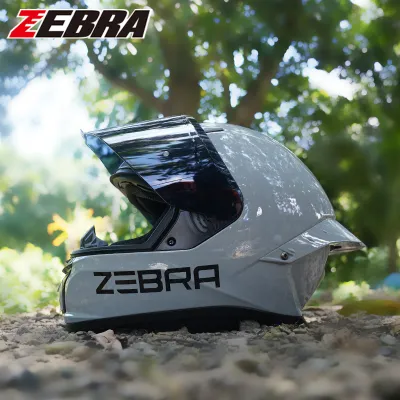
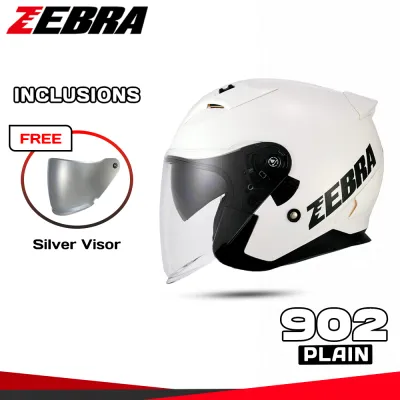
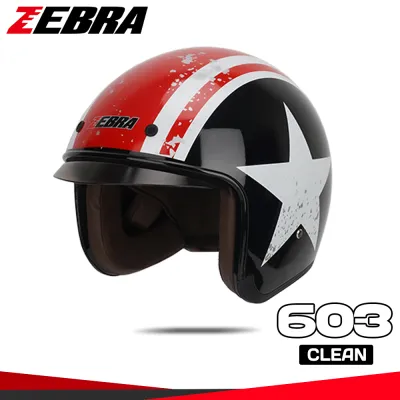
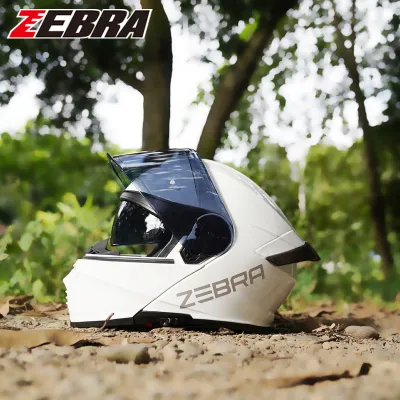
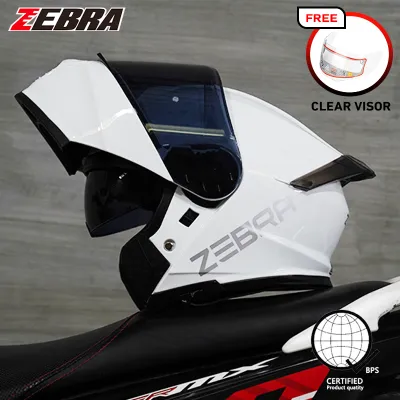
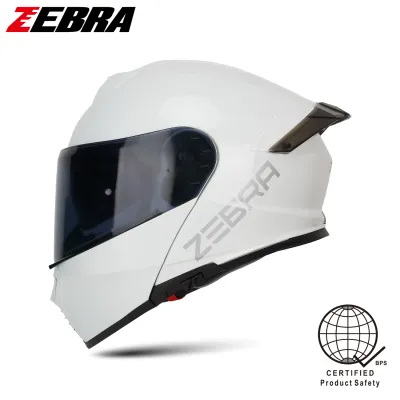
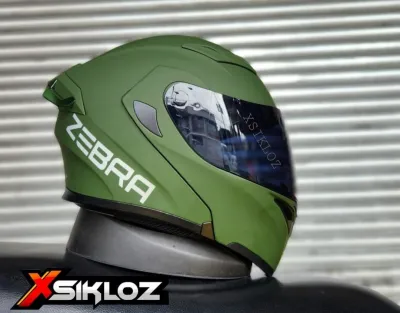
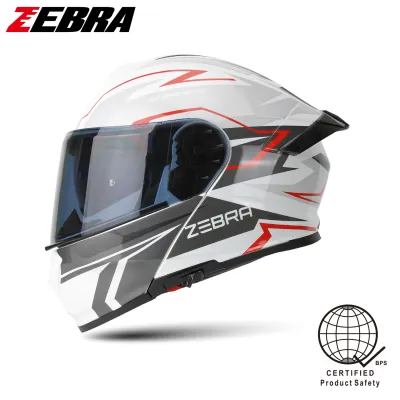
Prices are valid at publication and may change. Please refer to the product page for the latest price.
You should immediately reject any helmet that lacks clear, tamper-evident certification labels or shows signs of previous wear. Helmets have a limited shelf life due to the natural degradation of protective materials over time, so always check the manufacturing date stamp, usually located under the comfort padding. If a helmet has been dropped from a significant height, involved in a minor collision, or shows signs of adhesive degradation, it must be discarded immediately, as its ability to absorb impact will be severely compromised.
Entry-Level Budget: Essential Protection for Daily Commutes
For riders seeking an affordable option for short daily commutes or low-speed city riding, entry-level Zebra helmets offer essential protection without unnecessary frills. Helmets in this budget tier typically utilize injection-molded ABS (Acrylonitrile Butadiene Styrene) or basic thermoplastic resins for their outer shells. While these materials are highly impact-resistant and durable, they tend to be heavier than advanced composites, which can lead to neck fatigue during extended rides under the hot sun.

In terms of features, entry-level models focus on the basics required to get you from point A to point B safely. You can expect standard ventilation layouts, usually consisting of a single chin vent and one or two top exhaust ports to help manage the tropical heat. The visors are generally single-pane polycarbonate shields that offer basic wind and dust protection, though they may lack advanced anti-fog coatings, requiring you to crack the visor open slightly during sudden downpours to maintain visibility.
While these budget-friendly options meet necessary safety standards, they do come with noticeable trade-offs in comfort and refinement. The interior padding is often made of simpler, non-removable fabrics that may take longer to dry after a sweaty ride, potentially leading to odor buildup over time. Additionally, wind noise tends to be more pronounced at higher speeds due to simpler aerodynamic designs and basic rubber seals around the visor port, making them less suitable for long-distance highway touring.
Mid-Range Budget: Upgraded Comfort and Versatility
Stepping up to a mid-range Zebra helmet unlocks a significant boost in daily comfort, convenience, and overall build quality, making it the sweet spot for daily commuters and weekend tourers alike. In this tier, manufacturers often employ refined thermoplastic blends that reduce overall weight while maintaining excellent structural rigidity. The interior padding receives a major upgrade, featuring moisture-wicking, hypoallergenic fabrics that actively draw sweat away from your skin—a crucial feature for riding in the humid Philippine climate.
The feature set in the mid-range category is designed to make your riding experience much more seamless and adaptable to changing weather conditions. You will frequently find quick-release visor mechanisms that allow you to swap shields without tools, as well as dual-visor systems featuring an integrated drop-down sun shield to protect your eyes from intense afternoon glare. Many mid-range shields are also Pinlock-ready, allowing you to install an anti-fog insert that keeps your vision perfectly clear during heavy monsoon rains.
Deciding whether to invest the extra money in a mid-range helmet depends largely on your weekly mileage and the variety of your riding routes. If your daily commute exceeds thirty minutes or involves traversing high-speed bypass roads, the improved aerodynamics, reduced wind buffeting, and plush, removable liners of a mid-range model will dramatically reduce rider fatigue. The ability to easily remove and wash the interior pads also ensures your helmet remains fresh and hygienic through months of daily use.
Premium Budget: Advanced Materials and Track-Ready Features
For riders who demand the highest level of performance, lightweight comfort, and advanced engineering, premium Zebra helmets offer cutting-edge technology derived from professional racing standards. The defining characteristic of this premium tier is the transition to advanced composite shells, which may combine fiberglass, carbon fiber, and organic fibers. This sophisticated construction results in an incredibly lightweight helmet that significantly reduces strain on your neck muscles while offering superior energy dissipation during an impact.
The interior of a premium helmet is engineered for maximum comfort, hygiene, and safety under demanding conditions. The liners are fully removable, washable, and treated with advanced antibacterial coatings to prevent odor and mold growth in tropical environments. Furthermore, premium models often incorporate emergency quick-release cheek pads, allowing medical personnel to safely remove the helmet without putting unnecessary strain on a rider’s neck in the event of an accident.
To determine if a premium helmet is right for you, evaluate your typical riding speeds, motorcycle type, and long-term riding goals. If you ride a high-displacement sportbike, participate in track days, or frequently travel long distances at highway speeds, the advanced aerodynamics, wind-tunnel-tested ventilation channels, and multi-density EPS liners are well worth the investment. These helmets also feature dedicated cutouts for integrated Bluetooth communication systems, allowing you to stay connected without compromising the fit or safety of the internal foam.
Step-by-Step Fitting and Pre-Purchase Verification
No matter how much you spend on a Zebra helmet, it will only protect you effectively if it fits your head perfectly. To find your correct size, use a flexible measuring tape to measure the widest part of your head, about one inch above your eyebrows and directly over your ears. Compare this measurement to the manufacturer’s specific size chart, as sizing can vary significantly between different helmet models and shell shapes, making generic size categories unreliable.
Once you receive your helmet or try it on in a physical store, perform a series of physical checks to verify the fit. Put the helmet on and fasten the chin strap securely; it should feel snug all around your head without creating painful pressure points on your forehead or temples. Perform the roll-off test by grasping the rear of the helmet and attempting to pull it forward off your head; if the helmet slips off or shifts significantly, it is too large and will not protect you in a crash.
Finally, take steps to verify the authenticity of your purchase, especially when shopping on online marketplaces or from third-party retailers. Look for intact factory packaging, original branded dust bags, and complete user manuals with clear warranty information. Authorized physical dealers and official online flagship stores are the safest options to ensure you are receiving a genuine Zebra product with an uncompromised EPS liner, rather than a counterfeit copy that fails to meet basic safety standards.
Frequently Asked Questions (FAQ)
How often should I replace my Zebra helmet?
Under normal riding conditions, you should replace your helmet every three to five years from the date of first use, or within seven years from the manufacturing date. Over time, the protective EPS foam liner naturally degrades due to exposure to sweat, hair oils, UV rays, and extreme temperature fluctuations, reducing its ability to absorb impacts. Additionally, you must replace your helmet immediately after any crash, drop, or significant impact, even if there is no visible damage to the outer shell, as the internal foam is designed to compress only once to absorb energy.
Can I replace the visor on a budget Zebra helmet with an aftermarket one?
It is highly recommended to use only manufacturer-approved, original replacement visors for your specific Zebra helmet model. Aftermarket or unverified third-party visors often fail to seal properly against the helmet’s eyeport, leading to increased wind noise, water leaks during heavy rain, and potential detachment at high speeds. Furthermore, official visors are engineered to meet strict optical clarity and shatter-resistance standards, ensuring your eyes remain protected from flying debris while maintaining a clear, undistorted view of the road.

Community discussion
Share your experience or ask a question. Comments are reviewed before publication.